The 35-Cent Blue Plate Special: When America's Workers Had a Real Third Place
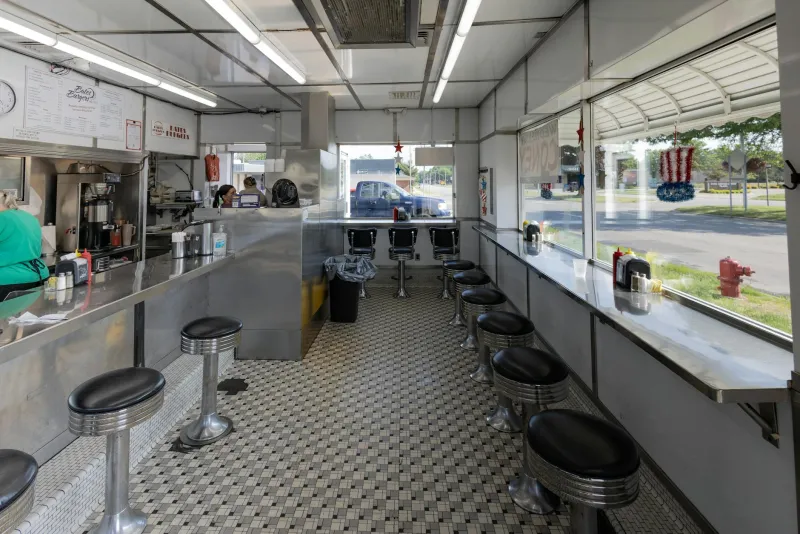
The Daily Migration
Every weekday at 11:45 AM, the lunch counter at Murphy's Diner in downtown Detroit would start filling up. Factory workers from the Ford plant mixed with secretaries from the insurance building, bank tellers sat next to construction crews, and everyone knew Dolores would have their usual order ready before they finished hanging up their coats.
A hot roast beef sandwich with mashed potatoes and gravy cost 35 cents in 1965. Coffee was a nickel, and a piece of pie could be had for a quarter. More importantly, Murphy's was where working-class Detroit came together for an hour each day — a democratic space where your paycheck mattered less than your ability to make conversation.
That world has almost entirely vanished from American life.
The Golden Age of the Blue Plate Special
For roughly four decades, from the 1930s through the 1960s, the American lunch counter represented something unique: a place where ordinary working people could afford to eat a real meal prepared by someone else, served at a real table, in the company of their neighbors.
These weren't fancy establishments. The décor was functional, the service was efficient, and the menu rarely changed. But they offered something precious: a daily escape from both the isolation of home cooking and the expense of restaurant dining.
"The lunch counter was the great equalizer," says food historian James Morton. "A secretary making $60 a week could sit next to a lawyer making $200 a week, and they'd both be eating the same meatloaf special for 40 cents."
More Than Just a Meal
The social function of these establishments extended far beyond nutrition. They served as informal job networks, neighborhood news centers, and democratic forums where politics, sports, and local gossip were debated over coffee refills.
Regular customers developed genuine relationships with both the staff and each other. Waitresses knew everyone's name, usual order, and family circumstances. Conversations started at one end of the counter would migrate down the line as people joined in or offered opinions.
"My father met half his construction crew at the lunch counter on Fifth Street," recalls Chicago native Patricia Walsh. "When someone needed work, word would spread down the counter. When someone's kid graduated or got married, everyone would hear about it over the noon special."
The Economics of Everyday Dining
What made this system work was simple economics. Labor was cheaper, food costs were lower, and profit margins were thinner but sustainable. A diner could serve a complete hot meal for what amounted to about 15 minutes of minimum wage work.
The ingredients were basic but real: actual meat, fresh vegetables, potatoes mashed from scratch. Nothing was pre-processed or microwaved because those technologies didn't exist yet. The food was simple, but it was genuine.
Restaurant owners weren't trying to get rich — they were trying to make a living serving their community. The business model was based on volume and regularity rather than high margins.
The Fast Food Revolution
The decline of the lunch counter began in the 1970s with the rise of fast food chains. McDonald's, Burger King, and their competitors offered something the traditional diner couldn't match: speed and consistency.
For increasingly busy Americans, the promise of a predictable meal in under five minutes became more appealing than the social ritual of the lunch counter. Fast food was cheaper upfront, even if the portions were smaller and the nutrition was questionable.
"Fast food didn't just change what we ate," explains sociologist Dr. Rebecca Martinez. "It changed how we thought about eating. Meals became fuel rather than social events."
The Upscale Takeover
At the same time, the restaurant industry began chasing higher-income customers. The casual dining chains of the 1980s and 1990s — places like Applebee's and Chili's — targeted suburban families with disposable income rather than working-class lunch crowds.
The old lunch counters found themselves squeezed out by rising rents, labor costs, and changing customer expectations. Their simple, honest food seemed outdated compared to the elaborate menus and themed atmospheres of the new chain restaurants.
Many historic diners were demolished or converted into trendy establishments serving $15 burgers to tourists seeking "authentic" experiences.
The Missing Middle
Today, American dining has split into two distinct categories: cheap fast food and expensive sit-down restaurants. The affordable middle ground — where working people could get a real meal in a social setting — has largely disappeared.
A worker earning $15 an hour would need to spend nearly an hour's wages for what used to cost 15 minutes of work. The economic equation that made daily restaurant meals feasible for ordinary Americans simply doesn't exist anymore.
"We've created a food system where you can get a burger for $3 or a burger for $18, but finding something decent for $8 is almost impossible," notes food economist Dr. Steven Park.
What We Lost
The disappearance of the lunch counter represents more than just a change in dining habits. It reflects the broader atomization of American social life and the decline of spaces where people from different backgrounds naturally interact.
The modern alternatives — food courts, drive-throughs, and upscale casual dining — don't replicate the democratic mixing that happened at the lunch counter. We eat faster and more efficiently, but we eat alone or only with people we already know.
The Search for Connection
Some cities have seen attempts to recreate the lunch counter experience, but they typically cater to nostalgic middle-class diners rather than actual working-class customers. The economics that made the original model sustainable — cheap rent, low labor costs, simple ingredients — can't be replicated in today's market.
Yet the hunger for that kind of community space remains. Food trucks, coffee shops, and brewery taprooms have all tried to fill the social void left by the lunch counter's disappearance, with varying degrees of success.
Perhaps the real lesson isn't about food at all, but about what happens when economic forces eliminate the spaces where ordinary people can afford to be social. The 35-cent blue plate special fed more than just bodies — it nourished the kind of casual, daily democracy that held communities together.