
Before ESPN Existed, America's Sports Fans Lived in Beautiful Suspense
Imagine caring deeply about your team's playoff chances but not knowing the score until the next morning. Picture following your favorite player's statistics by cutting box scores out of the newspaper and keeping them in a shoebox. Consider what it meant to be a sports fan when information was scarce, delayed, and precious.
This was American sports fandom for most of the 20th century—a world of beautiful uncertainty where not knowing was half the experience.
The Morning Paper Was Your Sports Bible
In 1970, if the Cubs played a night game in Los Angeles, Chicago fans had exactly one way to find out what happened: wait for the Tribune to hit their doorstep at dawn. The sports section wasn't just news—it was revelation. You'd unfold those broadsheet pages with the same anticipation a kid feels unwrapping Christmas presents.
The box score was a work of art, dense with abbreviated statistics that serious fans learned to decode like hieroglyphics. AB, R, H, RBI, E—each column told part of the story, but you had to imagine the rest. Did Ernie Banks strike out looking or swinging? Was that double hit down the line or into the gap? The newspaper gave you the skeleton; your imagination supplied the flesh.
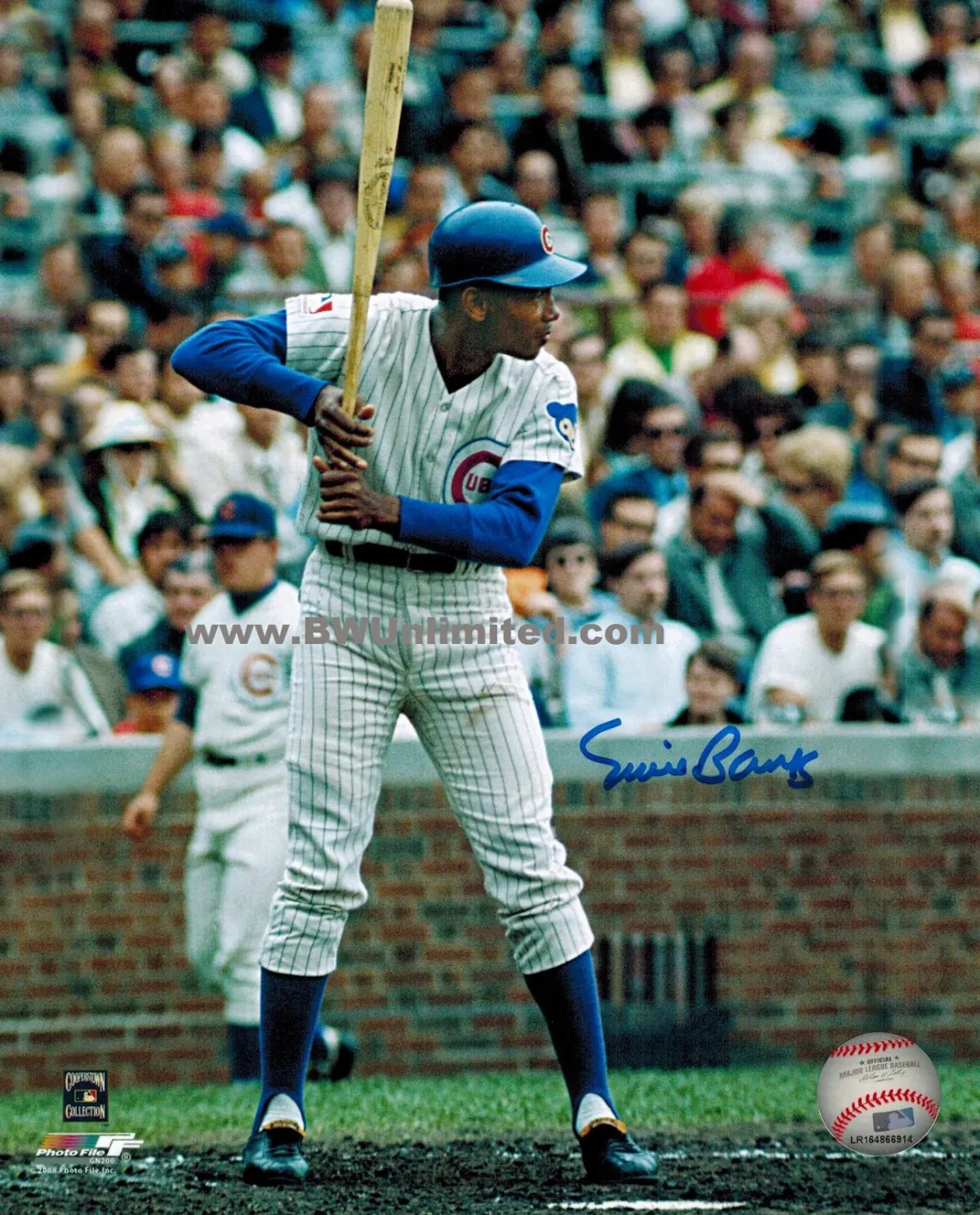 Photo: Ernie Banks, via 4.bp.blogspot.com
Sports columnists wielded enormous influence because they were often the only witnesses regular fans would ever encounter. If Red Smith or Jim Murray described a particular play or performance, that's how it lived in the collective memory. There was no video to contradict their interpretation, no multiple camera angles to reveal alternative truths.
Radio: The Theater of the Mind
For games happening in real time, radio was your lifeline to the action. But even radio required commitment. You couldn't check the score while stuck in traffic or glance at updates during a meeting. Following your team meant clearing your evening, settling into a comfortable chair, and surrendering to the rhythm of the broadcaster's voice.
The great radio announcers understood they were painting pictures with words. Mel Allen didn't just call Yankees games—he created a parallel universe where every swing had weight and every play mattered. When he said "Going, going, gone!" you could see that baseball arcing through the Bronx sky even if you were sitting in a Kansas farmhouse.
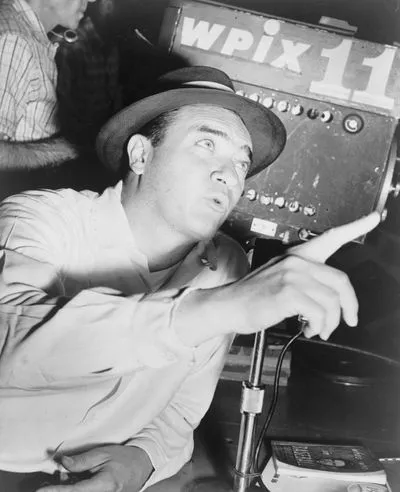 Photo: Mel Allen, via cdn.britannica.com
Away games were particularly magical on radio. The announcer was your only connection to distant cities, describing ballparks you might never see and weather you couldn't feel. When the Cubs played in San Francisco, the radio brought you fog rolling over Candlestick Park and wind swirling through the infield. You experienced geography through baseball.
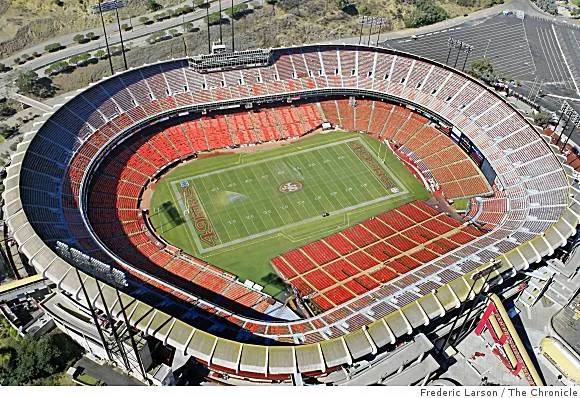 Photo: Candlestick Park, via seatingchartview.com
The Communal Experience of Not Knowing
The scarcity of information created unexpected bonds between strangers. Sports bars weren't just places to watch games—they were information exchanges where rumors and updates passed from person to person like valuable currency. Someone might walk in with news from a friend who'd been at the stadium, and suddenly every conversation stopped.
"Did you hear what happened in the ninth?"
"No, what?"
"Henderson stole home."
These moments had weight because information was finite and precious. You couldn't fact-check the story on your phone or pull up instant replay on YouTube. The tale lived or died based on the storyteller's credibility and your willingness to believe.
Television existed, of course, but coverage was limited and regional. If you lived in Boston, you might see thirty Red Sox games per year on television—a fraction of today's wall-to-wall coverage. Each televised game felt like an event, not just another entry in an endless stream of content.
The Art of Delayed Gratification
Perhaps most remarkably, fans developed an appreciation for delayed gratification that seems almost alien today. Following baseball meant accepting that some games would remain mysteries. If your team played a day game while you were at work, you might never know exactly how that crucial double play unfolded or what the pitcher's expression looked like when he struck out the side.
This limitation forced fans to develop deeper relationships with fewer pieces of information. Instead of consuming every available statistic, you memorized the ones that mattered. Instead of following every transaction around the league, you focused intensely on your team's fortunes. The narrower focus paradoxically created richer engagement.
Weekend doubleheaders held special magic because they offered rare abundance—six or seven hours of continuous baseball, enough to satisfy a week's worth of craving. Fans treated these marathon sessions like holidays, planning their entire day around the rhythm of two complete games.
When Statistics Were Personal Treasures
Before ESPN's SportsCenter and MLB.com's infinite databases, keeping track of player statistics was a personal hobby that required dedication. Serious fans maintained their own record books, carefully tracking batting averages and earned run averages with pencil calculations that would make today's sabermetricians smile.
Trading cards weren't just collectibles—they were reference materials. The back of a 1975 Topps card contained statistical treasure that you couldn't easily find anywhere else. Kids memorized these numbers not because they were assigned homework, but because the information felt valuable and rare.
Arguments about player performance lasted longer and burned hotter because settling them required research. You couldn't just Google "Mickey Mantle 1961 home runs" to end a debate. You had to remember, or find someone who remembered, or wait until you could get to a library with the proper baseball encyclopedia.
The Transformation of Fandom
Today's sports fan lives in a completely different universe. Every game is available somewhere, every statistic is accessible instantly, and every play can be reviewed from multiple angles within seconds of its completion. We've gained incredible access and convenience, but we've lost something harder to quantify—the sweet tension of not quite knowing.
Modern fandom is often characterized by information overload rather than information scarcity. Fantasy sports have turned every player into a data point in your personal portfolio. Social media provides instant reactions from thousands of strangers. Advanced analytics reveal truths about the game that even the players don't fully understand.
The question isn't whether this transformation represents progress—clearly, today's fans have access to richer, more complete information about their favorite sports. The question is whether something irreplaceable was lost when mystery and anticipation disappeared from the fan experience.
The Beauty of Not Knowing
There was something almost spiritual about the old relationship between fans and their teams. The gaps in information forced your imagination to work harder. The delay between action and knowledge created space for hope and worry to flourish. Not knowing the score until morning meant that possibility lived longer.
Perhaps most importantly, the limitations of pre-internet sports fandom created genuine shared experiences. When everyone had access to the same limited information at the same time, conversations had different texture. Stories had room to grow and change in the telling. Legends could develop organically rather than being instantly fact-checked and debunked.
American sports fandom has undoubtedly become more informed, more connected, and more comprehensive. Whether it's become more enjoyable is a question each fan has to answer for themselves.