Before Your Phone Became Your Best Friend: How Americans Actually Survived Waiting Around
The Barbershop University
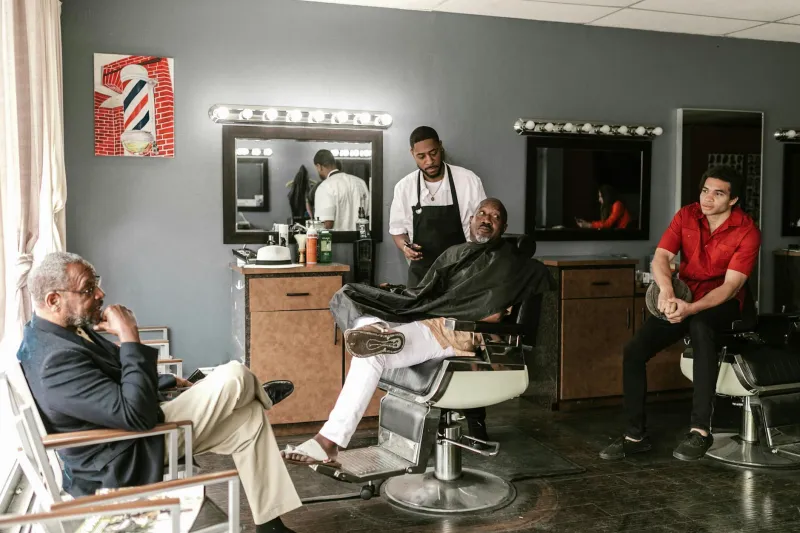
Every Tuesday at 3 PM, Frank's Barbershop became the unofficial town hall of Millfield, Ohio. While waiting for their turn in the chair, men didn't scroll through feeds or check emails — they talked. About the weather, sure, but also about local politics, their kids' baseball games, and whether the new highway would help or hurt downtown businesses.
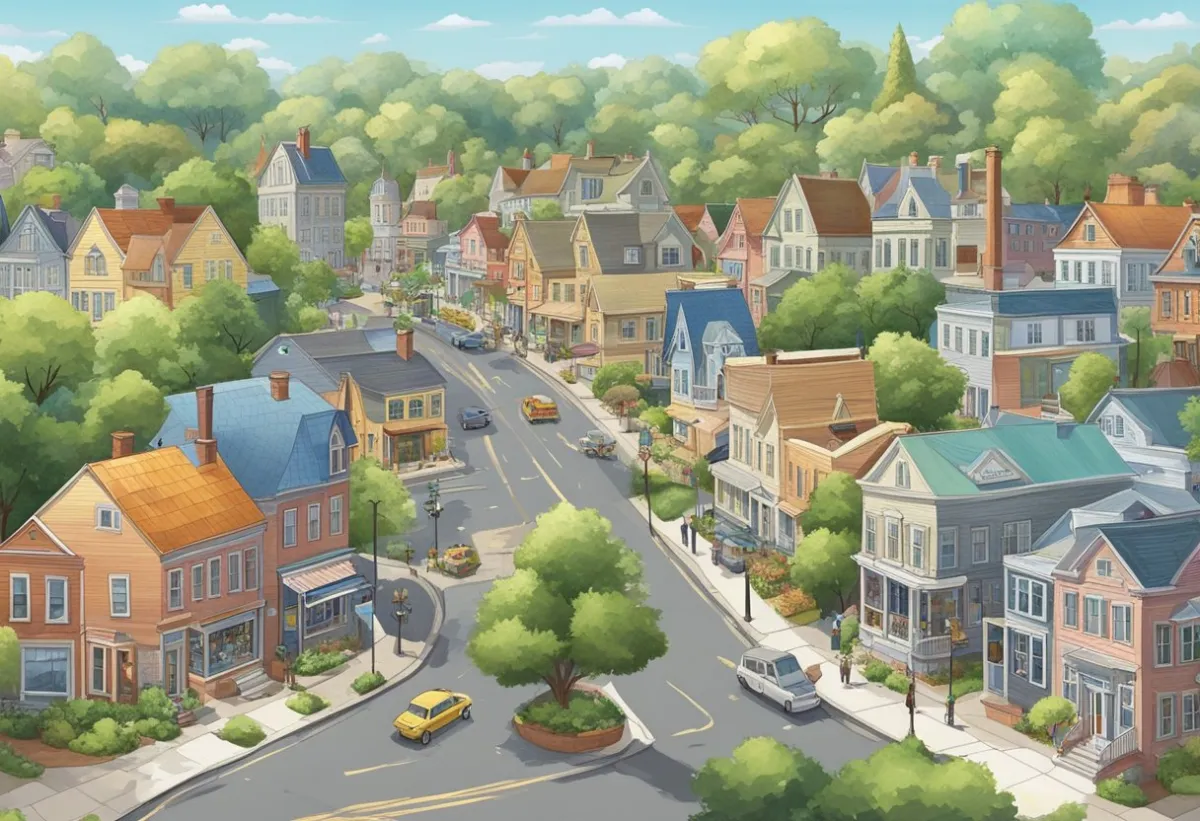 Photo: Millfield, Ohio, via koala.sh
These weren't planned discussions. They emerged naturally from the simple fact that six guys were stuck in the same room for thirty minutes with nothing to do but exist in each other's presence. The barber became a moderator, the waiting customers became an impromptu panel, and somehow real conversations happened.
Compare that to today's barbershop, where everyone sits silently, faces glowing with phone light, engaged with people and content from anywhere except the room they're actually sitting in.
The Magazine Archaeology of Waiting Rooms
Doctor's offices in 1975 were time machines. You'd find a six-month-old copy of National Geographic next to last year's Reader's Digest, creating accidental history lessons as you flipped through articles about places you'd never been and ideas you'd never considered.
 Photo: National Geographic, via cdn.vox-cdn.com
Waiting for your appointment meant genuine discovery. Maybe you'd learn about deep-sea exploration, read a short story that stuck with you for years, or discover that your political opinions weren't as fixed as you thought. The randomness was the point — you encountered content you'd never actively chosen, broadening your perspective in ways that today's personalized algorithms actively prevent.
Those waiting room magazines created shared cultural reference points. Millions of Americans read the same Life magazine article about the space program or the same Good Housekeeping story about changing family dynamics. This accidental synchronization of attention helped create a more unified national conversation.
 Photo: Life magazine, via static.life.com
Bus Window Philosophy
Riding public transportation before smartphones meant watching the world go by — literally. Commuters developed the lost art of productive observation, turning routine trips into opportunities for reflection, people-watching, and genuine daydreaming.
Without podcasts or videos to consume, bus riders became accidental anthropologists. They noticed things: how neighborhoods changed from block to block, which businesses thrived and which struggled, how different people carried themselves through their daily routines. This passive observation created a deeper connection to their physical communities.
The hour-long commute became thinking time. Problems got solved, creative ideas emerged, and life decisions crystallized during those periods of enforced mental downtime. The brain, freed from constant input, could finally process and organize the day's experiences.
The Checkout Line Conversations
Grocery store lines in 1980 were social spaces. Strangers compared notes about unfamiliar vegetables, shared cooking tips, and complained about rising prices. The forced proximity of waiting created opportunities for brief but meaningful human connections.
Cashiers became neighborhood information hubs, knowing which customers had new grandchildren, who was recovering from surgery, and which families were struggling financially. The simple act of waiting in line together created micro-communities that helped people feel connected to their immediate surroundings.
Today's self-checkout lanes and phone-focused customers have eliminated these spontaneous interactions. We've gained efficiency but lost the social lubrication that helped communities function.
When Boredom Bred Creativity
Psychologists now understand something our smartphone-saturated culture has forgotten: boredom is essential for creativity. When the mind isn't constantly consuming external content, it begins making unexpected connections between existing ideas, leading to genuine insights and creative breakthroughs.
Pre-smartphone Americans experienced this regularly. Stuck in traffic without podcasts, they'd mentally replay conversations and suddenly understand what they should have said. Waiting for appointments without games to play, they'd solve work problems that had been bothering them for weeks.
Children especially benefited from unstructured mental time. Long car rides without tablets forced them to invent games, tell stories, and develop internal entertainment systems that served them throughout their lives. The phrase "I'm bored" was the starting point for imagination, not a problem to be immediately solved with digital distraction.
The Lost Art of Observation
Without constant digital input, Americans developed more sophisticated observation skills. They noticed architectural details, overheard interesting conversations, and picked up on social dynamics that today's phone-focused population completely misses.
This heightened awareness created better storytellers, more perceptive friends, and more engaged community members. People who regularly practiced the art of paying attention became more interesting themselves, with a reservoir of observed details to draw from in conversations.
Restaurant waiting areas showcased this difference perfectly. Couples talked to each other while waiting for tables. Families played simple games or discussed their days. The 20-minute wait became relationship time rather than individual screen time.
The Social Choreography of Shared Waiting
Waiting rooms, bus stops, and checkout lines developed their own unspoken social rules. People learned how to coexist peacefully in small spaces, how to signal availability for conversation, and how to respectfully maintain privacy when needed.
These skills transferred to other areas of life, creating a more socially competent population. Americans knew how to make small talk with strangers, how to read social cues, and how to navigate the delicate balance between friendliness and intrusion.
The smartphone era has atrophied these social muscles. Many young adults now experience anxiety in situations that require unstructured human interaction, having never developed the skills their grandparents took for granted.
What We've Traded Away
Modern smartphones have solved the problem of boredom so completely that we've forgotten why boredom might have been valuable. We've gained access to infinite entertainment, instant communication, and unlimited information. But we've lost something harder to quantify: the mental space that allowed for reflection, creativity, and genuine human connection.
The ability to immediately escape any moment of discomfort or emptiness has made us less resilient, less creative, and more dependent on external stimulation. We've forgotten how to be alone with our thoughts, how to find entertainment in our immediate surroundings, and how to turn waiting time into thinking time.
The Irony of Connection
We carry devices that can connect us to anyone, anywhere, at any time. Yet we're more isolated than ever from the people physically around us. The barber shop conversations, waiting room discoveries, and bus window revelations have been replaced by algorithm-curated content that confirms our existing preferences rather than challenging them.
The question isn't whether we should return to the era of magazine archaeology and forced small talk. But maybe, occasionally, we could try existing in a moment without immediately reaching for digital rescue.
Sometimes the most interesting thing happening is the thing that's actually happening right where you are.