Coast to Coast in a Cloud of Cigarette Smoke: What Flying Actually Felt Like in the 1950s
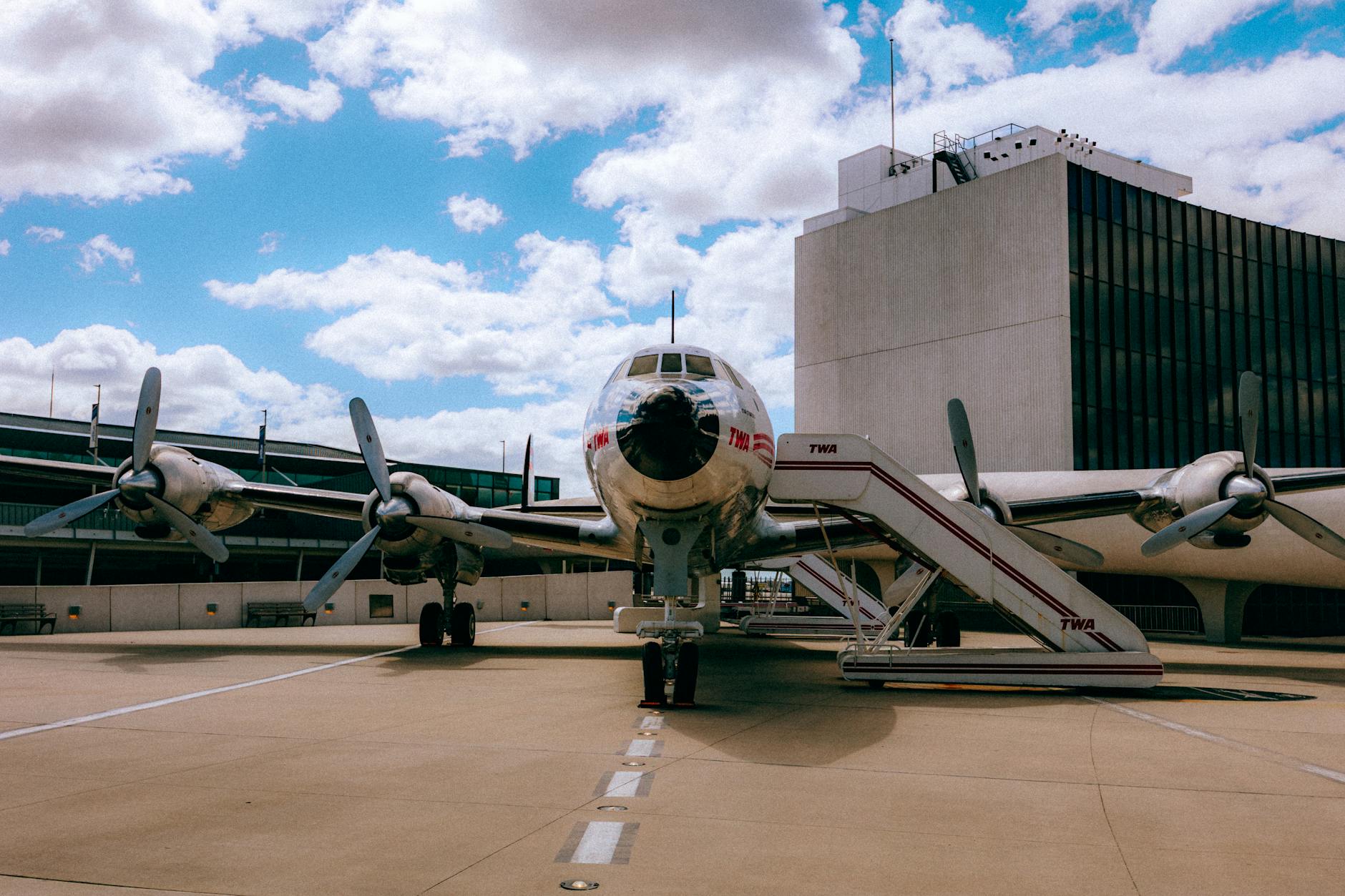
Coast to Coast in a Cloud of Cigarette Smoke: What Flying Actually Felt Like in the 1950s
Next time you're squeezing into a middle seat with a warm ginger ale and a three-hour delay, consider this: seventy years ago, the person sitting where you are would have been wearing a suit, sipping a proper cocktail, and staring out the window at a propeller spinning loud enough to rattle their teeth — for sixteen straight hours.
Air travel in America today feels like a chore. In the 1950s, it was an event.
Most Americans Had Never Left the Ground
Here's the number that reframes everything: in 1950, fewer than 15 percent of Americans had ever boarded a commercial aircraft. Flying wasn't a mode of transportation for regular people — it was something executives did, or movie stars, or the kind of person who had a secretary to handle the booking.
The reason was simple. A round-trip ticket from New York to Los Angeles in the early 1950s ran somewhere around $200 to $260. That sounds almost reasonable until you remember that the median household income in 1950 was roughly $3,300 a year. You were looking at spending close to 8 percent of your annual earnings to fly across the country once. Today, that same proportional cost would put a round-trip ticket somewhere north of $6,000. Suddenly that $280 fare on your travel app looks a little different.
For most American families, a cross-country trip meant the train — a beautiful, slow, multi-day journey that was itself considered a luxury compared to driving.
The Aircraft Were Magnificent, Slow, and Loud
The dominant workhorse of 1950s commercial aviation was the Lockheed Constellation and, later, the Douglas DC-7 — both propeller-driven aircraft that cruised at around 300 to 350 miles per hour. Compare that to the Boeing 737 or Airbus A320 you'd board today, which cruise closer to 575 mph. The physics of propeller travel meant that a New York to Los Angeles flight didn't clock in at the five or six hours we're used to — it took 14 to 16 hours, often with refueling stops in cities like Chicago or Kansas City.
And it was loud. Passengers wore earplugs or simply learned to shout. The vibration was constant. At cruising altitude, the cabins were pressurized but not always reliably so, and altitude sickness was common enough that airlines quietly kept paper bags available for reasons beyond turbulence.
Yet somehow, people dressed for it. Men in sport coats. Women in heels and gloves. The cultural expectation was that air travel deserved the same formality as a dinner reservation at a fine restaurant.
The Lounge at 20,000 Feet
If the discomfort was real, so was the glamour — and airlines leaned into it hard. Some aircraft configurations in the early jet age included stand-up cocktail lounges mid-cabin where passengers could stretch their legs, smoke cigarettes (smoking was not just permitted but expected), and socialize as though they were at a cocktail party that happened to be hurtling through the stratosphere.
Meals were served on real china, with silverware. Flight attendants — called stewardesses at the time, and required by most airlines to be single, female, and under a certain age and weight — were trained to provide something closer to fine dining service than the foil-wrapped snack distribution we know today.
Airlines competed aggressively on the quality of their food and service because they couldn't legally compete on price. The Civil Aeronautics Board regulated fares, meaning every carrier charged roughly the same amount. The battleground was experience.
The Jet Age Changed Everything — Fast
The Boeing 707, introduced to commercial service in 1958, didn't just make flying faster. It detonated the economics of the entire industry. Jet engines were faster, more fuel-efficient over long distances, and capable of carrying more passengers. The New York to Los Angeles route dropped from sixteen hours to around five and a half. Ticket prices began their long, slow decline.
By the 1970s, the percentage of Americans who had flown at least once had climbed past 50 percent. By the time deregulation hit in 1978 — when the government stepped back and let airlines actually compete on price — the transformation accelerated dramatically. Budget carriers emerged. Fares fell. Flying became, gradually, something ordinary people did.
What We've Actually Gained (and Lost)
Today, roughly 900 million passengers board domestic U.S. flights every year. The average domestic airfare, adjusted for inflation, is lower now than at almost any point in aviation history. A last-minute cross-country ticket can be had for under $200 on a bad day and under $100 if you catch a sale.
We've traded the silverware for pretzels and the cocktail lounge for a USB port. The glamour evaporated somewhere around the mid-1980s, and most of us have made our peace with that. But it's worth sitting with the scale of what changed. A mode of transport that was once accessible to roughly one in seven Americans — reserved for the wealthy, the powerful, and the adventurous — is now so routine that we complain about the Wi-Fi.
The 1950s traveler boarding a Constellation in a sport coat and earplugs, settling in for a sixteen-hour odyssey, would find today's crowded, efficient, unglamorous air travel almost incomprehensible in the best possible way.
We got exactly what we asked for. We just forgot to be impressed by it.