Before GPS and Rest Stops, Driving Across America Was a Genuine Adventure — and Not Always the Good Kind
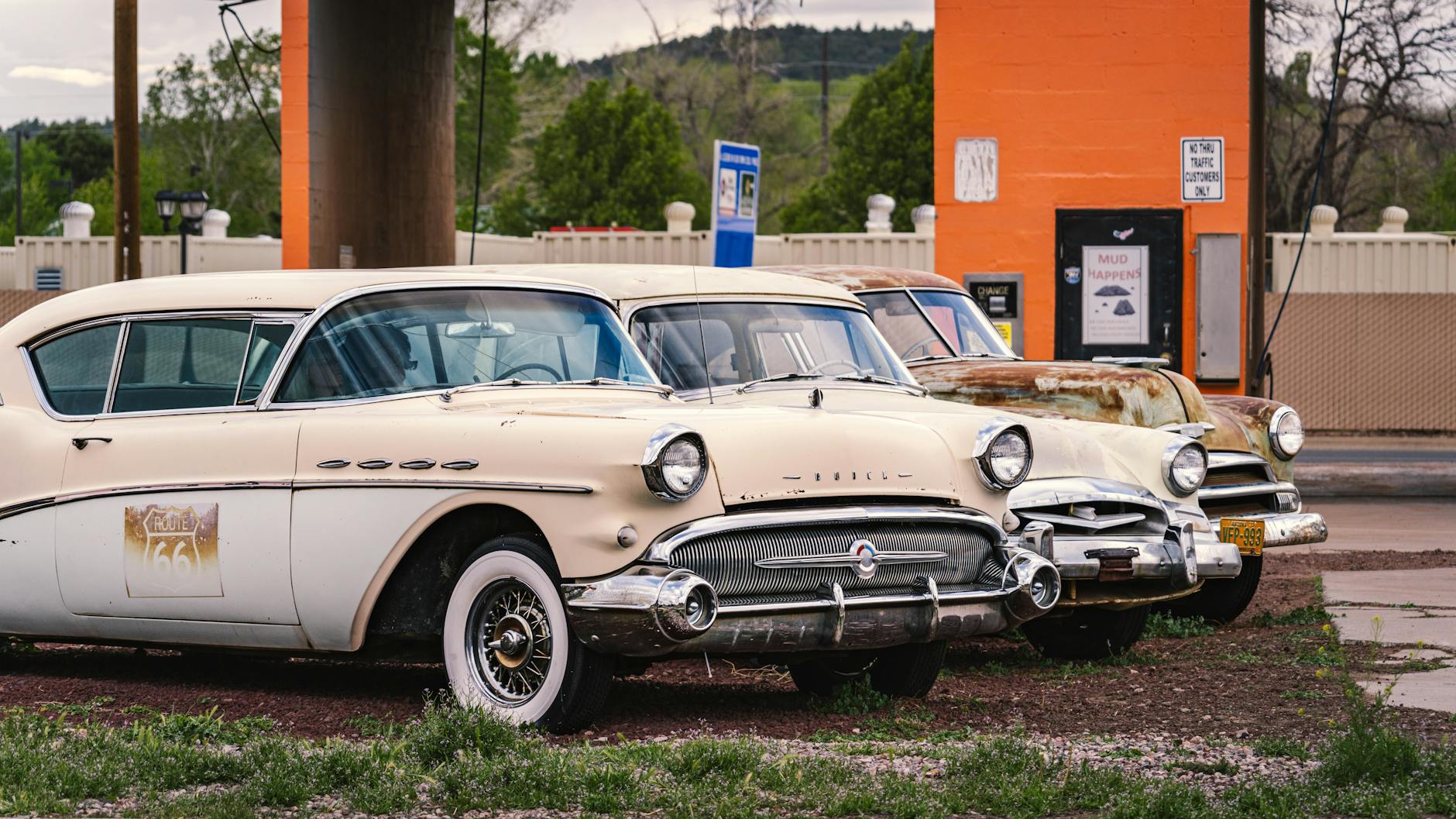
Before GPS and Rest Stops, Driving Across America Was a Genuine Adventure — and Not Always the Good Kind
There's a version of the great American road trip that lives in the cultural imagination as pure romance. Open highway, windows down, the country rolling out ahead of you. Jack Kerouac. Thelma and Louise. A cooler in the back seat and nowhere to be.
That fantasy isn't wrong, exactly. But it's missing something important — specifically, the part where you're stranded on a two-lane blacktop in rural New Mexico because your carburetor decided it was done, the nearest town is forty miles back, and your paper map has a coffee stain directly over the route you need.
The American road trip has always been a national tradition. But what it actually felt like to do one in 1960 versus today is almost incomparably different. And most people have no idea just how much the infrastructure of the journey has changed.
The Road America Had Before the Interstate
Here's the foundational fact: the Interstate Highway System, the network of limited-access freeways that most Americans now treat as a given, was not actually complete until 1992. The program was authorized in 1956 under President Eisenhower, who had been inspired partly by the German Autobahn he'd seen during World War II. But building 47,000 miles of highway across a continent-sized country takes time.
In 1960, a cross-country driver would have relied heavily on US Route 66 and other older federal highways — two-lane roads that ran directly through the center of every small town along the way. Traffic lights. Slow trucks. Main Street speed limits enforced by local police who were very aware that out-of-state plates were a revenue opportunity.
The average speed on these routes, when you factored in all the stops and slowdowns, was somewhere around 35 to 40 miles per hour. Coast to coast — roughly 2,800 miles from New York to Los Angeles — would take somewhere between 10 and 14 days if you were driving at a reasonable pace and not pushing yourself into exhaustion. Two weeks of vacation, just for the driving.
The Map Problem
Navigation deserves its own moment here, because modern drivers genuinely cannot appreciate how different it was.
You planned your route before you left, using paper maps from AAA or the gas station rack. You highlighted the roads you intended to take. You estimated mileage by hand. And then, once you were on the road, you were on your own.
There was no recalculating. No real-time traffic alerts. No satellite telling you there was a faster route four miles ahead. If you missed a turn — which happened constantly, because rural road signage in 1960 was inconsistent at best — you figured it out by backtracking, asking someone at a gas station, or just accepting the detour and updating your mental map.
Getting genuinely lost was a regular part of long-distance driving. Not the briefly-confused kind of lost you feel today before your phone sorts it out. Lost for hours. Lost in a way that cost you an entire afternoon.
Cars That Were Not Built for This
The vehicles themselves were another variable that modern drivers don't have to think about. American cars in the late 1950s and early 1960s were large, powerful, and — by today's standards — profoundly unreliable over long distances.
Overheating was common. Tire blowouts were far more frequent than they are now, partly because tire technology was less advanced and partly because road surfaces were rougher. Air conditioning was a luxury option that many families didn't have, which made crossing the Mojave Desert in July a genuinely punishing experience.
Savvy road-trippers carried spare fan belts, extra oil, a basic tool kit, and the phone number of every AAA station along their planned route. Breakdowns weren't a hypothetical — they were a budgeted-for probability. You planned for the car to need attention somewhere along the way, the same way you planned for meals.
Where You Slept, and What You Ate
The interstate infrastructure didn't just change the roads. It changed everything that grew up alongside them.
In 1960, the roadside motel landscape was a patchwork of independently owned properties with wildly variable quality. Some were perfectly fine. Others were genuinely grim. Chain motels existed — Holiday Inn opened its first location in 1952 — but the standardized, predictable roadside hospitality experience that Americans now take completely for granted was still being invented.
Food was a similar story. Diners and local restaurants dotted the route, which sounds charming and sometimes was. But if you arrived in a small town after 8 p.m., you might find everything closed. The concept of a 24-hour fast food drive-through at every highway exit — which is now so ubiquitous it barely registers — simply did not exist.
The Same Trip Today
Flip forward to 2025. A coast-to-coast drive is still a big undertaking, but it's a fundamentally different kind of challenge.
Interstates connect both coasts with limited-access highways built for sustained high-speed travel. The legal speed limit on many western interstates runs to 80 mph. A motivated driver can cover 600 miles in a single day without heroic effort. The same New York to Los Angeles journey that took two weeks in 1960 can realistically be done in four days of solid driving — or three if you're pushing it.
GPS navigation means you can make spontaneous detours and find your way back without anxiety. Roadside chains appear at virtually every exit. Rest areas with clean facilities are spaced at regular intervals. And if you're driving an EV, a growing network of fast-charging stations means even that technology is increasingly road-trip viable.
The car itself is almost absurdly more reliable. Modern vehicles are engineered to run 200,000 miles with routine maintenance. The chance of a catastrophic breakdown on a well-maintained late-model car is genuinely low — low enough that most people don't think about it at all.
What We Lost, What We Gained
There's something genuinely worth mourning in the old road trip experience. The forced slowness. The serendipitous wrong turns that led somewhere unexpected. The conversations with strangers at gas stations who knew the local roads better than any map.
But let's be honest: most of what made a 1960 cross-country drive difficult wasn't charming. It was just hard. The romance we project onto it is partly a product of distance — the same distance that makes us forget about the carburetor in New Mexico.