A Deal and a Deed: When Buying Your First Home Took One Afternoon
The Saturday Afternoon House Hunt
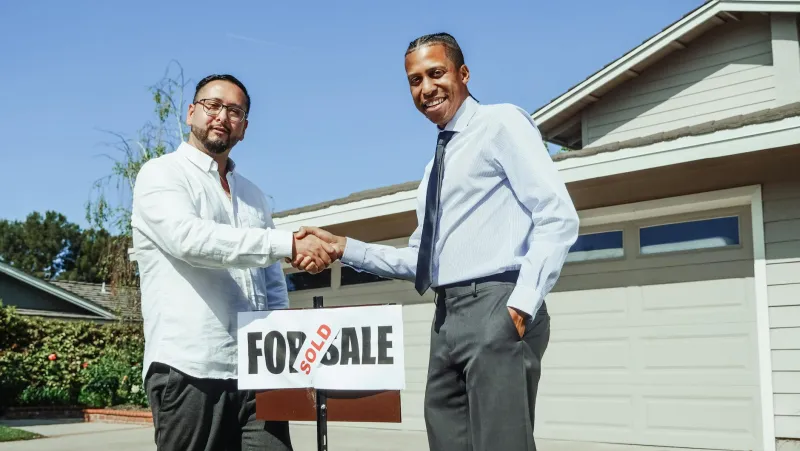
In 1962, Jim Patterson spotted a "For Sale" sign on a tidy ranch house in suburban Cleveland. He knocked on the front door, met the owner over coffee in the kitchen, and by sunset, he owned the place. No credit checks, no home inspections, no title insurance. Just a handshake, a down payment, and a simple contract scribbled on letterhead.
"We looked at the house, liked what we saw, and made a deal," Patterson recalls. "The whole thing took maybe three hours."
Today, that same transaction would require an average of 43 days, involve at least eight different professionals, and generate enough paperwork to fill a small filing cabinet. The American dream of homeownership hasn't just gotten more expensive — it's gotten exponentially more complicated.
When Trust Was the Only Insurance Policy
For most of the 20th century, buying a house was fundamentally a neighborhood transaction. Sellers were often moving to another house down the street or across town. Buyers frequently knew someone who knew someone who could vouch for the property's condition. Local banks made loans based on personal relationships rather than algorithmic risk assessments.
The paperwork was minimal because the assumptions were simple: houses were built to last, neighborhoods were stable, and people generally told the truth about what they were selling. A typical purchase agreement might run three pages, covering the basics of price, possession date, and what fixtures stayed with the house.
"My parents bought their first home in 1953 with a one-page contract," says real estate historian Margaret Chen. "The seller's word that the roof didn't leak was considered sufficient disclosure."
The Liability Revolution
Everything changed when America became a more litigious society. The 1970s and 1980s brought waves of consumer protection laws, environmental regulations, and professional liability standards that transformed real estate from a handshake business into a highly regulated industry.
Sudden discoveries of asbestos, lead paint, and underground oil tanks turned yesterday's dream homes into today's legal nightmares. Buyers who once accepted houses "as is" began demanding detailed inspections of everything from electrical systems to soil composition. Sellers, burned by lawsuits, started requiring extensive legal protection.
"We went from caveat emptor — buyer beware — to a system where everyone is trying to protect themselves from everyone else," explains real estate attorney David Morrison. "Every form, every inspection, every disclosure exists because somewhere, someone got sued."
The Professional Complex
What was once a direct negotiation between buyer and seller now involves a small army of specialists. Real estate agents, mortgage brokers, home inspectors, appraisers, title companies, insurance agents, and attorneys each play essential roles in the modern transaction.
This professionalization brought genuine benefits. Today's buyers get detailed information about a property's condition, legal status, and fair market value. Mortgage underwriting, while tedious, prevents many people from taking on debt they can't afford.
But it also created a system where no single person understands the entire process. First-time buyers often feel like they're navigating a foreign bureaucracy rather than making one of life's most important purchases.
The Digital Paper Trail
Modern real estate transactions generate staggering amounts of documentation. A typical home purchase today involves disclosure forms, inspection reports, loan applications, appraisal documents, title searches, insurance policies, and closing statements that can total 200 pages or more.
Much of this paperwork exists to satisfy regulatory requirements rather than inform the actual decision-makers. Buyers sign dozens of forms acknowledging risks they can't control and understanding processes they don't fully grasp.
"I tell my clients to budget two hours just for signing papers at closing," says mortgage broker Sarah Williams. "Most of them have never seen half these documents before that day."
What We Lost in Translation
The shift from handshake deals to bureaucratic processes reflected broader changes in American society — our increasing mobility, the decline of stable neighborhoods, and our growing reliance on institutions rather than personal relationships.
But something fundamental was lost when home buying stopped being a human-scale transaction. The seller who could tell stories about the house's quirks was replaced by disclosure forms. The local banker who knew your family was replaced by credit algorithms. The simple joy of finding a place to call home got buried under layers of professional complexity.
The New Reality
Today's homebuyers navigate a system designed to minimize risk rather than maximize satisfaction. Every protection comes with a cost — not just in money, but in time, stress, and human connection. The average closing date gets pushed back multiple times as various professionals complete their required tasks.
Yet most buyers accept this complexity as the natural order of things. They've never known a world where purchasing a house could be as straightforward as buying a car.
Perhaps that's the real measure of how much has changed: an entire generation now considers it normal that one of life's most basic needs — shelter — requires navigating a maze that would have baffled their grandparents. The handshake that once sealed the deal has been replaced by a signature on the 47th page of documents, and somehow we've convinced ourselves this represents progress.