The Friday Night Trip to Blockbuster Was a Whole Experience — and We Didn't Know We'd Miss It This Much
The Friday Night Trip to Blockbuster Was a Whole Experience — and We Didn't Know We'd Miss It This Much
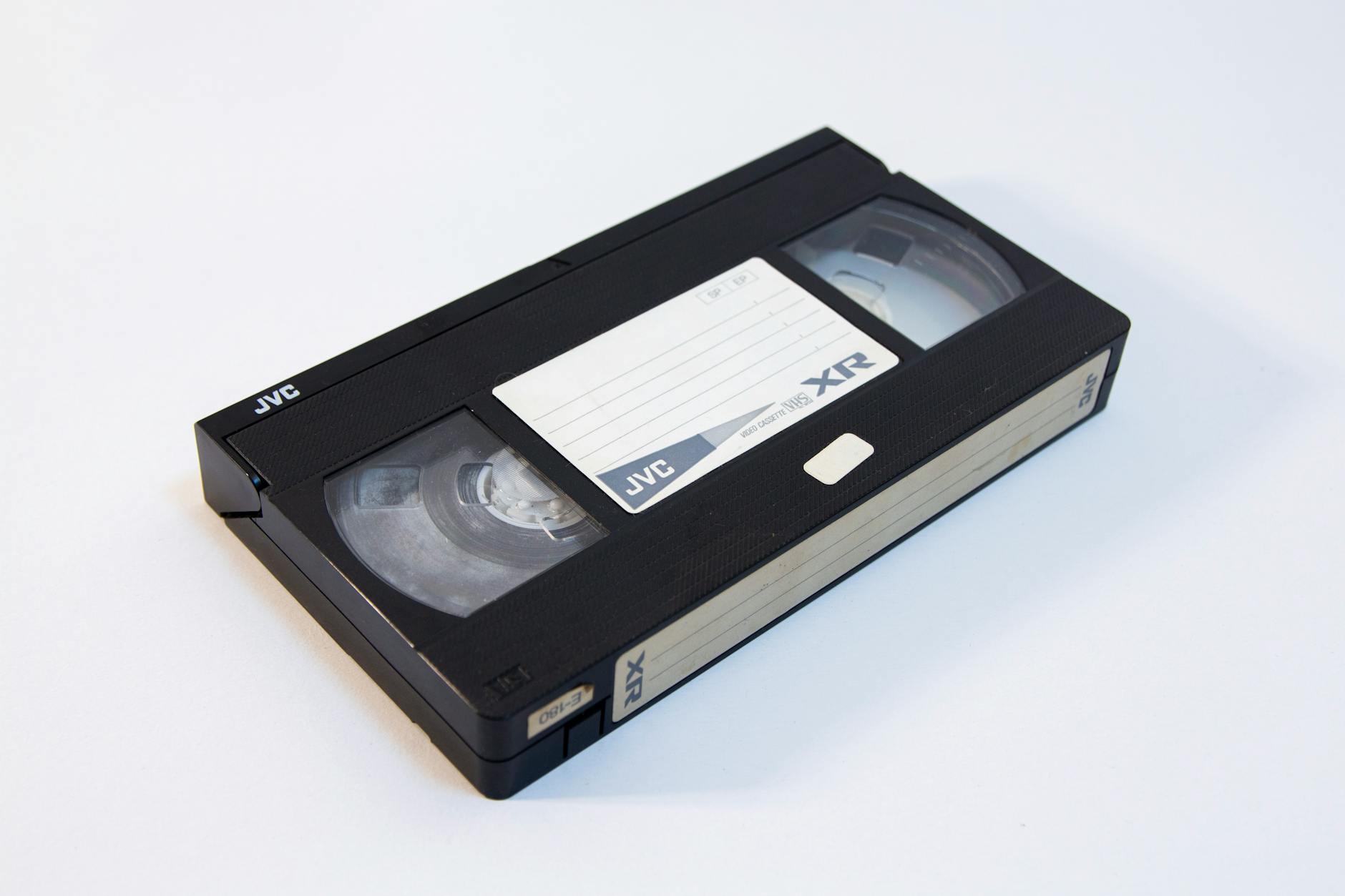
Somewhere around 9 p.m. on a Friday in 1996, a significant portion of America was doing the same thing: pulling into a strip mall parking lot, pushing open a glass door, and stepping into the particular atmosphere of a video rental store. The slightly cool air. The carpet that had seen better days. The wall of new releases along the right side, the staff picks near the front, and somewhere in the back, an entire section of action movies organized with more care than most people organized their homes.
You knew what you were looking for. You also knew there was a real chance someone had already taken it. And somehow, that uncertainty was part of the appeal.
The Ritual, Reconstructed
For anyone who grew up in the 1980s, 1990s, or early 2000s, the video store trip wasn't just a transaction. It was a Friday night activity in its own right — something you did before watching the movie, a kind of preamble that built anticipation in a way that opening a streaming app simply doesn't.
The drive over was part of it. So was the conversation in the car about what you were in the mood for. Action? Comedy? Something scary? You'd negotiate before you even arrived, then negotiate again when you discovered the movie you'd agreed on was gone.
That moment — standing in front of an empty slot where the movie you wanted should have been — was genuinely deflating. And it was also genuinely common. New releases at Blockbuster were limited to whatever physical copies the store had stocked, and on a Friday night, the good ones went fast. The store's famous policy of no late fees (eventually) helped, but it didn't solve the fundamental scarcity problem. The movie you wanted existed in a finite number of copies, and other people had gotten there first.
What happened next was the best part. You wandered. You picked things up, read the back of the case, put them down. You found something you'd completely forgotten about. A friend or your dad grabbed something off the shelf and said trust me on this one. A clerk — and video store clerks were a specific type of person, deeply opinionated about film in a way that felt slightly intense at the time and seems charming in retrospect — would lean over and ask what you were looking for, then lead you to something you'd never have found on your own.
Serendipity was built into the architecture of the place.
What the Numbers Looked Like
At its peak in the early 2000s, Blockbuster operated nearly 9,000 stores across the United States and employed around 60,000 people. An estimated 65 million people held Blockbuster membership cards. On any given Friday evening, the stores were genuinely busy — a social space in a way that's easy to forget.
The business model was built on physical scarcity and late fees (the late fees alone generated an estimated $800 million annually at the company's peak — a detail that still stings a little). You rented a physical object, returned it, and paid a penalty if you didn't. It was inefficient by almost every modern metric.
Netflix launched its DVD-by-mail service in 1998 and began streaming in 2007. Blockbuster filed for bankruptcy in 2010. The last corporate-owned Blockbuster stores closed in 2013. One franchise location in Bend, Oregon — now famous as the last Blockbuster on Earth — still operates today, partly as a business and partly as a monument to a particular era of American leisure.
The Paradox of Infinite Choice
Streaming solved the obvious problems. No driving. No late fees. No empty slots on the shelf. Access to thousands of titles from any device, any time, with no negotiation required.
And yet something strange has happened. The very abundance that streaming promised has created its own kind of paralysis. Most people with a Netflix account have had the experience of spending 20, 30, sometimes 45 minutes scrolling through an enormous library of available content and ultimately watching nothing — or defaulting back to a show they've already seen.
Psychologists have a name for this: the paradox of choice. When options multiply beyond a certain threshold, decision-making becomes harder, not easier. The friction of choosing actually increases. And without the physical, tactile experience of picking up a box and reading the back, without the social context of a recommendation from an actual human being who knew the store's inventory by heart, the choice feels abstract and somehow weightless.
The video store forced constraints. You had to pick something from what was available. That limitation, frustrating as it occasionally was, also made the decision feel meaningful. You committed to a movie. You drove home with it. You watched it.
What Was Lost, What Was Gained, and What We're Still Figuring Out
It would be dishonest to romanticize the video store without acknowledging what streaming genuinely improved. The selection on any major platform dwarfs what even the largest Blockbuster could stock. Independent and foreign films that would never have made it onto a strip-mall shelf are now accessible to anyone with a subscription. The convenience is real and significant.
But the thing that streaming can't replicate is the social texture of the experience. The video store was a neighborhood institution in a way that a streaming algorithm will never be. You ran into people you knew. You had conversations. You took a chance on something because a stranger's handwritten staff-pick card made it sound interesting.
There's a reason that lone Blockbuster in Bend draws visitors from around the world — people who want to stand in those aisles one more time, pick up a VHS case, and feel something they can't quite name but immediately recognize.
Friday night used to begin before the movie started. That part, at least, is genuinely gone.