You Used to Hear a New Song Only When the DJ Decided You Would — Then Everything Changed
You Used to Hear a New Song Only When the DJ Decided You Would — Then Everything Changed
Picture this: it's 1971. You heard a song on the radio last Tuesday — maybe three seconds of it before your mom called you for dinner — and you've had it stuck in your head ever since. You don't know the title. You're not sure of the artist. Your options are to either wait and hope the DJ plays it again, ask everyone you know if they recognize your humming, or haunt the record store until someone behind the counter takes pity on you.
That was the music discovery experience for most Americans for most of the twentieth century. And almost nobody under thirty fully grasps how strange and limiting it actually was.
The DJ Was God
In 1970, AM radio was the dominant force in American music. The FM band existed but hadn't yet become the album-oriented rock powerhouse it would turn into by the mid-70s. What you heard was almost entirely determined by a relatively small number of radio programmers and DJs who decided, each week, which forty or so songs deserved airtime in your city.
This wasn't just a minor inconvenience. It was a genuine cultural chokepoint. Regional music scenes struggled to break nationally unless a major label got behind them. Artists who didn't fit the format — too weird, too slow, too political — simply didn't reach most ears. The listener had no vote, no input, and no alternative beyond buying the record blind based on a song title and a hope.
And buying records wasn't trivial. A new vinyl LP in 1970 cost around $5 to $6 — roughly $40 in today's money. You bought carefully. You committed.
The Format Wars: Eight-Tracks to CDs
Through the 70s and 80s, the formats multiplied without ever really solving the core problem. Eight-track tapes offered portability but had a maddening habit of switching tracks mid-song. Cassettes were more flexible and, crucially, recordable — the mixtape was born, and with it the first real hint that listeners might one day curate their own experience. You could tape songs off the radio, pausing at just the right moment to cut out the DJ's voice. It was tedious, imprecise, and wildly satisfying.
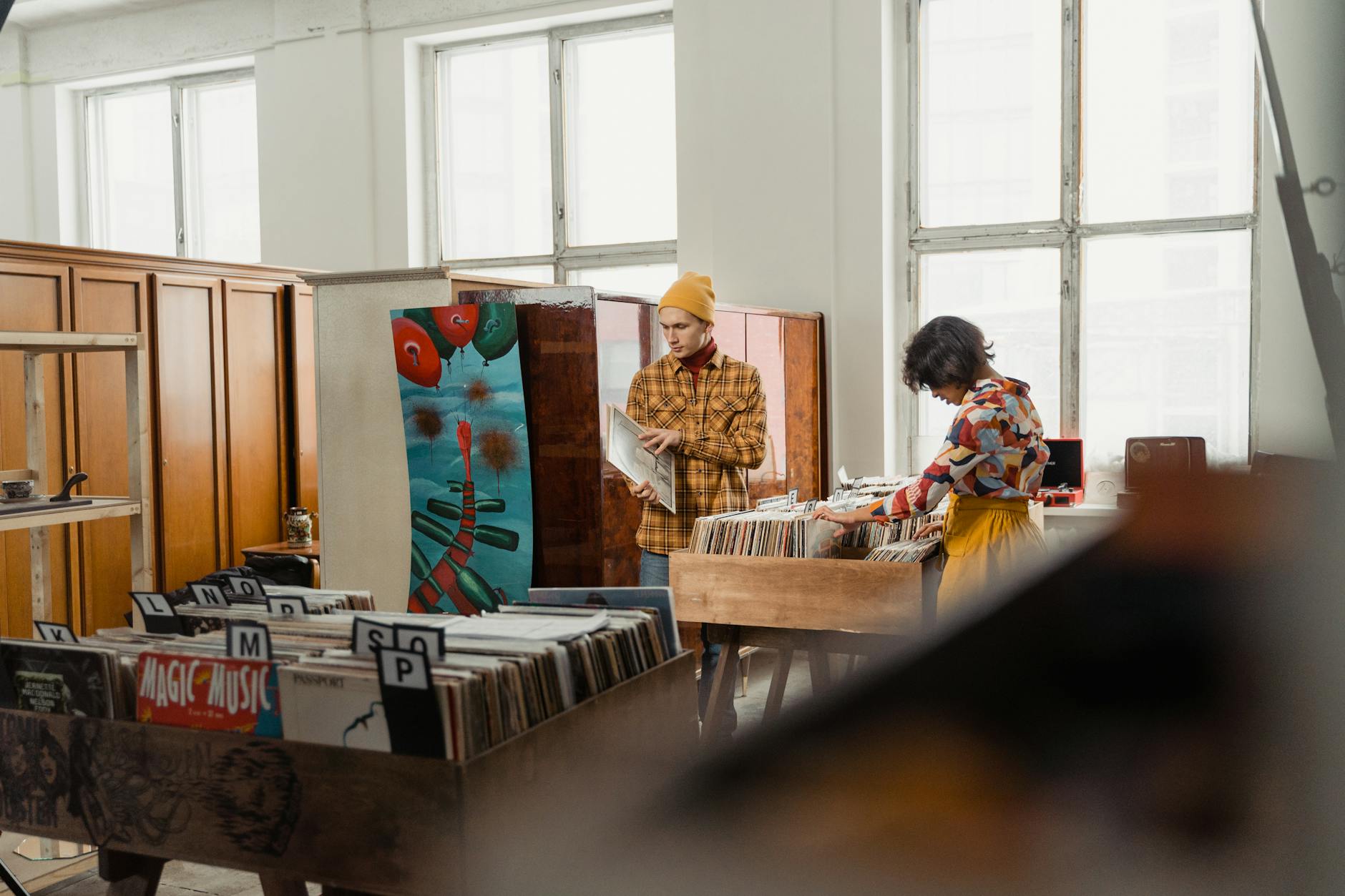
The compact disc, arriving in American stores in the early 1980s, felt like the endgame. Perfect digital audio. No degradation. Skip to any track instantly. By 1990, CD sales were overtaking cassettes. Music stores — Tower Records, Sam Goody, Coconuts — became cultural destinations, the kind of place you'd spend an entire Saturday afternoon flipping through racks, reading liner notes, making decisions.
But you were still limited to what the store stocked. And what the store stocked was what the labels decided to press. The gatekeepers hadn't gone anywhere. They'd just changed format.
Napster Blew the Door Off Its Hinges
In 1999, a nineteen-year-old named Shawn Fanning released a piece of software called Napster that, within about eighteen months, had 80 million registered users sharing music files for free over the internet. The recording industry responded with lawsuits, outrage, and a congressional hearing or two. Napster was eventually shut down in 2001.
But the idea it had released couldn't be contained. The public had tasted on-demand music and found it intoxicating. The question stopped being whether the old model would survive and became how fast it would collapse.
iTunes, launched by Apple in 2003, offered a legal middle ground — 99 cents per song, downloaded instantly, playable on your computer or your iPod. It felt revolutionary at the time. You could buy a single track without purchasing the entire album. You could carry a thousand songs in your pocket. Millions of Americans embraced it.
And yet, in hindsight, iTunes was still a purchasing model. You still owned a finite library. You were still making decisions based on what you could afford.
The Streaming Moment Nobody Fully Appreciated
Spotify launched in the United States in 2011. Apple Music, Tidal, Amazon Music — the streaming services multiplied through the 2010s until the model became the default. Today, a single $10-per-month subscription gives you access to roughly 100 million songs. Every genre. Every era. Every obscure B-side and regional act and foreign-language artist your algorithm decides you might like at 11pm on a Wednesday.
For free, with ads, you can access most of it right now without entering a credit card number.
Let that sink in against the backdrop of 1970. The person who spent forty bucks on an LP they'd heard two songs from, who waited by the radio with a cassette tape ready to record, who drove forty minutes to the city's one good record store looking for an import — that person would consider today's streaming landscape not just impressive but genuinely, almost uncomfortably magical.
The Thing We Forgot to Notice
Here's what's easy to miss in all of this: we didn't just gain convenience. We changed our entire relationship with music.
When records were expensive and access was limited, people listened differently. An album was a commitment. You knew it front to back because you'd paid for it and you were going to get your money's worth. Music discovery was a social act — you borrowed your friend's copy, you asked the guy at the record store, you traded recommendations like currency.
Today, the average listener skips a song after five seconds if it doesn't hook them. Playlists replace albums. The algorithm replaces the DJ — though it turns out we didn't eliminate the gatekeeper so much as make it invisible and give it our listening data.
None of that is a criticism. It's just a reminder of the scale of what changed. The ability to hear virtually any piece of recorded music ever made, within seconds, from a device in your pocket, is one of the most genuinely extraordinary developments in the history of human culture.
We just got so used to it that we forgot to be amazed.