
When Car Dealers Were Your Neighbors
In 1962, Tom Sullivan walked into McCarthy Ford on Main Street, shook hands with Jim McCarthy — who coached his son's Little League team — and drove home in a new Galaxie 500 two hours later. The price was $2,400, exactly what the sticker said. Jim threw in floor mats, a full tank of gas, and promised to handle any problems personally.
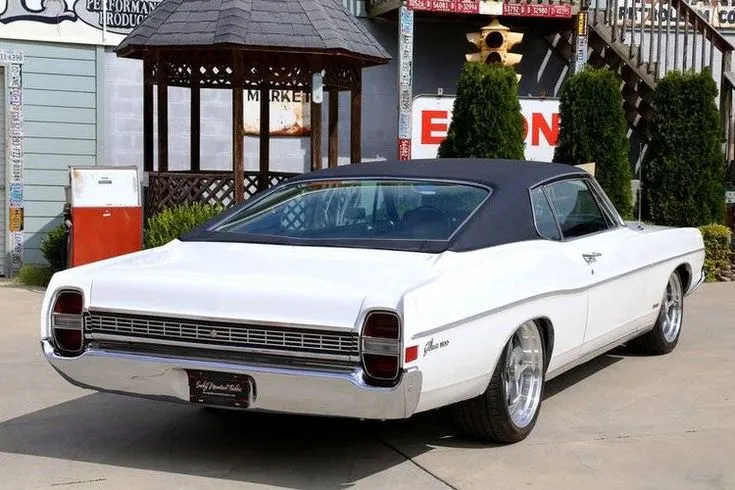 Photo: Ford Galaxie 500, via i.pinimg.com
 Photo: McCarthy Ford, via storage.googleapis.com
That transaction would be impossible today, not because the cars have changed, but because everything around them has.
Car buying in postwar America was a neighborhood affair. Dealerships were locally owned, often family businesses that had been serving the same community for decades. The owner's reputation was his most valuable asset, and that reputation lived or died based on how fairly he treated his neighbors.
The Era of the Honest Sticker Price
Back then, the sticker price was actually the price. Haggling existed, but it was brief and straightforward — maybe a hundred dollars off for cash, or free floor mats and a radio. The idea that you'd need to negotiate for three hours over phantom fees and mysterious financing terms would have seemed absurd.
Financing was equally simple. You either paid cash, arranged a loan through your bank, or the dealer handled a straightforward payment plan. Interest rates were regulated and transparent. There were no "documentation fees," no "dealer preparation charges," no "nitrogen tire inflation upgrades." The price was the price.
Trade-ins followed the same honest pattern. The dealer would walk around your old car, check the engine, and make an offer based on actual condition and market value. No hidden damage fees. No surprise deductions at signing. No complicated lease-end inspections with microscopic paint chip penalties.
When Service Meant Something
The relationship didn't end at purchase. Your dealer was also your service department, and he had a vested interest in keeping you happy for life. If something went wrong with your new Ford, you called Jim McCarthy directly. He'd either fix it immediately or give you a loaner car while they ordered parts.
This personal accountability created a virtuous cycle. Dealers sold reliable cars because their reputation depended on long-term customer satisfaction. Manufacturers built better vehicles because dealer complaints carried real weight. Everyone's incentives aligned around quality and service rather than short-term profit maximization.
Warranties were honored without argument. Recalls were handled promptly and personally. The dealer wanted you to buy your next car from him in three years, so he treated you like a neighbor, not a transaction.
The Corporate Takeover
By the 1980s, this entire ecosystem was crumbling. Manufacturers began consolidating dealerships, favoring large corporate groups over family operations. Volume discounts and factory incentives rewarded dealers who moved inventory quickly rather than those who provided superior service.
The financing game became infinitely more complex. Instead of simple loans, dealers began offering leases, balloon payments, and extended warranties with confusing terms. "Finance and insurance" became a separate profit center, with specialized staff trained to maximize revenue through add-on products.
Computer systems allowed dealers to track every aspect of the negotiation process. They knew exactly how much profit margin existed on each vehicle, which financing options generated the highest commissions, and which customers were most likely to accept overpriced add-ons.
Today's Dealership Gauntlet
Walk into a modern car dealership, and you're entering a sophisticated sales machine designed to extract maximum profit from every interaction. The process has become so adversarial that most customers arrive armed with internet research, pre-approved financing, and negotiation strategies.
A typical car purchase now involves multiple rounds of "let me check with my manager," mysterious fees that appear at the last minute, and pressure to buy extended warranties, paint protection, and other high-margin add-ons. What used to take two hours now stretches to four, six, or even eight hours of psychological warfare.
The financing office represents the final boss battle, where customers face a barrage of insurance products, service contracts, and payment protection plans. Declining these offerings often requires saying "no" fifteen or twenty times to increasingly aggressive sales pitches.
The Trust Deficit
Car dealers consistently rank among the least trusted professions in America, alongside politicians and telemarketers. This reputation isn't accidental — it's the inevitable result of a business model that prioritizes short-term profit over long-term relationships.
Modern dealerships serve customers from massive geographic areas rather than tight-knit communities. A dealer in suburban Houston might draw customers from a 50-mile radius, making personal accountability nearly impossible. If you have a bad experience, they'll never see you again anyway.
The internet has made pricing more transparent, but it's also enabled new forms of deception. "Internet pricing" often excludes fees that appear later. Online reviews can be manipulated. Even factory invoice prices — once considered the dealer's true cost — are now complicated by holdback payments, volume bonuses, and manufacturer incentives.
The Digital Disruption
Companies like Carvana, CarMax, and Tesla have recognized that traditional dealerships have become so dysfunctional that customers will pay premiums to avoid them entirely. These services offer fixed pricing, online purchasing, and home delivery — essentially returning to the simplicity of the 1960s through modern technology.
The success of these alternative models proves that customers don't actually want to negotiate for hours over car prices. They want the straightforward, honest transaction that used to be standard at every neighborhood dealership.
What We Lost on the Lot
The transformation of car buying from neighborhood transaction to corporate ordeal represents a broader shift in American business culture. We traded personal relationships for economies of scale, community accountability for shareholder value, and straightforward honesty for profit maximization.
Jim McCarthy's Ford dealership worked because everyone involved — dealer, customer, and manufacturer — lived in the same community and had to face each other at church, school events, and the grocery store. That social fabric created natural constraints on bad behavior that no amount of regulation or consumer protection laws can replicate.
The Road Back
Some manufacturers are experimenting with fixed pricing and simplified purchasing processes. Electric vehicle startups often sell directly to consumers, bypassing dealers entirely. These changes suggest the industry might be slowly returning to the transparency and simplicity that once made car buying a pleasant afternoon activity rather than a dreaded ordeal.
But until dealerships remember that their customers are also their neighbors — or until technology finally makes them obsolete — buying a car will remain one of the most stressful transactions in American life. We turned a handshake into a hostage negotiation, and we're all poorer for it.