Bread for a Nickel, Beef for a Dream: How American Grocery Bills Changed Across a Century
Bread for a Nickel, Beef for a Dream: How American Grocery Bills Changed Across a Century
There's a particular kind of shock that comes from flipping through an old newspaper and landing on the grocery ads. Eggs: 18 cents a dozen. Bread: 8 cents a loaf. Chicken: 22 cents a pound. Your first instinct is pure envy. Your second instinct, if you slow down long enough to do the math, is something closer to complicated.
Because those prices didn't exist in a vacuum. They existed alongside wages, working hours, and household budgets that looked nothing like ours today. The story of what Americans paid for food across the 20th century isn't really a story about prices at all — it's a story about proportion, sacrifice, and what it actually meant to keep a family fed.
The Early 1900s: Cheap Prices, Expensive Lives
In 1910, a loaf of bread cost around 5 to 6 cents. A pound of ground beef ran about 14 cents. Milk was roughly 8 cents a quart. On paper, that sounds extraordinary. In practice, it was anything but.
The average American factory worker in 1910 earned somewhere between $400 and $600 a year — roughly $8 to $12 a week. Feeding a family of four on that income meant that groceries could consume anywhere from 40 to 50 percent of total household earnings. There was no surplus. There was no eating out. Meals were built around whatever stretched furthest, and meat was often a luxury reserved for Sundays, if that.
Fresh produce was seasonal and local by necessity, not by choice. Refrigeration was rare in American homes until the 1920s and 1930s, which meant shopping happened frequently — small quantities, short shelf life, no room for waste. The grocery budget wasn't a line item in a spreadsheet. It was a daily negotiation.
The 1930s: When Even Cheap Food Was Out of Reach
The Great Depression didn't just cut wages — it eliminated them entirely for millions of families. Paradoxically, food prices actually fell during the early 1930s. Bread dropped below a dime. Eggs were sometimes 18 cents a dozen. And none of that mattered if you had no income at all.
For families who were employed, grocery costs in the 1930s could represent 30 to 35 percent of take-home pay. Soup kitchens and bread lines weren't feeding people who refused to buy groceries. They were feeding people for whom even Depression-era prices were impossible.
The era left a mark on American food culture that lasted for generations — a deep instinct toward frugality, an aversion to waste, and a habit of stretching ingredients that many families carried well into the postwar boom.
The Postwar Years: The First Taste of Abundance
The late 1940s and 1950s changed everything. Wages rose sharply. Refrigerators became standard. Supermarkets replaced corner grocers, bringing scale, efficiency, and lower prices. For the first time in American history, the average working family began spending less than a quarter of their income on food.
By 1955, ground beef cost around 50 cents a pound — nominally higher than 1910, but representing a far smaller share of a worker's weekly pay. A dozen eggs ran about 60 cents. Milk was around 45 cents a half-gallon. And for the first time, Americans were buying things like breakfast cereal, canned goods, and frozen dinners — convenience foods that reflected a new relationship with the kitchen.
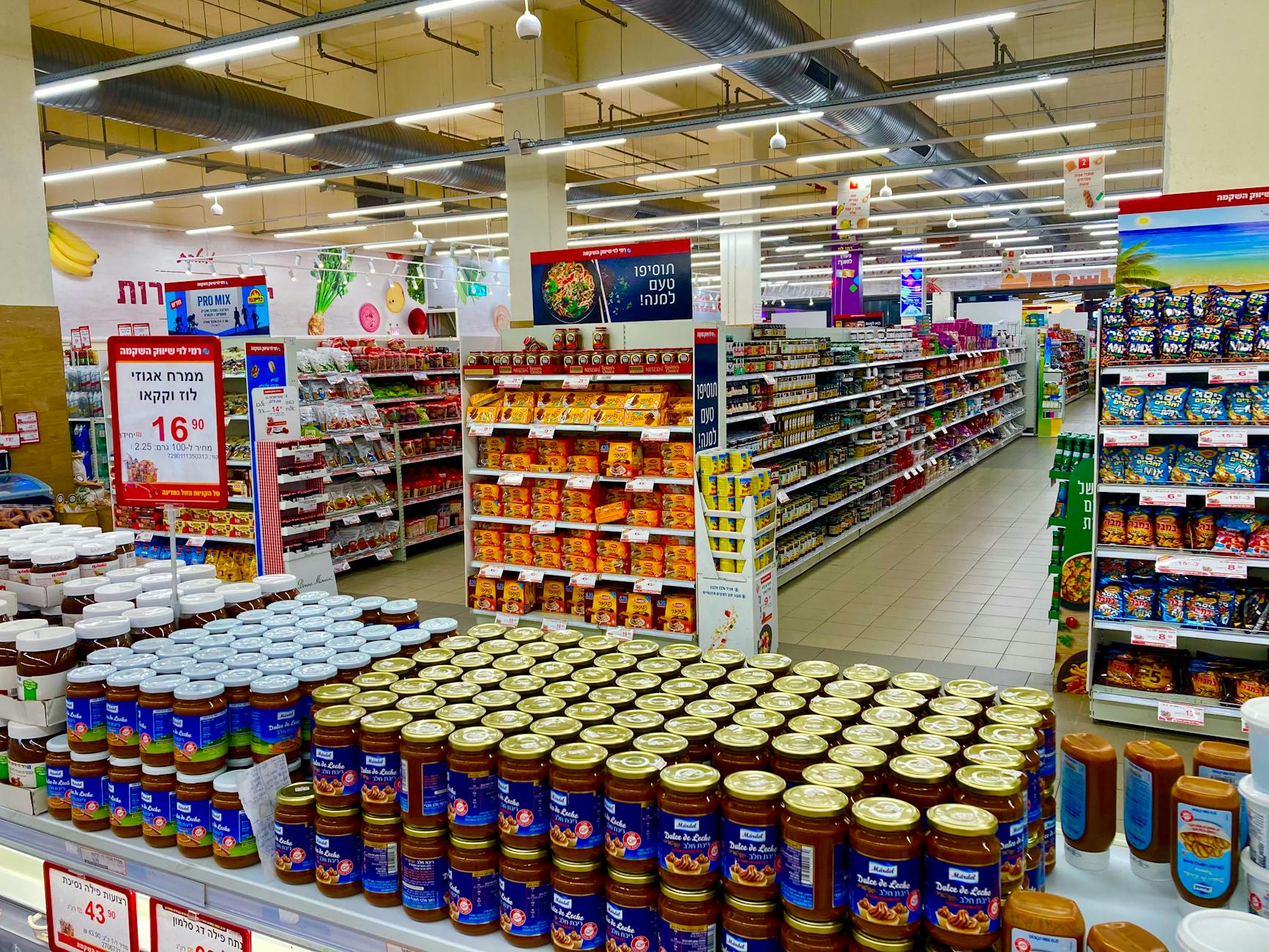
The supermarket itself became a cultural symbol. Wide aisles, fluorescent lighting, carts loaded with more food than any previous generation could have casually purchased — it was abundance made visible.
The 1970s and 1980s: Inflation Bites Back
The comfortable postwar equilibrium cracked in the 1970s. Oil shocks sent transportation and production costs soaring. Inflation ran hot, and grocery prices rose with it. Between 1970 and 1980, the price of a pound of ground beef roughly doubled. Bread nearly did the same.
For American families, this was a genuine squeeze. Wages weren't keeping pace. The share of income spent on food ticked back upward for many households. Couponing became a serious hobby. Store-brand products surged. The era gave rise to warehouse clubs and bulk buying — strategies built around the anxiety of rising prices.
Today: The Paradox of Cheap Food and Tight Budgets
Here's the number that tends to stop people: American households today spend roughly 8 to 10 percent of their income on food. That's lower than at any previous point in history, and lower than almost any other country in the world.
And yet food insecurity remains a real and persistent problem in the United States, affecting tens of millions of people. The explanation for that paradox lies in income inequality — the average figure looks comfortable, but it conceals enormous variation. For lower-income households, food can still represent 30 percent or more of take-home pay, a proportion that would feel familiar to a factory worker in 1915.
Meanwhile, the actual cost of groceries has climbed sharply in recent years. A dozen eggs that cost under $2 in 2020 was hitting $4, $5, or more by 2023 in many parts of the country. Ground beef regularly tops $6 a pound. Bread hovers around $4 to $5 for a standard loaf.
The raw numbers are unrecognizable compared to that 1910 newspaper ad. But the underlying tension — between what food costs and what families can actually afford — turns out to be surprisingly familiar.
What the Numbers Really Tell Us
The century-long arc of American grocery prices is, in the end, a story about more than food. It's about how wages, technology, trade, and policy all intersect at the kitchen table. It's about the difference between a price tag and a real cost.
That nickel loaf of bread from 1910 wasn't a bargain. It was a necessity purchased by people with very little to spare. And the $4 loaf sitting on a shelf today tells its own complicated story — about who can grab it without thinking, and who still has to do the math.