When Hollywood Was America's Church: The Death of the Saturday Movie Ritual
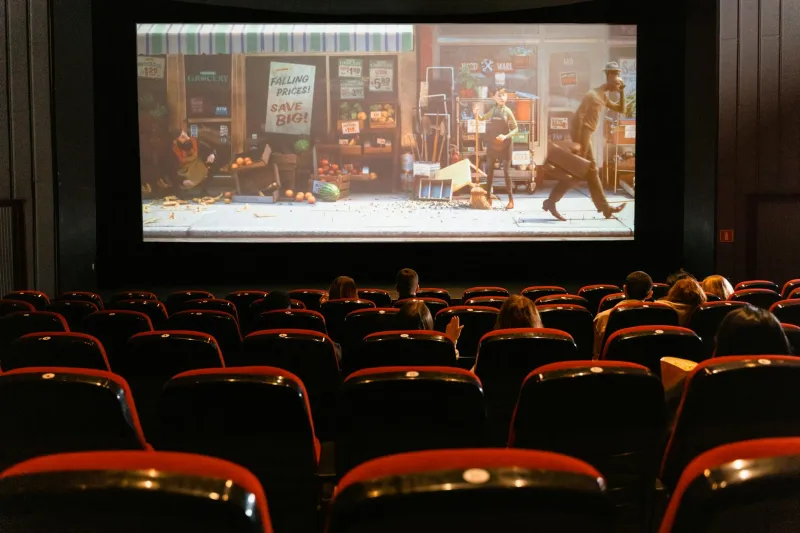
The Cathedral of Dreams
Every Saturday at 2 PM, something magical happened across America. Families would put on their best clothes—kids in pressed shirts and polished shoes, parents in their weekend finest—and walk to the neighborhood movie theater. This wasn't just entertainment; it was a pilgrimage to America's secular cathedral.
The Regal Theater on Main Street wasn't just a building with seats and a screen. It was a palace, with velvet curtains, ornate ceilings, and an usher in a crisp uniform who'd guide you to your seat with a flashlight. The air smelled of fresh popcorn and anticipation. Everyone knew the drill: arrive early, buy your candy at the concession stand, and settle in for an afternoon that would transport you somewhere else entirely.
This was moviegoing in mid-20th century America—a shared ritual that brought entire communities together under one roof, staring at the same screen, gasping at the same moments, laughing at the same jokes.
More Than Just a Movie
What we called "going to the movies" back then was actually a four-hour experience. You didn't just watch one film—you got a double feature, plus a cartoon, plus a newsreel, plus coming attractions. The newsreel was particularly important; this was how Americans learned about world events before television news became ubiquitous.
Between features, kids would rush to the lobby for more candy, teenagers would awkwardly navigate first dates in the back rows, and parents would discuss the film they'd just seen. The intermission wasn't dead time—it was social time.
The movies themselves were different too. Hollywood operated under the Production Code, which meant films were designed to bring families together, not split them apart into demographic niches. A Western playing at the Bijou was crafted to entertain grandparents, parents, and children simultaneously.
The Theater as Community Center
Your local movie theater was more than an entertainment venue—it was a community institution. The same families sat in roughly the same seats every week. Mrs. Henderson always brought her knitting. The Johnson kids always tried to sneak candy from home. Mr. Peterson, who ran the hardware store, would use intermission to catch up with customers.
Theater owners knew their audiences personally. They'd book films based on what their specific community wanted to see. If the local high school football team made it to state championships, the theater might show a sports picture the following week. During wartime, patriotic films dominated the schedule.
This personal touch extended to the experience itself. Many theaters had live organists who'd play before the show and during intermissions. Some had "Dish Nights" where women could collect pieces of china over multiple visits. Others hosted amateur talent contests or children's matinee clubs with special membership cards.
When Everything Changed
The death of this ritual didn't happen overnight—it was a slow strangulation that took decades. Television arrived first, giving families a reason to stay home on Saturday afternoons. Then came the multiplex in the 1970s, which replaced intimate neighborhood theaters with sterile mall complexes.
The double feature died. Newsreels became irrelevant. Intermissions disappeared as movies got longer and theater owners realized they could sell more tickets with continuous showings. The personal touch vanished as corporate chains bought out local theater owners.
By the 1990s, "going to the movies" meant driving to a mall, buying overpriced concessions from a teenager who didn't know your name, and sitting in a dark room with strangers watching a film designed for a specific demographic—not for everyone.
The Final Blow
If multiplexes wounded the communal movie experience, streaming services delivered the killing blow. Netflix launched its streaming service in 2007. By 2020, Americans were spending more time watching content at home than in theaters. The COVID-19 pandemic simply accelerated a trend that was already well underway.
Today, most Americans watch movies alone or with immediate family, on devices ranging from 75-inch TVs to smartphone screens. We pause when we want, rewind scenes we missed, and scroll through our phones during slow parts. We've gained convenience and lost communion.
The numbers tell the story: In 1946, Americans bought 4.1 billion movie tickets. In 2019, before the pandemic, that number was just 1.2 billion—despite the population nearly doubling.
What We Lost
When we killed the Saturday matinee, we lost more than just a way to watch movies. We lost a shared cultural experience that bound communities together. We lost the anticipation of waiting a week to see how the serial would continue. We lost the democracy of the double feature, where a B-movie might surprise you more than the main attraction.
Most importantly, we lost the ritual itself—the act of leaving our homes, dressing up, and gathering with our neighbors to dream the same dreams for a few hours. In our rush toward convenience and personalization, we forgot that some experiences are better when they're shared.
The movies are still with us, of course. But moviegoing—that sacred Saturday afternoon pilgrimage to America's secular church—is largely a memory now, preserved only in the stories of those who remember when Hollywood wasn't just in our pockets, but in our hearts.