She Needed a Chaperone Just to Dance. What Women's Nights Out Looked Like 100 Years Ago
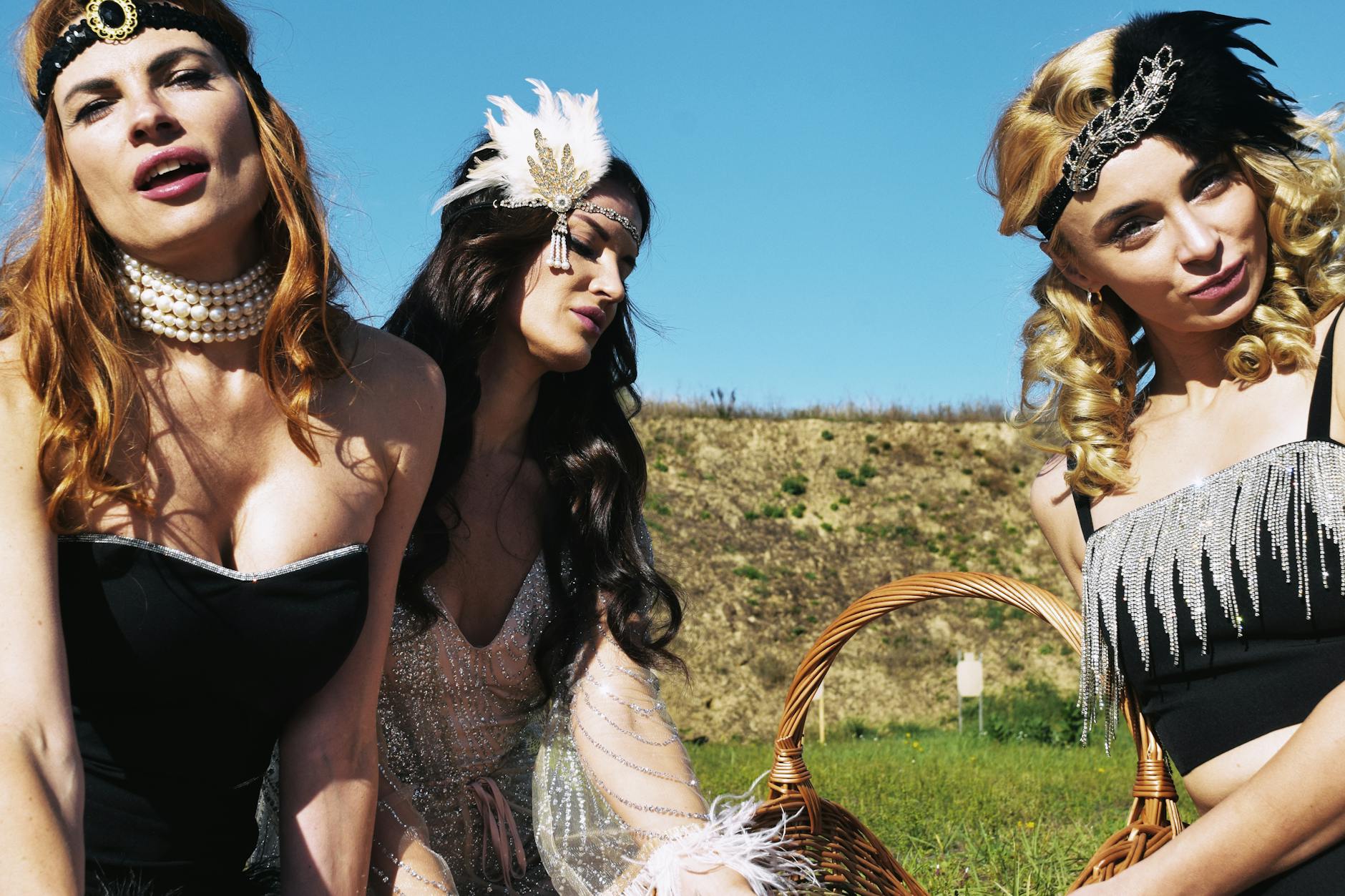
She Needed a Chaperone Just to Dance. What Women's Nights Out Looked Like 100 Years Ago
Picture this: it's 1924, and your great-grandmother wants to go out with her girlfriends on a Friday night. Before she even gets to the door, she has to clear it with her father — or her husband, if she's married. She'll need someone to accompany her. The venue has to be respectable. Her skirt can't be too short. And she absolutely cannot be seen drinking in public, because Prohibition is in full swing and the speakeasy she's secretly dying to visit is, technically, illegal.
Now picture this: it's 2025, and you open an app, reserve a rooftop bar, split a charcuterie board with three friends, and finish the night at a karaoke spot nobody planned on. No permission required. No guardian in sight. The only dress code is whatever you felt like wearing.
The distance between those two Friday nights is not just a century of calendar pages. It's a complete reinvention of what it means for women to socialize freely.
The Flapper Moment: Freedom With an Asterisk
The 1920s flapper is the symbol we reach for when we talk about women breaking loose. And honestly, the flappers were revolutionary. They bobbed their hair, raised their hemlines, and walked into jazz clubs with a confidence that scandalized polite society. For the first time in American life, young women were visibly claiming public space for themselves.
But it's worth pausing on how conditional that freedom actually was.
Most flappers came from middle-class or wealthy urban families. The speakeasies they frequented were underground, which meant they were technically operating outside the law — and that gave women a certain cover, because everyone there was bending the rules. The social rebellion was real, but it was also fragile. A woman's reputation could still be destroyed by the wrong rumor, the wrong neighborhood, or being seen leaving the wrong establishment at the wrong hour.
Chaperones weren't always legally required, but they were socially enforced. Young unmarried women were expected to move through public spaces with supervision, and venues catering to respectable clientele made that expectation very clear. Dancing with a stranger? Acceptable in some circles. Dancing alone? Absolutely not.
The Long Freeze: Mid-Century Pullback
Here's the part of the story that often gets skipped: after the jazz age wound down and the Great Depression hit, a lot of that social momentum stalled out. The 1930s and 1940s brought economic hardship and wartime austerity. Women were encouraged to stay home, save resources, and keep things practical.
By the 1950s, American consumer culture had built an entire architecture around the domestic woman. Restaurants and bars were largely male-oriented spaces. A woman dining alone at a nice restaurant could be refused a table — seriously, some establishments had written policies about it. Bars were even more exclusionary. In many states, women couldn't legally sit at a bar counter without a male companion well into the 1960s.
A girls' night out in 1955 might mean a church social, a neighbor's living room, or a carefully chaperoned dance at the local hall. Fun, certainly. But bounded by invisible walls that most women of that era had simply learned to navigate around.
The 1970s Crack in the Wall
Second-wave feminism changed the equation in ways that rippled directly into social life. Women entered the workforce in larger numbers, earned their own paychecks, and started expecting access to the same public spaces men had always taken for granted.
The legal landscape shifted too. The Equal Credit Opportunity Act of 1974 meant women could finally open a credit card without a male co-signer — which sounds almost unbelievable today, but was a genuine barrier to financial independence for millions of American women just fifty years ago. You can't exactly fund a spontaneous night out when you can't hold your own line of credit.
By the late 1970s and into the 1980s, women's social lives started to look more recognizable to modern eyes. Happy hours, bachelorette parties, girls' weekends. The concept of women spending money on their own entertainment — and doing so openly, proudly, without apology — was becoming normalized rather than scandalous.
What a Night Out Looks Like Now
Today, the average American woman spends more on experiences — restaurants, travel, live events — than previous generations could have imagined. The bachelorette weekend industry alone is worth billions. Solo female travel has exploded into its own cultural category, with entire media ecosystems built around women exploring the world independently.
Brunch culture, in particular, is fascinating through a historical lens. The idea of women gathering on a weekend morning, occupying a restaurant for two hours, ordering multiple rounds of drinks, splitting the bill with their own cards, and lingering as long as they want — that's a picture that would have been genuinely unusual as recently as the 1960s. Now it's so ordinary it's practically a cliché.
Dress codes? Largely self-determined. Spending limits? Personal choice. Curfews? The concept barely registers.
The Winding Road to a Simple Friday Night
What's striking, when you lay it all out, is how recently these freedoms arrived. The grandmother who raised your mother may well have grown up in a world where her social life was supervised, financially dependent on a man, and physically limited to spaces deemed appropriate for women.
The flapper era gave us the image of liberation. But the actual, structural, legal, and financial freedom that makes a modern girls' night out possible? That took most of the twentieth century to build.
So the next time you're splitting a check with your friends at midnight on a Tuesday, it's worth remembering: that ordinary moment is the result of a hundred years of women insisting they deserved to be there.