Carry-On Nation: When Packing Light Meant Something Completely Different
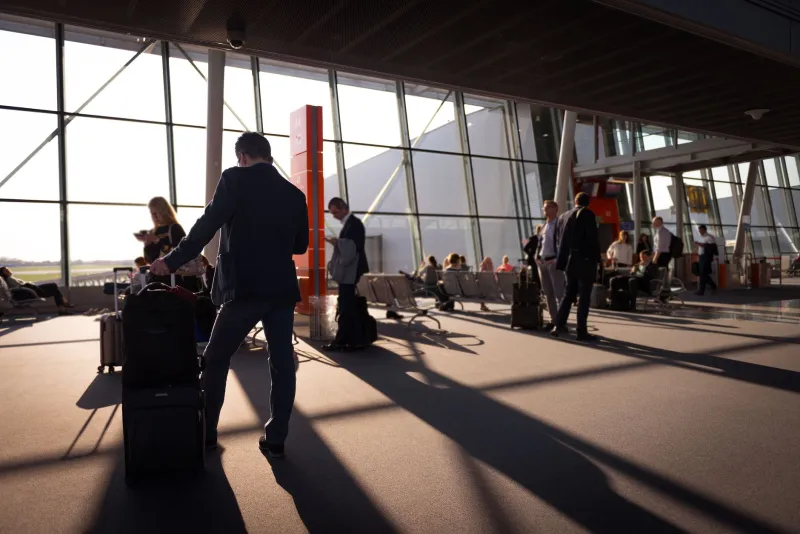
The Bag That Used to Stay in the Overhead of Your Mind
Somewhere between the golden age of commercial aviation and today's budget airline era, the simple act of packing a suitcase turned into something resembling competitive sport. What used to be an afterthought — toss in a few outfits, hand it to a porter, forget about it — is now a ritual that starts days before departure, involves color-coded packing cubes, and ends with someone sitting on a zipper.
That's not progress. That's anxiety with a luggage tag.
How Flying Used to Work
In the 1950s and 1960s, air travel was genuinely exclusive. Tickets were expensive enough that most Americans flew only a handful of times in their lives, if that. The experience was designed to feel like an occasion. People dressed for it. They arrived at the airport without the dread of a two-hour security crawl. And they checked their bags — plural, sometimes — without paying a cent extra.
Checked luggage was simply part of the ticket price. Airlines competed on service, not on how many fees they could layer onto a base fare. A family of four heading to Florida for two weeks would check several large bags and think nothing of it. The luggage would arrive at baggage claim, often in good shape, and the trip would begin.
Perhaps more interestingly, people packed for longer trips. Because flying was expensive and infrequent, travelers tended to stay longer when they went somewhere. A two-week vacation was common. Business travelers on international routes might be gone for ten days at a stretch. Packing for a longer stay meant bringing more — but it also meant packing with intention. You brought what you actually needed for a real trip, not a frantic three-day weekend squeezed between back-to-back meetings.
The Fee That Changed Everything
The tipping point came in 2008, when American Airlines became the first major U.S. carrier to charge for checked bags. Within a year, most domestic airlines had followed. What started as a revenue grab during a fuel crisis became a permanent feature of the industry — and it fundamentally rewired how Americans travel.
Almost overnight, the carry-on bag became sacred. Passengers who once checked luggage without a second thought suddenly found themselves Tetris-stacking clothing into a 22-inch roller bag, determined not to pay what eventually became $30 to $40 per checked bag, each way. On a family trip, that math adds up fast.
The result? Overhead bins became battlegrounds. Boarding groups were redesigned around who got to the bin first. Airlines began enforcing size limits more aggressively — or, in some cases, charging for carry-ons too. The luggage arms race was on.
The Rise of the Packing Influencer
Here's something that would have baffled a 1962 Pan Am passenger: there are now people on the internet whose entire platform is built around teaching others how to pack a suitcase. Packing cubes, roll-versus-fold debates, capsule wardrobe philosophies, one-bag travel evangelism — there's an entire content ecosystem dedicated to solving a problem that previous generations didn't really have.
Fast fashion plays a role here too. When clothing became cheap and disposable, the calculus of packing changed. Instead of bringing versatile, well-made pieces that could be mixed and matched across a two-week trip, many travelers now overpack with inexpensive options, wearing each item once. A study by OnePoll found that the average American brings nearly half their suitcase contents home unworn. Half. The bag weighs more, the stress is higher, and the wardrobe strategy is somehow worse.
What Frequent Flying Did to the Experience
One of the stranger ironies of modern travel is that we fly far more often than our grandparents did, but we seem to enjoy it considerably less. Domestic air travel in the U.S. has expanded dramatically since deregulation in 1978. Cheaper fares democratized flying — which is genuinely a good thing. But the volume of travel, combined with the fee structure designed to extract maximum revenue from every touchpoint, has stripped away much of the pleasure.
The mid-century traveler who flew twice a year approached each trip with a sense of occasion. The modern road warrior catching a 6 a.m. Monday flight to Dallas approaches it with a protein bar and a pair of noise-canceling headphones. The trip is compressed. The bag is engineered for efficiency. The experience is managed rather than enjoyed.
There's also the security dimension. Pre-9/11, airport arrivals were leisurely. Families walked to the gate together. Nobody removed their shoes. The idea that your toiletries would need to fit in a quart-sized plastic bag would have sounded absurd. Today, those restrictions are so normalized that most travelers under 30 have never known anything different.
Has Anything Actually Improved?
Fair question. Luggage technology is genuinely better — modern hardshell spinners are lighter and more durable than the rigid suitcases of previous decades. Packing organization products, whatever you think of the influencer culture around them, do actually help. And the democratization of air travel means that people who could never have afforded to fly in 1965 can now book a round trip for under $200.
But somewhere in that evolution, packing stopped being a simple preparation and became a performance. The overhead bin is now a status display. The carry-on is a declaration of savvy. The traveler who checks a bag is either naive or wealthy enough not to care.
The suitcase didn't just change size. It changed meaning.
And whether that's progress probably depends on whether you've ever missed a connection because someone's overstuffed duffel wouldn't fit in the overhead bin.