Dr. Johnson's Little Black Book: When Your Entire Medical History Fit in One Manila Folder
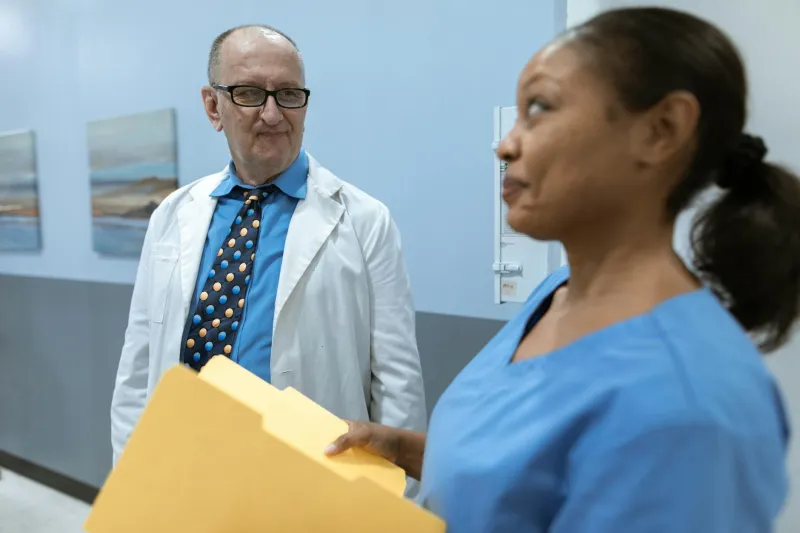
The Doctor Who Knew Your Middle Name
Dr. William Johnson kept his patient files in a gray metal cabinet behind his desk, organized alphabetically in manila folders that grew thicker with each visit. When eight-year-old Tommy Morrison came in with a suspicious cough in 1967, Dr. Johnson didn't need to ask about allergies, family history, or previous medications. He simply pulled Tommy's folder — which started the day Tommy was born — and found everything he needed to know.
The relationship was personal, the record-keeping was simple, and the continuity was absolute. One doctor, one file, one complete picture of a patient's health.
Today, that same child's medical information would be scattered across dozens of digital platforms, patient portals, and electronic health records that rarely communicate with each other. Tommy's cough would require logging into multiple systems, calling several offices, and hoping that somewhere in the digital maze, someone has the complete picture.
The Era of the Family Doctor
For most of American history, medical care was fundamentally personal. Families chose a doctor when they moved to a new town, and that relationship often lasted decades. Dr. Johnson knew that Tommy's father had diabetes, his mother struggled with anxiety, and his grandmother had died of heart disease — not because he looked it up in a computer, but because he had cared for three generations of the Morrison family.
These doctors practiced what we now call "continuity of care" without giving it a fancy name. They saw patients through pregnancies, childhood illnesses, workplace injuries, and chronic conditions. They made house calls, knew their patients' occupations and living situations, and understood how family dynamics affected health outcomes.
"My father practiced for 40 years in the same town," recalls Dr. Margaret Chen, whose father was a family physician in rural Ohio. "He could tell you not just what was wrong with a patient, but what was likely to go wrong based on their family history, their job, and their personality."
The Simple Filing System
The technology was primitive but effective. Patient records were handwritten on standard forms, with notes added chronologically as visits occurred. Lab results were stapled to pages, X-rays were filed in large envelopes, and prescription histories were tracked on simple charts.
This system had obvious limitations — files could be lost, handwriting was sometimes illegible, and sharing information with specialists required physically mailing copies. But it had one crucial advantage: everything about a patient's health was in one place, controlled by one person who knew the patient personally.
When Dr. Johnson reviewed Tommy's file before a visit, he saw the complete arc of the boy's health: his birth weight, vaccination schedule, growth patterns, previous illnesses, and family medical history. There were no gaps, no missing records, and no systems that couldn't communicate with each other.
The Specialist Revolution
The shift away from the family doctor model accelerated in the 1980s and 1990s as medical knowledge became increasingly specialized. Insurance companies began encouraging patients to see specialists directly rather than going through a primary care physician. The idea was that specialized care would be more efficient and effective.
This fragmentation brought genuine benefits. Specialists had deeper knowledge of specific conditions and access to advanced diagnostic tools. A cardiologist could detect heart problems that a family doctor might miss, and a dermatologist could identify skin cancers that would have gone unnoticed.
But it also meant that no single doctor maintained the complete picture of a patient's health. Tommy's cough might be treated by his pediatrician, but his allergies were managed by a specialist across town, his sports injuries were handled by an orthopedist, and his annual physical was conducted by whoever was available at the clinic.
The Digital Promise
Electronic health records were supposed to solve the fragmentation problem by making patient information instantly accessible to any authorized healthcare provider. The promise was seductive: imagine if every doctor, hospital, and clinic could access your complete medical history with a few keystrokes.
The reality has been far more complicated. Different healthcare systems use incompatible software platforms. Hospitals guard patient data for competitive reasons. Privacy regulations make sharing information between providers a bureaucratic nightmare.
Today, a typical American's medical information might be stored in separate systems at their primary care clinic, specialists' offices, the local hospital, urgent care centers, pharmacies, and various testing facilities. Getting these systems to communicate requires either technical integration that rarely works smoothly or patients serving as their own medical historians.
The Patient Portal Maze
Modern patients are expected to manage their own medical information through a collection of patient portals, mobile apps, and online systems. Each healthcare provider typically has its own platform with its own login credentials, interface, and limitations.
Trying to get a complete picture of your own health now requires logging into multiple systems, downloading various reports, and piecing together information that used to exist in Dr. Johnson's single manila folder. The burden of maintaining continuity has shifted from healthcare providers to patients themselves.
"I have accounts with seven different medical portals," says Chicago resident Maria Rodriguez. "None of them talk to each other, and half the time I can't remember which test result is in which system. It's like my medical history has been scattered to the wind."
What We Gained and Lost
The modern healthcare system offers undeniable advantages over Dr. Johnson's simple filing cabinet. Today's patients have access to specialists, advanced diagnostics, and treatments that weren't available in 1967. Electronic records can be backed up, searched, and analyzed in ways that paper files never could.
But we've also lost something fundamental: the doctor who knew your story. The physician who could spot patterns across years of visits, who understood how your work stress affected your blood pressure, who remembered that your mother had the same symptoms at your age.
"We've gained precision but lost wisdom," explains Dr. Robert Martinez, a family physician who has practiced for 30 years. "I can access more data about my patients than ever before, but I know less about them as people."
The Fragmented Future
As healthcare becomes increasingly digital and specialized, the fragmentation is likely to get worse before it gets better. Telemedicine, wearable devices, and AI diagnostics are generating even more data streams that don't necessarily integrate with existing systems.
Patients are becoming their own medical record keepers, expected to remember and communicate information that used to be the doctor's responsibility. The intimate relationship between patient and physician — built on years of shared history and mutual knowledge — has been replaced by a series of brief encounters with providers who may be seeing you for the first time.
Dr. Johnson's manila folder may seem primitive by today's standards, but it represented something we've struggled to recreate in the digital age: a complete, coherent, and personal approach to healthcare. In our quest for better technology, we may have forgotten that medicine, at its core, is still about human relationships and the stories that connect us across time.