The Store That Smelled Like Sawdust and Actually Solved Your Problem: America's Vanishing Hardware Culture
The Store That Smelled Like Sawdust and Actually Solved Your Problem: America's Vanishing Hardware Culture
Walk into a True Value or an Ace Hardware in 1978 and you'd hit a wall of it immediately — that particular combination of linseed oil, cut lumber, machine grease, and something vaguely metallic that had no name but was completely unmistakable. It was the smell of a place that knew exactly what it was for. And the guy behind the counter usually did too.
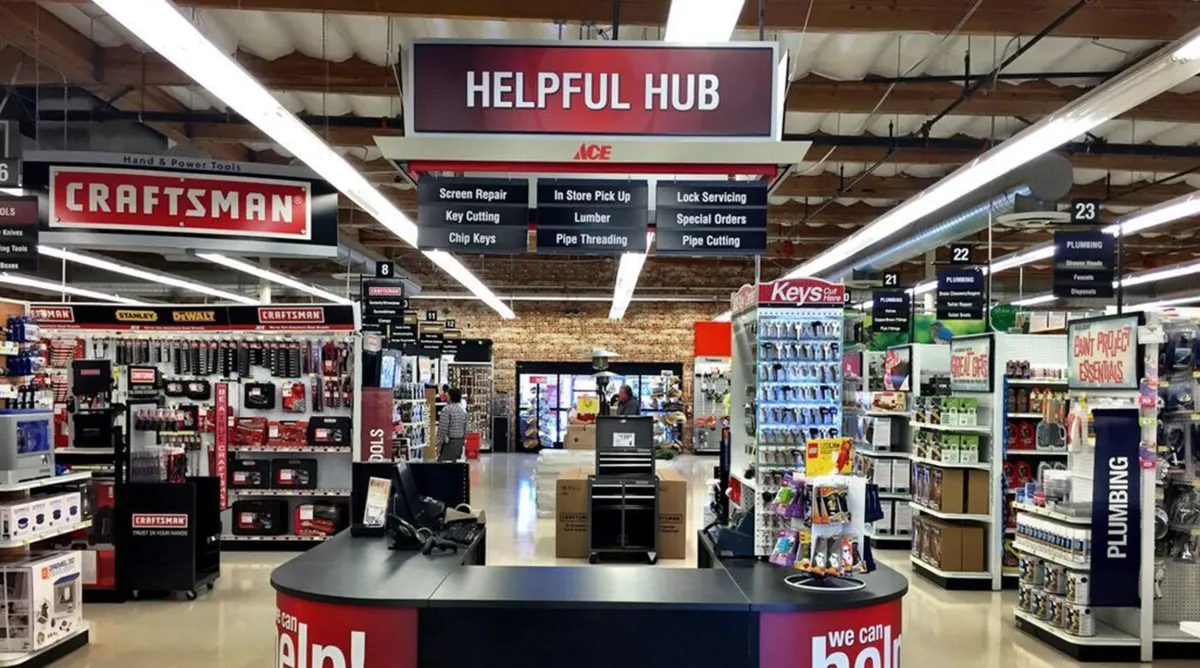 Photo: Ace Hardware, via media-s3-us-east-1.ceros.com
America's independent hardware stores were, for most of the twentieth century, something close to neighborhood institutions. Not glamorous ones — nobody was writing poems about the hardware store — but genuinely useful in the way that a good doctor or a reliable mechanic is useful. They stocked the specific things people in that specific neighborhood needed. And the person running the place had usually been running it for twenty years and could tell you, without checking a computer, exactly which aisle and which drawer held the part you were describing.
The Man Who Knew Every Bolt
The owner of a good independent hardware store occupied a particular role in American community life that we don't have a clean word for anymore. He was part merchant, part tradesman, part informal consultant. When your faucet made a noise you couldn't identify, he could often diagnose it from your description alone. When you were attempting a repair you'd never done before, he'd walk you through it while he found your parts — not because he was paid to consult, but because that's what you did when someone came in with a problem.
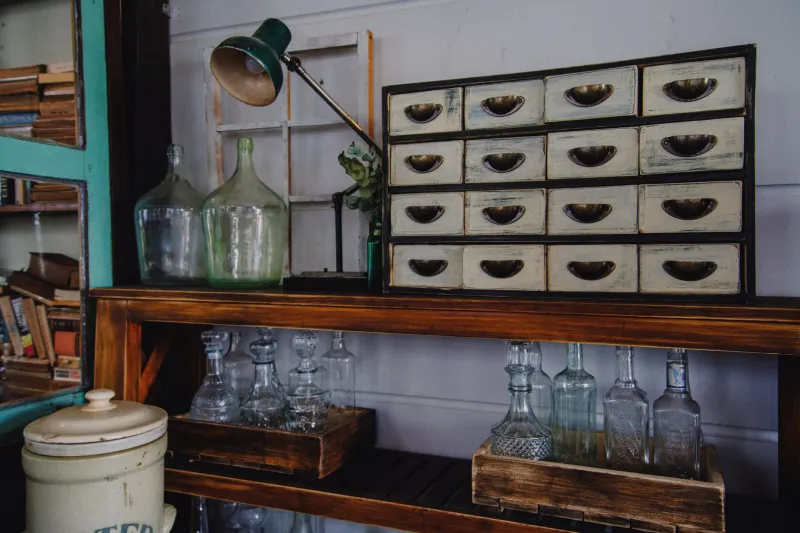
These stores were organized by a logic that looked chaotic from the outside but was completely coherent to anyone who'd spent time there. Thousands of small wooden drawers, each holding a different size of screw, washer, or fitting. Bins of loose hardware where you bought exactly what you needed — four bolts, not a blister pack of twenty. Paint mixed to match a chip you'd pulled off your porch rail. Specialty items that no chain would ever bother stocking because the margin was too thin and the demand too local.
For kids who tagged along on Saturday errands, these stores were oddly memorable. There was something genuinely interesting about a place organized entirely around fixing things. You learned, without anyone particularly trying to teach you, that houses and appliances and fences were made of specific parts with specific names, and that most problems had a physical solution if you knew what you were looking for. Hardware stores were accidental trade schools, and a lot of Americans got their first practical education in how things worked by standing next to a parent while the guy behind the counter explained a repair.
When the Orange Boxes Arrived
The Home Depot opened its first stores in Atlanta in 1979. Lowe's had been around since 1946 but expanded aggressively through the 1980s and 1990s. The pitch was straightforward and genuinely appealing: more of everything, at lower prices, all in one place. For contractors buying in volume, it was a revelation. For the average homeowner, the selection was staggering.
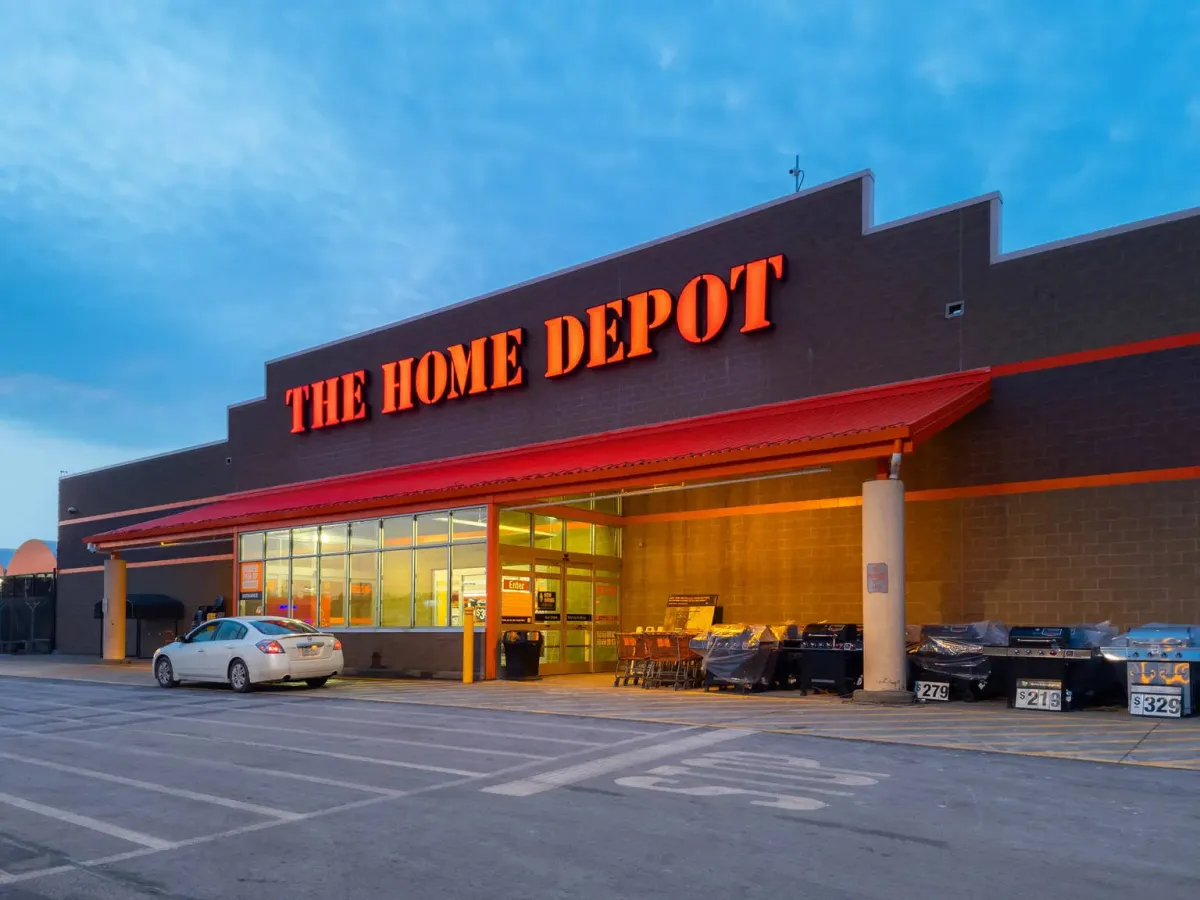 Photo: Home Depot, via wallpapers.com
What the warehouse model couldn't replicate was the knowledge. A 120,000-square-foot store requires a lot of employees to staff it, and those employees are typically generalists covering broad sections of the store rather than specialists who've spent decades in the trade. The institutional knowledge that lived in the head of an independent hardware store owner — accumulated over years of solving actual customers' actual problems — doesn't transfer to a training manual.
The independent hardware stores didn't disappear entirely. The Ace Hardware cooperative and True Value network kept thousands of independently owned stores alive by giving them buying power to compete on price. But the numbers tell a clear story: there were roughly 25,000 independent hardware stores in the United States in 1980. By the early 2000s, that number had fallen by more than half.
What Gets Lost When Scale Takes Over
The big-box model is genuinely good at certain things. The selection is extraordinary. The prices are competitive. You can buy a toilet, a riding mower, a ceiling fan, and a bag of mulch in the same trip. For large projects with standard requirements, the warehouse stores are hard to beat.
But they're notably poor at the thing the old hardware store did best: solving the weird problem. The stripped bolt from a 1987 dishwasher. The specific hinge size for a cabinet that doesn't match any current standard. The right caulk for a particular combination of materials in a damp environment. These problems require someone with accumulated knowledge and the willingness to engage with your specific situation — and that person is increasingly hard to find in an aisle staffed by a part-time employee who started last Tuesday.
The result is that a lot of Americans have quietly stopped attempting certain repairs. When the person who used to help you figure it out is gone, and the YouTube video doesn't quite match what you're looking at, the path of least resistance becomes calling a contractor — or just buying new.
The Smell You Can't Manufacture
There's still a handful of truly old-school hardware stores scattered across America, the kind that have been in the same family for three generations and still have the original wooden floors. Walk into one and the smell hits you immediately. Someone behind the counter will ask what you're working on and actually listen to the answer.
These places are worth seeking out, not just for nostalgia but for practical reasons. The knowledge stored in a good independent hardware store is genuinely useful, and it's becoming genuinely rare.
The big orange boxes aren't going anywhere. They serve a real purpose and they do it at scale. But something specific and valuable walked out the door when the neighborhood hardware store closed — something that smelled like sawdust and linseed oil and could tell you exactly which drawer had your answer.