Before Cell Phones, Getting Lost Was Just Something That Happened to You
Before Cell Phones, Getting Lost Was Just Something That Happened to You
Somewhere around 1987, a man driving alone on Interstate 80 through rural Nevada got a flat tire. No other cars in sight. No buildings visible in any direction. He changed the tire himself — he'd done it before — but in doing so he realized he'd been heading the wrong direction for the past forty minutes. He was late for a meeting in Reno. His wife didn't know where he was. His office had no way to reach him.
He drove. He found a gas station eventually. He used the pay phone. He arrived two hours late and nobody was particularly alarmed, because this was just a thing that happened.
That world — where being unreachable for hours at a time was completely normal, where emergencies played out without instant communication, where plans made in the morning couldn't be adjusted at noon — is harder to imagine today than most people realize.
The Infrastructure of Staying in Touch
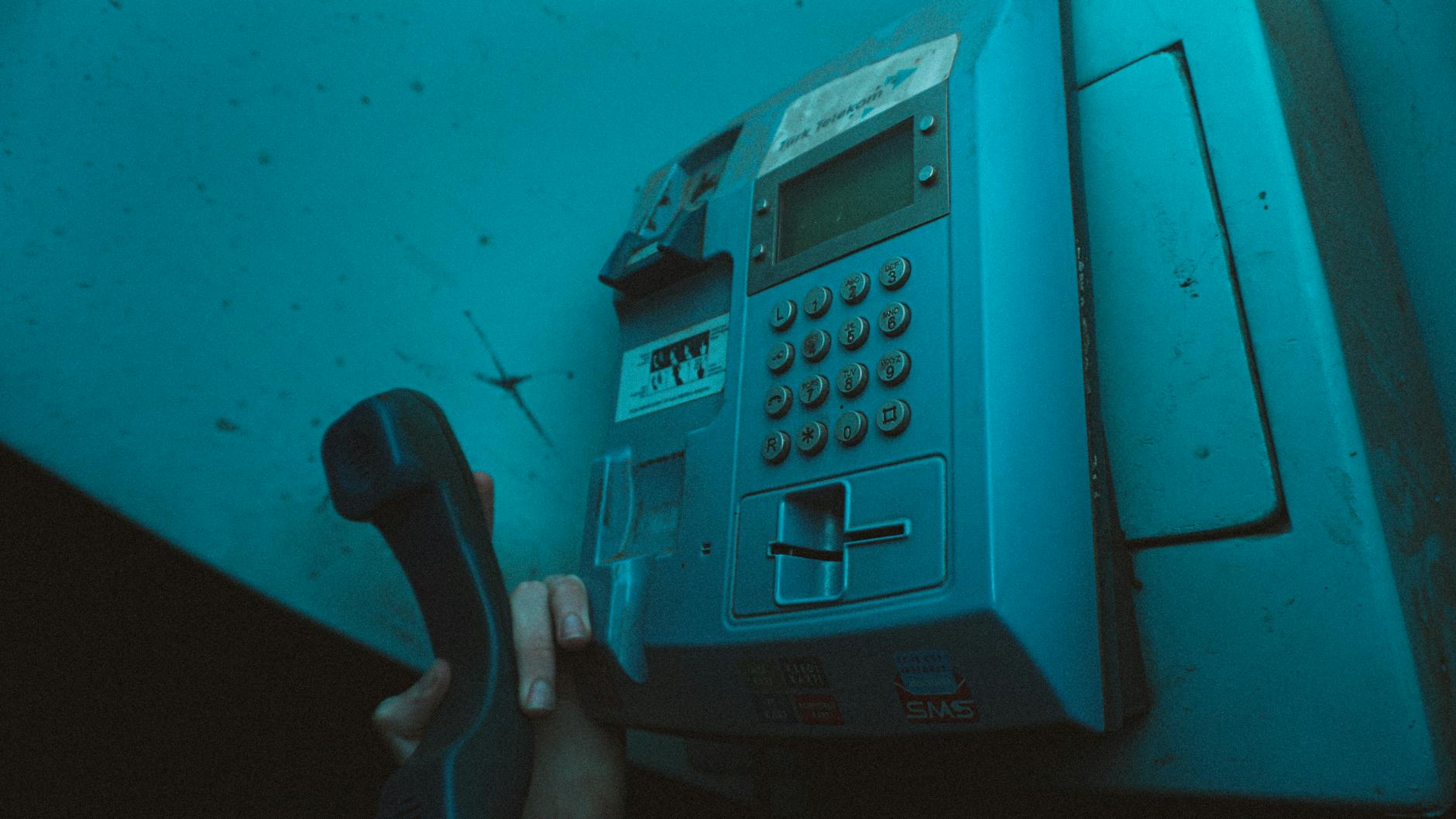
At its peak in the mid-1990s, the United States had approximately 2.6 million pay phones. They were on street corners, in gas stations, in the lobbies of hospitals and hotels, in shopping mall corridors, outside convenience stores, in airport terminals. They were the connective tissue of daily American life.
Using one cost a dime in the 1960s, a quarter through much of the 70s and 80s, and eventually 50 cents by the mid-90s as the network began its long decline. You kept change in your car. You kept change in your jacket pocket. Running out of quarters at the wrong moment was a minor but genuine crisis — the kind that could derail an evening or strand you without a way to reach anyone.
Long-distance calls from a pay phone were expensive enough that most people kept them short. You called to relay information, not to have a conversation. I'm running late. Meet me at the corner of Fifth instead. I'll be there at seven. Then you hung up before the coins ran out.
You Memorized Phone Numbers
This is the detail that tends to genuinely surprise younger readers: people knew phone numbers. Not just their own — their parents', their best friends', their workplace, their doctor's office. A reasonably social adult in 1985 probably had fifteen to twenty phone numbers stored in their head, recalled as automatically as their own address.
Today, most people can name three or four numbers from memory, if that. The contact list absorbed the cognitive load so completely that the skill simply atrophied. Ask someone under thirty for their partner's cell phone number and watch them reach for their phone to look it up.
This wasn't just a party trick. It was a survival skill. If you got separated from your group at a concert, you needed to know a number to call from the venue's pay phone. If your car broke down and a stranger offered to let you use their landline, you needed to be able to dial someone from memory. The number lived in your head or the connection didn't happen.
Making Plans Was an Act of Commitment
Here's something the pre-cell phone era demanded that we've almost entirely abandoned: specificity.
When you made plans in 1988, you made real plans. Not "let's figure it out later" or "just text me when you're close." You said: I'll meet you at the northeast entrance of the mall at 2pm. If I'm not there by 2:15, something came up and go without me. And then you showed up, because there was no mechanism for last-minute adjustment. The plan was the plan.
Canceling required effort. You had to call before you left, while you were still near a phone. Once you were in the car, you were committed. "Flaking" as a social concept existed, but the logistics of it were genuinely harder. You couldn't send a breezy text from your couch twenty minutes before arrival. You had to either show up or have made a phone call hours earlier.
Social researchers who study this period note that appointment-keeping rates were, by most measures, higher — not because people were more considerate, but because the friction of canceling was real.
Emergencies Were a Different Calculation
The thing that's hardest to reconstruct emotionally is what a roadside emergency felt like before you had a device that could summon help in thirty seconds.
A flat tire on a well-traveled road was manageable — you changed it or you waited for someone to stop. A flat tire on a rural highway at night was something else. You might wait an hour before another car passed. You might walk two miles to a farmhouse. You might sit in your locked car until dawn.
Parents of teenagers in the 1980s had a particular relationship with this anxiety. Your kid borrowed the car on a Friday night. They said they'd be home by midnight. At 12:30, you had no way to reach them — no way to know if they were fine and just running late, or broken down on the side of a road somewhere, or worse. You waited. The phone rang or it didn't. This was parenthood in the pre-mobile era: a recurring exercise in accepting that the people you loved were sometimes simply out of reach.
The Pay Phone's Long Goodbye
The decline, when it came, was swift. Cell phone adoption hit roughly 50 percent of American adults around 2000. Pay phone revenues collapsed almost immediately. By 2007, the number of active pay phones had dropped below 500,000. Today, a few thousand remain — mostly in places with no cell coverage, or as a kind of urban artifact, like the last eight remaining pay phone booths in New York City, which were preserved as historical landmarks when the city finally decommissioned its last public pay phone in 2022.
Most Americans under 25 have never used one.
What We Actually Left Behind
Nobody is arguing we should go back. The ability to call 911 from anywhere, to reach your kids instantly, to navigate an unfamiliar city without stopping to ask directions — these are genuine, meaningful improvements in daily safety and quality of life.
But there's something worth pausing on in the texture of that older world. People were unreachable, and everyone understood that. It was normal to not know where your friends were for hours at a time. Plans required real commitment because changing them was hard. Attention wasn't constantly interrupted because there was nothing in your pocket to interrupt it.
The 2.6 million pay phones didn't just connect people. In a strange way, the gaps between them — all the hours and miles where no connection was possible — shaped how Americans moved through the world. With more patience, maybe. With more presence, certainly.
The man on I-80 with the flat tire eventually made it to Reno. He told the story at dinner, everyone laughed, and by the following week it had already become just another unremarkable Tuesday.