Pin the Tail and Pass the Cake: When Birthday Parties Happened in Backyards, Not Bank Accounts
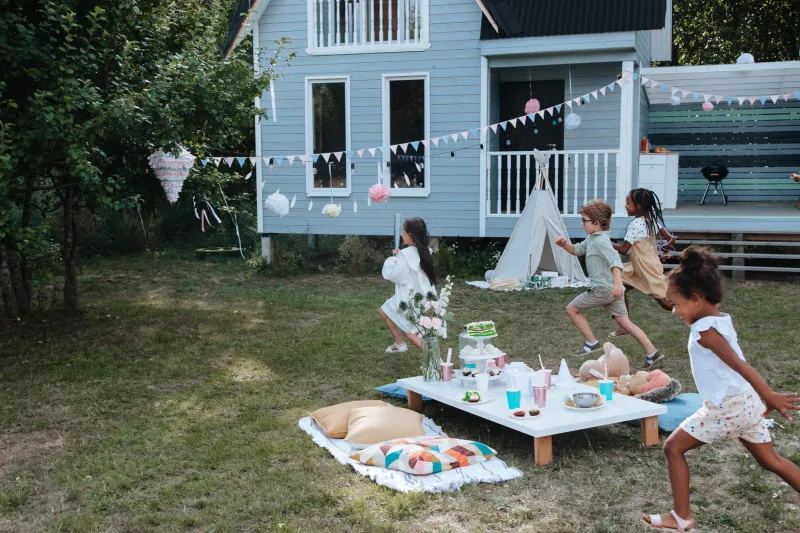
When Parties Happened Because Kids Existed
Mrs. Henderson would tape a handwritten note to her front door: "Tommy's Birthday Party Today — 2 PM." That was it. No RSVP required, no themed decorations ordered six weeks in advance, no stress about whether the entertainment would be Instagram-worthy. Kids from the neighborhood would just show up, usually bringing nothing but themselves and maybe a toy they'd wrapped in newspaper.
This wasn't poor planning. This was how birthday parties worked when the point was celebrating a kid, not impressing other parents.
The Democracy of Backyard Celebrations
In the 1960s and 70s, most kids' birthday parties followed the same basic formula: cake baked from a Duncan Hines box, games that required nothing but imagination, and decorations that came from the five-and-dime store. The birthday child might get to choose between chocolate and vanilla cake, but beyond that, parties were refreshingly predictable.
 Photo: Duncan Hines, via www.smartsheet.com
The games were universal: Pin the Tail on the Donkey, Musical Chairs, Red Light Green Light. No one hired a clown or rented a bouncy castle because those things didn't exist in most neighborhoods. Instead, someone's dad would organize a water balloon fight in the backyard, or the kids would play Hide and Seek until the streetlights came on.
 Photo: Musical Chairs, via i.pinimg.com
 Photo: Pin the Tail on the Donkey, via www.comeprevenire.it
When the Whole Street Was Invited
The guest list was simple: every kid within shouting distance of the birthday child's house. There was no careful social curation, no anxiety about whether inviting one child might hurt another's feelings. If you lived on the block and you were roughly the same age, you were invited. Period.
This democratic approach meant birthday parties often had twenty or thirty kids, but nobody worried about the cost because the expenses were minimal. Hot dogs, potato chips, and soda were the standard party food. The birthday cake was the only thing that mattered, and even that was usually homemade by someone's mother who knew how to make frosting roses with a butter knife.
The Art of Cheap Entertainment
Without Pinterest to consult or party supply stores to raid, parents had to be creative with what they had. A bedsheet became a parachute for group games. Empty boxes turned into a treasure hunt. Someone always had a deck of cards for games that could last hours.
The entertainment was the kids themselves. They made up games, told jokes that weren't funny, and ran around until they were exhausted. The adults mostly stayed inside, checking on things occasionally but trusting that children could figure out how to have fun without professional guidance.
From Backyard to Budget Buster
Today's birthday parties have become elaborate productions that require months of planning and budgets that would have fed a 1970s family for weeks. Parents book venues, hire entertainers, order custom cakes, and create themed decorations that will be photographed extensively and thrown away immediately afterward.
The average American family now spends over $400 on a child's birthday party. That's more than many families spent on Christmas presents in the 1960s. What started as a simple celebration of another year of life has transformed into a competitive display of parental creativity and financial resources.
The Pressure of Pinterest Perfection
Social media has turned children's birthday parties into performance art. Parents feel pressure to create events that look good in photos, complete with coordinated color schemes, elaborate decorations, and activities that will generate the right kind of social media content.
The focus has shifted from making the birthday child happy to creating an experience that will impress other adults. Kids get lost in the shuffle of themed everything, professional photographers, and parties that are more about the parents' Pinterest boards than the child's actual interests.
When Simple Was Sufficient
The old backyard birthday parties weren't elaborate, but they were memorable in ways that today's expensive productions often aren't. Kids remember the games they played, the friends who showed up, and the feeling of being celebrated by their community. They don't remember the decorations or the entertainment budget.
There was something powerful about the simplicity. When a party's success depended on whether the birthday child had fun rather than whether it looked good on Instagram, the focus stayed where it belonged: on the kid whose birthday it was.
The Village That Showed Up
Perhaps most importantly, those neighborhood birthday parties were community events. Parents knew each other, kids played together regularly, and celebrating one child felt like celebrating everyone. The party wasn't an isolated event but part of the ongoing life of the neighborhood.
Today's birthday parties often bring together children who barely know each other, supervised by parents who are meeting for the first time. The social connections that once made birthday parties feel like genuine celebrations have been replaced by the logistics of managing an event.
What We Gained and What We Lost
Modern birthday parties are certainly more elaborate and often more exciting than their backyard predecessors. Kids today get experiences that would have seemed impossible to previous generations: laser tag, escape rooms, elaborate themed parties that transform ordinary spaces into fantasy worlds.
But in our quest to make birthdays more special, we may have made them less meaningful. When every party is a production, no party feels particularly special. When the focus is on impressing other parents rather than celebrating the child, something essential gets lost in the translation.
The handwritten invitation taped to the front door wasn't just a way to announce a party. It was an invitation to community, a reminder that celebrating one child was everyone's job, and a promise that showing up was enough.