Six O'Clock Sharp: The Dinner Table That Once Ran the American Household
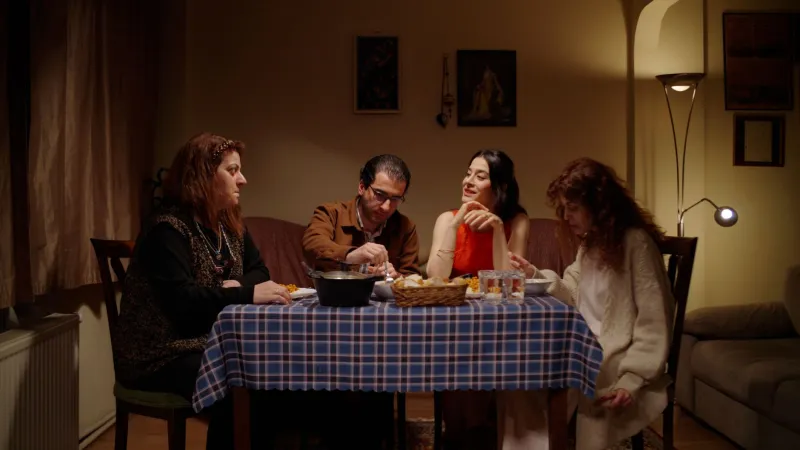
When Dinner Was Non-Negotiable
There was a time, not so long ago, when six o'clock meant one thing in most American homes: everyone sat down to eat. Not suggested. Not optional. Not penciled in between soccer practice and a Netflix queue. Dinner was the fixed point around which the rest of the day organized itself, and missing it without a very good reason was not something that happened twice.
The dinner table was the original family operating system. It's where news traveled, decisions got made, kids learned how adults talked about the world, and the household — for better or worse — functioned as a unit. It was imperfect, sometimes tense, occasionally boring. It was also irreplaceable in ways we're only beginning to understand now that it's largely gone.
What Actually Happened at the Table
To understand what's been lost, it helps to be specific about what dinner actually was in, say, 1962 in a typical American household.
The television, if the family owned one, was off. The phone — a single landline mounted on the kitchen wall — was ignored unless someone made the deliberate choice to answer it. The family gathered, usually within a few minutes of each other, because the schedule was predictable and the expectation was clear.
Conversation at the table served real functions. Parents shared information about the week ahead — a car repair, a relative visiting, a bill that needed attention. Kids reported on school, which meant parents actually knew what was being taught, who their children's friends were, and whether anything was going wrong. Current events entered the conversation because someone had read the newspaper that morning or caught the evening news before dinner.
This was, in the most practical sense, how information moved through a family. There was no group text. There was no shared calendar app. There was dinner.
Research has consistently supported what common sense suggests: families that eat together regularly produce children with better academic performance, lower rates of substance use, stronger communication skills, and higher self-esteem. A landmark study by the National Center on Addiction and Substance Abuse at Columbia University found that teenagers who had frequent family dinners were significantly less likely to use drugs, alcohol, or tobacco than those who rarely ate with their families. The table wasn't just feeding bodies. It was building people.
The Slow Unraveling
The decline of the family dinner didn't happen all at once. It was gradual, driven by a convergence of forces that each seemed reasonable in isolation.
The first was the expansion of after-school activities. By the 1980s and 1990s, the organized activity calendar for American children had grown substantially. Soccer leagues, dance classes, tutoring sessions, and club sports all competed with the 6 p.m. dinner window. Parents, trying to give their kids every advantage, found the family schedule increasingly fragmented.
The second was the rise of dual-income households. As more families depended on two working parents, the logistics of a shared evening meal became genuinely complicated. Someone was always arriving late, leaving early, or too exhausted to cook anything more ambitious than frozen dinners eaten in shifts.
The third — and perhaps most transformative — was the television. The TV dinner, introduced in 1953, wasn't just a food product. It was a cultural permission slip. Eating in front of the television moved from occasional treat to default setting in many homes over the following decades. By the time streaming services arrived and every family member had their own screen, the idea of a shared, screen-free meal had started to feel almost quaint.
The Scheduled Dinner and What It Reveals
Something interesting has happened in the years since the daily family dinner faded. For many households, dinner together has become a special occasion — something that requires planning, coordination, and a certain amount of effort to pull off. Sunday dinners. Birthday meals. Holiday gatherings. The family table hasn't disappeared; it's been promoted.
But promotion came with a cost. When dinner is an event rather than a routine, it carries different weight. Conversation becomes more performative. Kids who aren't used to sustained family discussion find it awkward. Parents who haven't checked in with their children's daily lives in a week have too much ground to cover and not enough time. The meal becomes either strained or superficial.
There's also a class dimension that rarely gets discussed. Research from the American Time Use Survey shows that family dinner frequency correlates strongly with household income. Higher-income families are more likely to eat together regularly — partly because they have more schedule flexibility, partly because they're more likely to have a parent at home in the evening. For lower-income households juggling multiple jobs and unpredictable hours, the structured family meal is often a genuine luxury.
What Got Lost in the Feed
Here's the piece that's hardest to quantify but easiest to feel: the dinner table was where children learned to participate in adult conversation. Not to lead it, not to dominate it — but to sit with it. To hear their parents disagree about something and watch how that got resolved. To listen to a grandparent tell a story they'd heard before and understand, slowly, why it kept being told.
That kind of ambient education doesn't happen through a screen. It doesn't happen in a car on the way to practice. It happens at a table, over food, in the ordinary repetition of showing up at the same time every day.
A 2018 study published in the Journal of Adolescent Health found that family meals were one of the strongest predictors of adolescent wellbeing across economic and demographic groups. The content of the conversation mattered less than the act of having it regularly.
Still Worth Showing Up
The dinner table isn't dead. Plenty of American families still make it work — maybe not every night, maybe not without a phone or two on the table, but with enough consistency to matter. And there's a quiet cultural counter-movement happening, driven partly by the very disconnection that technology accelerated. Cooking at home surged during the pandemic. Interest in family routines has grown. Some families are deliberately reclaiming the table as a technology-free zone, even if just a few nights a week.
It's not 1962. The schedules are real, the pressures are real, and nobody's suggesting a return to an era that had its own serious problems.
But the table itself — the idea of it, the discipline of it — still has something to offer. It always did. We just got busy enough to forget.