The Ten-Cent Sundae That Made You Dress Up: When Eating Out Was America's Special Occasion
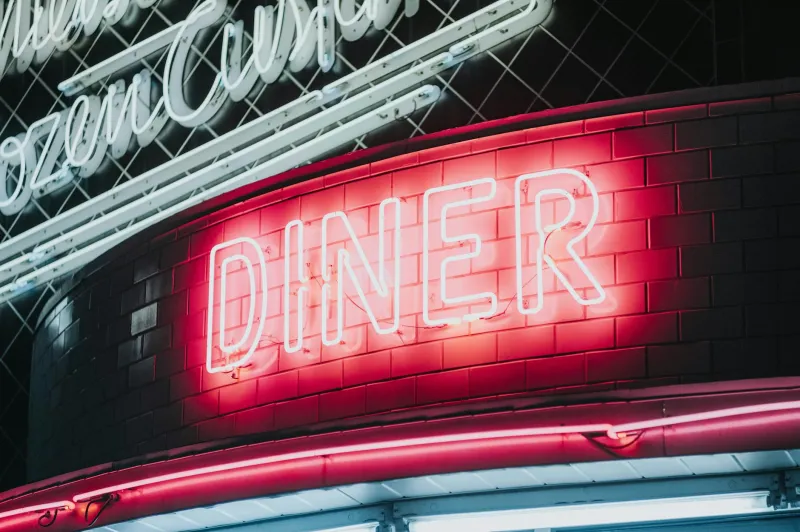
When Your Best Shirt Came Out for a Burger
Picture this: It's 1955, and your dad announces the family is going out for dinner. Not because the refrigerator is empty or because everyone's too tired to cook, but because it's a genuine occasion. Your mother disappears into the bedroom to put on her good dress and lipstick. You're told to wash your face and change into clean clothes. Even your little brother gets his hair combed down with water.
This wasn't unusual behavior for a family that had lost their minds. This was just what you did when you left the house to eat someone else's cooking.
The Ritual of Going Somewhere
In mid-century America, eating out was an event that carried real social weight. Families didn't casually swing by McDonald's in their pajamas or order Thai food to their couch on a Tuesday night. When you went to a restaurant — even just the local diner — you prepared for it like you were going somewhere that mattered.
The preparation started hours before you left the house. Mom would plan what everyone would wear, check that the car had enough gas, and sometimes even call ahead to see if the restaurant was busy. The idea of showing up somewhere in whatever clothes you happened to be wearing was as foreign as the idea of eating dinner while staring at your phone.
When a Milkshake Lasted Three Hours
Once you arrived at the restaurant, the real ritual began. You didn't rush through your meal to get back to something more important. The meal was the important thing. A family could easily spend three hours at a diner, nursing coffee refills and sharing a single piece of pie four ways.
Teenagers would meet at the local soda fountain after school and make a ten-cent Coke last until dinnertime, talking about everything and nothing while the jukebox played the same songs over and over. The idea that you needed to eat quickly and leave to make room for other customers would have seemed absurd. The restaurant was where you went to be social.
The Lost Art of Dining Conversation
Without phones to stare at or Netflix to get back to, people actually talked to each other during meals. Parents asked their kids about school and got answers longer than "fine." Couples on dates spent entire evenings learning about each other over a shared plate of French fries. The waitress knew your name and your usual order, and she had time to chat because nobody was in a hurry to leave.
Restaurants were designed for lingering. Booths were comfortable enough to sit in for hours. Tables were big enough for everyone to lean in and hear each other talk. The lighting was warm and inviting, not the harsh fluorescent glare designed to move customers through as quickly as possible.
From Special Occasion to Daily Habit
Today, the average American eats out more than four times per week. What was once a rare treat has become so routine that we order dinner through an app while watching TV in our underwear. We eat alone at our desks, in our cars, and standing over the kitchen sink. The idea of getting dressed up to go anywhere for food feels almost quaint.
The shift happened gradually, then all at once. Drive-throughs in the 1970s made eating out faster and more casual. Fast food chains multiplied across the country, turning restaurant meals into quick fuel stops rather than social experiences. Then came delivery apps that brought restaurant food directly to our doors, eliminating even the minimal effort of getting in the car.
What We Lost When Eating Out Became Ordinary
Somewhere in our rush toward convenience, we lost something valuable: the idea that sharing a meal could be an event worth preparing for. When everything is convenient, nothing feels special. When you can have restaurant food delivered to your couch in twenty minutes, the anticipation and ritual that once made eating out memorable disappears.
The old way wasn't perfect. It was less convenient, more expensive relative to home cooking, and certainly less accessible to families with busy schedules. But there was something powerful about the collective agreement that eating someone else's cooking, in their space, was worth putting on your good clothes and spending real time together.
The Vanishing Third Place
Restaurants and diners once served as what sociologists call "third places" — spaces that weren't home or work, where communities gathered informally. The local diner was where you caught up on neighborhood news, where teenagers learned to socialize, where business deals were made over coffee that cost a nickel and came with unlimited refills.
Today's restaurants are optimized for efficiency, not community. Tables are smaller, music is louder, and turnover is everything. The staff doesn't have time to chat, and customers don't expect them to. We've gained speed and convenience, but we've lost the slow, unstructured social time that once made eating out feel like a small celebration.
The ten-cent milkshake that lasted all afternoon wasn't just about the ice cream. It was about having a place to go, people to see, and time to waste in the best possible way. In our rush to make everything faster and easier, we forgot that some things are worth slowing down for.