The Bells That Taught America to Wait: When Neighborhood Commerce Came to You
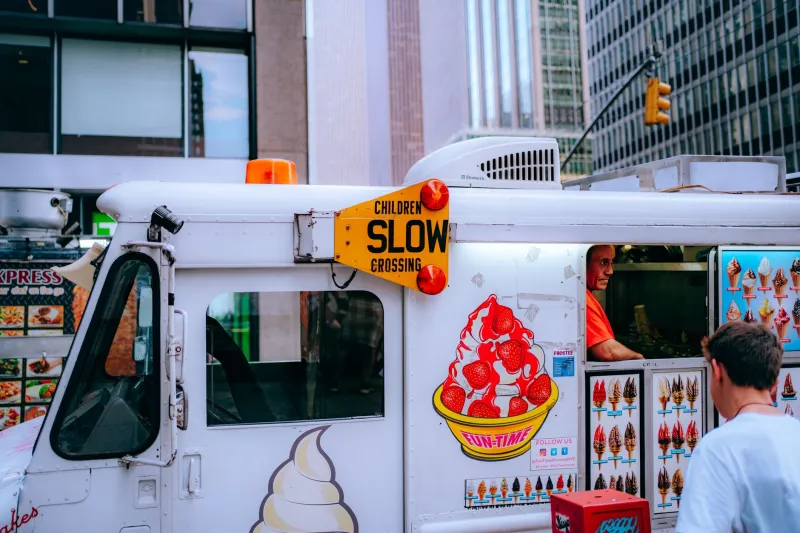
The sound started three blocks away—a tinkling melody that made every kid in the neighborhood stop what they were doing and listen. Not the frantic electronic chimes of today's few remaining ice cream trucks, but the gentle, mechanical bells of the Good Humor man making his slow progress through tree-lined streets. Children would calculate distances, count pocket change, and negotiate with siblings about pooling resources for a shared Popsicle.
That weekly ritual of anticipation, patience, and small-scale commerce has almost entirely disappeared from American childhood, taking with it lessons about money, community, and the simple pleasure of waiting for something good.
The Traveling Economy of Childhood
Fifty years ago, American neighborhoods supported an entire ecosystem of mobile vendors who moved through residential streets on predictable schedules. The ice cream truck was just the most beloved member of a commercial parade that included knife sharpeners, produce vendors, and traveling salesmen who brought services directly to front doors.
These weren't random businesses—they were carefully orchestrated routes that vendors had maintained for years, sometimes decades. The knife sharpener came every other Tuesday. The ice cream truck arrived between 3:30 and 4:00 PM on weekdays. The produce cart rolled through Saturday mornings with fresh vegetables that housewives could inspect before buying.
Children learned these schedules by heart, developing an internal clock that connected time, money, and reward in ways that modern kids never experience. They knew that Thursday meant the candy man, that Saturday brought fresh fruit, and that summer evenings belonged to the ice cream truck's magical appearance.
The Lessons Hidden in Loose Change
These mobile vendors created America's first real economy for children—a place where nickels and dimes had actual purchasing power and kids learned fundamental financial lessons through direct experience. A child with fifteen cents faced real choices: one expensive ice cream or three pieces of penny candy. Save up for the premium treat or spend immediately on smaller pleasures.
Unlike today's digital transactions that happen invisibly on parent-controlled cards, these purchases required physical money, face-to-face interaction, and immediate decision-making. Kids learned to count change, negotiate prices, and understand the concept of "sold out" when the vendor's supply was exhausted.
The ice cream truck didn't take credit cards or offer payment plans. If you didn't have money, you didn't get ice cream. If you spent your allowance on Monday, you waited until next week for another chance. These harsh but fair rules taught patience, planning, and the reality that money was finite.
The Social Theater of Street Commerce
Every visit from a mobile vendor became a small social event that brought neighborhoods together. Children gathered around the ice cream truck, comparing choices and sharing recommendations. Adults emerged from houses to buy fresh produce or get knives sharpened, creating impromptu conversations with neighbors they might not otherwise see.
These vendors knew their customers personally. The ice cream man remembered which kids always bought the same treat and which houses never made purchases. The knife sharpener knew Mrs. Johnson's kitchen scissors and Mr. Peterson's garden tools. This personal knowledge created accountability and trust that's impossible to replicate in anonymous digital commerce.
Children learned social skills from these interactions—how to wait in line, how to speak politely to adults, how to handle disappointment when their favorite treat was sold out. They practiced basic etiquette in low-stakes situations where mistakes didn't matter but lessons were absorbed naturally.
The Sensory Education
Mobile vendors engaged all the senses in ways that modern commerce has abandoned. The ice cream truck's bells created anticipation. The sight of colorful treats lined up in the freezer taught visual decision-making. The smell of fresh produce from the vegetable cart educated young noses about quality and ripeness.
Kids learned to evaluate purchases through direct sensory experience. They could see if the apples were bruised, smell if the peaches were ripe, and watch the ice cream man scoop their cone. This hands-on education about quality, freshness, and value is completely absent from today's pre-packaged, delivered-in-boxes economy.
The knife sharpener's demonstration of bringing dull blades back to life taught children about craftsmanship and the value of maintaining possessions rather than replacing them. These small lessons in practical economics happened naturally through observation.
The Death of Patience
Today's children live in an economy of instant gratification where everything arrives within days, hours, or minutes. They tap screens and receive deliveries without ever interacting with a human being or understanding the complex systems that bring products to their doors.
The weekly rhythm of mobile vendors taught a different relationship with desire and fulfillment. Kids learned that some pleasures were worth waiting for, that anticipation could be part of the enjoyment, and that not every want could be immediately satisfied.
This forced patience created a different emotional relationship with consumption. The ice cream that arrived after a week of waiting tasted better than the frozen treat pulled instantly from a home freezer. The anticipation was part of the product.
What Technology Solved (and Destroyed)
Modern delivery systems have solved the logistical problems that mobile vendors addressed—bringing goods directly to consumers without requiring trips to stores. But they've eliminated the human element, the community building, and the educational value that came with street-level commerce.
Today's kids can order ice cream through an app and have it delivered in thirty minutes, but they miss the social ritual, the financial education, and the simple pleasure of hearing those bells in the distance and knowing something good was coming their way.
The efficiency gains are undeniable, but we've lost something irreplaceable: a gentle introduction to commerce that taught patience, community, and the sweet satisfaction of waiting for something that was worth the wait.
The bells still ring in a few neighborhoods, but they echo through streets where children are inside, engaged with screens, missing the lessons that once came naturally from the simple act of buying ice cream from a neighbor who knew their name.