When Calling Someone Meant the Whole Neighborhood Might Listen: The Lost World of American Phone Calls
The Telephone as Community Property
Picture this: It's 1955, and you need to call your friend across town. You walk to the heavy black rotary phone mounted on your kitchen wall, lift the receiver, and hear... your neighbor Mrs. Henderson gossiping with her sister about the new family that moved in down the street. You hang up, wait five minutes, and try again. Still busy. This wasn't a technical glitch—this was Tuesday afternoon on a party line.
For most Americans in the 1950s, the telephone wasn't a personal device. It was shared infrastructure, like a public water fountain. Eight families might share a single phone line, each assigned a different ring pattern. Two short rings and a long one? That call was for you. One long ring followed by two short? Keep listening if you were nosy, but officially, that wasn't your business.
Today, we carry devices in our pockets that can instantly connect us to anyone, anywhere in the world, for free. We video chat with strangers, send voice messages while walking, and get annoyed if a call takes more than two rings to connect. The idea that making a phone call once required patience, planning, and sometimes an audience seems almost medieval.
When Long Distance Meant Something
In 1955, calling someone in another state was a big deal. You didn't just dial—you called the operator, stated your destination, and waited while she manually connected your call through a series of switches and cables. "Long distance calling," the operator would announce, and everyone in the room would quiet down. This was serious business.
A three-minute call from New York to Los Angeles cost about $2.50—roughly $28 in today's money. Families budgeted for long-distance calls the way we budget for vacation flights. Sunday evenings were popular for long-distance calling because rates dropped slightly, leading to what phone companies called "Mother's Day traffic"—not the holiday, but the weekly ritual of adult children calling home.
People wrote letters to arrange phone calls. "I'll call you Sunday at 7 PM Eastern" wasn't just a courtesy—it was essential planning. Miss the call, and you'd wasted serious money. There were no voicemails, no callback features, no second chances without paying again.
The Ritual of Rotary Dialing
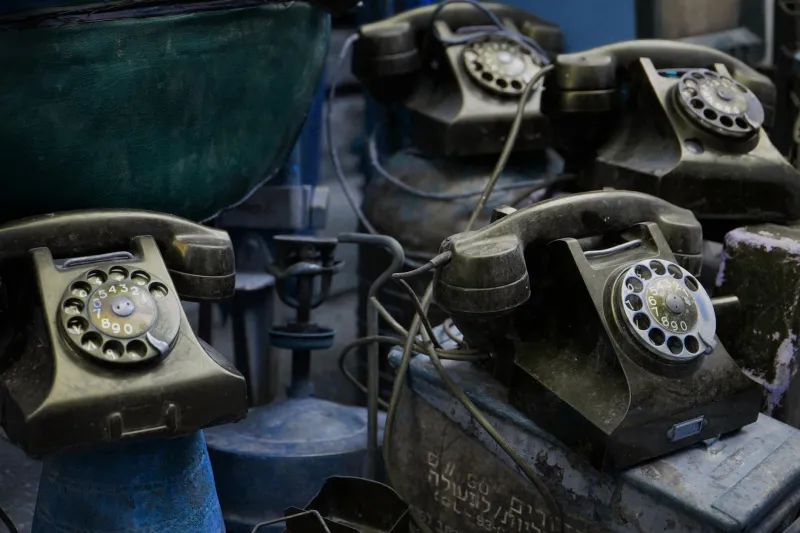
Making a local call in 1955 was its own small ceremony. You'd pick up the heavy Bakelite receiver, listen for the dial tone, then carefully rotate the dial for each number. Dialing "0" meant waiting for the dial to slowly rotate all the way back—nearly a full second per digit. A seven-digit phone number took about eight seconds to dial if you were quick.
Mess up on the sixth digit? Start over. The phone didn't remember partial numbers or offer redial options. Speed dialing meant memorizing numbers and having steady fingers. Phone numbers were shorter too—many areas still used exchanges like "Madison 4-7829" or "Riverside 2-3456," connecting callers to specific neighborhoods through their local exchange.
Compare that to today: We don't even dial numbers anymore. We tap names in our contacts, tell our phones to "call Mom," or let apps connect us automatically. The average smartphone connects a call in under two seconds, and we get frustrated if it takes longer.
Privacy Was a Luxury
The party line system meant privacy was rare and expensive. Wealthier families could pay extra for a "private line," but most Americans shared their phone service with neighbors. This created an entire etiquette around phone use that sounds absurd today.
You were supposed to limit calls to five minutes during busy periods. You couldn't monopolize the line during emergencies—but you also couldn't prevent neighbors from listening in if they wanted to eavesdrop. Some families developed code words for sensitive conversations, while others simply accepted that personal business might become neighborhood gossip.
Phone conversations were formal, too. You identified yourself when calling ("Hello, this is Robert calling for Susan"), and you certainly didn't call after 9 PM unless it was an emergency. The phone was often located in a central area like the kitchen or hallway, making private conversations nearly impossible even within your own family.
The Economics of Connection
Every phone call in 1955 cost money—even local calls were often charged per minute after the first three minutes. Families received monthly phone bills itemizing each call, its duration, and cost. Teenagers asking to "call their friends" meant asking parents to spend money, creating natural limits on social phone time.
Businesses built entire models around phone economics. Restaurants didn't list phone numbers in ads because calling to ask about hours or menus cost customers money. Information was distributed through newspapers, Yellow Pages, and word of mouth instead of quick phone calls.
Today, most Americans have unlimited calling plans that make domestic calls essentially free. We think nothing of calling a restaurant to ask a quick question, phoning multiple stores to compare prices, or staying on hold for customer service. The friction of payment has completely disappeared from voice communication.
What We Lost and Gained
The transformation from 1955's deliberate, expensive, semi-public phone calls to today's instant, free, private communication represents one of the most dramatic shifts in how humans connect. We gained incredible convenience and lost the weight that made phone calls feel important.
In 1955, if someone called you long distance, it meant something significant was happening. Today, we decline calls from unknown numbers without thinking twice. We've traded the ritual and ceremony of telephone communication for the ability to reach anyone, anywhere, anytime—and somehow, we often feel more disconnected than ever.
The next time your call connects instantly and clearly to someone across the country, remember: Your great-grandmother would have considered this nothing short of magic.