When Your Banker Knew Your Father: How Small Business Loans Used to Come From Actual Neighbors

The Corner Office Where Dreams Got Funded
Walk into First National Bank of Anywhere, USA in 1962, and you'd find Harold Morrison behind the loan desk — the same Harold who coached your Little League team and sat three pews behind your family every Sunday. When you needed $5,000 to open that hardware store, Harold didn't pull up a credit report. He remembered how you always showed up early to practice, how you helped Mrs. Peterson with her groceries after her husband passed, and how your father never missed a payment on anything in thirty years.
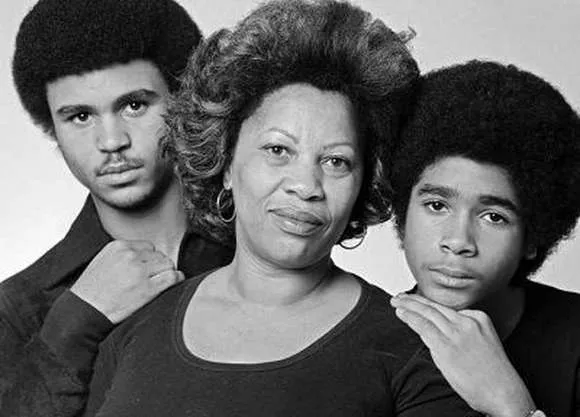 Photo: Harold Morrison, via thepersonage.com
That conversation lasted twenty minutes. The handshake sealed the deal.
When Character Was Collateral
Small-town banking operated on an entirely different currency: reputation. Loan officers didn't just work in the community — they lived there, sent their kids to school there, and planned to retire there. They knew which families paid their bills on time, which young men had the work ethic to succeed, and which business ideas actually made sense for their particular corner of America.
The bank president often grew up on the same streets as his borrowers. He'd watched the applicant deliver newspapers at age twelve, work summers at the grain elevator, and marry the Methodist minister's daughter. When that same person walked in asking for startup capital, the banker wasn't evaluating a stranger's financial profile — he was betting on someone whose entire character arc he'd witnessed firsthand.
This wasn't just small-town nostalgia. It was a fundamentally different approach to risk assessment. Instead of reducing entrepreneurs to credit scores and debt-to-income ratios, community banks evaluated the whole person: their family history, work ethic, community standing, and local connections.
The Paperwork That Fit in One Folder
Applying for a business loan in 1965 required three things: a simple application form, basic financial information, and the ability to look someone in the eye and explain your vision. No business plans with detailed market analysis. No projected cash flow statements stretching five years into the future. No environmental impact studies or regulatory compliance documentation.
The entire loan file could fit in a manila folder. The decision usually happened within a week — not because the process was rushed, but because the banker already knew everything he needed to know about the borrower's character and the local market conditions.
Compare that to today's small business loan application, which can require dozens of forms, multiple years of tax returns, detailed business plans, personal guarantees, and enough documentation to fill a briefcase. The SBA alone has created a bureaucratic maze that would have baffled those 1960s bankers who could approve a $10,000 loan with a phone call to check references.
When Banking Was Local by Necessity
Community banks couldn't diversify their risk across global markets. If Main Street failed, the bank failed. This created a powerful incentive structure: bankers had to genuinely understand their local economy and invest in its success. They couldn't make risky loans and then sell them to distant investors. Every loan stayed on their books, in their community, where they'd have to live with the consequences.
This alignment of interests created something remarkable: financial institutions that actually cared about their borrowers' long-term success. Bank presidents attended chamber of commerce meetings not for networking opportunities, but because their institution's survival depended on the health of local businesses.
When the hardware store owner struggled during a tough winter, his banker might restructure the loan terms rather than foreclose. When the diner needed new equipment, the bank president could approve the loan because he ate lunch there twice a week and knew the owner's work ethic firsthand.
The Algorithm That Knows Everything Except You
Today's small business financing operates through entirely different machinery. Automated underwriting systems can process thousands of applications daily, evaluating credit scores, cash flow patterns, and risk metrics with mathematical precision. Online lenders promise decisions in minutes, not days.
But something crucial got lost in this efficiency: the human element. Modern lending algorithms can tell you everything about an applicant's financial history while knowing nothing about their character, community standing, or likelihood of actually succeeding in their specific market.
A entrepreneur with a 720 credit score and perfect debt-to-income ratio might get approved instantly, even if their business idea makes no sense for their location. Meanwhile, someone with slightly imperfect credit but deep community roots and a solid work ethic might get rejected by automated systems that never learned the difference between financial hiccups and fundamental character flaws.
What We Gained and What We Lost
Modern small business lending has undeniable advantages. It's faster, more transparent, and theoretically more objective. Entrepreneurs in underserved communities can access capital without relying on local networks that might exclude them. Online platforms have democratized access to funding in ways that would have seemed miraculous to those 1960s Main Street dreamers.
But we've also lost something that can't be easily quantified: the power of someone betting on you personally. When Harold Morrison approved that hardware store loan, he wasn't just providing capital — he was investing in his community's future and expressing faith in a neighbor's potential.
That kind of personal investment created obligations that extended far beyond loan payments. Borrowers felt accountable not just to an institution, but to an actual person who'd taken a risk on them. This relationship often became the foundation for decades of mutual success.
The Price of Progress
As we've gained efficiency and scale in small business lending, we've lost the intimacy and local knowledge that once drove American entrepreneurship. The handshake deals that built Main Street America have been replaced by digital platforms that can process thousands of applications without ever meeting a single borrower.
Progress always involves trade-offs. But sometimes, in our rush toward efficiency, we forget to count what we've left behind.
The next time you drive through a small town and see empty storefronts where family businesses once thrived, remember: those enterprises weren't just killed by big box stores and e-commerce. They also died from a financial system that stopped seeing entrepreneurs as neighbors and started seeing them as risk profiles.
Some things, it turns out, can't be reduced to an algorithm.