Built Like a Tank, Fixed With a Handshake: When Your Washing Machine Was a 30-Year Investment
The Refrigerator That Outlived Three Marriages
In 1962, newlyweds Jim and Martha bought a Frigidaire for $299—roughly $2,800 in today's money. That refrigerator hummed faithfully through their divorce in 1978, Jim's remarriage in 1982, and his second wife's death in 2019. When Jim finally sold the house last year, the new owners specifically asked if the old Frigidaire came with the property. It's still running.
This wasn't unusual. It was expected.
American appliances once carried an implicit promise: buy this once, use it for decades, pass it to your children. Manufacturers built their reputations on durability, not planned obsolescence. A washing machine that died after five years was considered a scandal, not a business model.
When Repairmen Were Neighborhood Celebrities
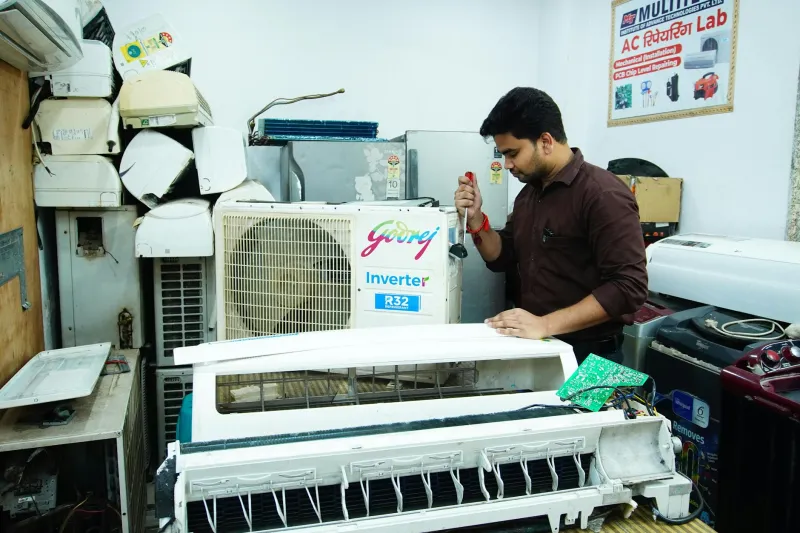
Every community had them—the appliance whisperers who could resurrect any machine with the right part and a firm hand. Eddie the TV repair guy knew which tubes were prone to failure. Frank the washing machine specialist could diagnose a problem by the sound of the spin cycle. These weren't just service technicians; they were mechanical shamans who kept America's households running.
The relationship between homeowner and repairman was built on mutual respect and long-term thinking. Repairmen stocked parts for machines that were already ten years old because they knew those machines had another ten years of life left. Homeowners paid repair bills willingly because fixing a fifteen-year-old refrigerator was still cheaper than buying a new one.
Frank Martinez ran Martinez Appliance Repair in Phoenix from 1954 to 1998. His customer files read like neighborhood genealogies—three generations of the same families, calling him to service the same Maytag washers and Whirlpool dryers their grandparents had purchased decades earlier.
 Photo: Frank Martinez, via i.pinimg.com
"I had customers where I'd serviced the wedding gift appliances, then twenty years later I'm fixing the same machines for their kids," Martinez remembered. "Those old machines, they had personalities. You got to know them like old friends."
The Engineering Philosophy That Built America's Kitchens
Post-war American manufacturers embraced what engineers called "over-specification"—building products significantly stronger than necessary. A washing machine designed to handle 20 years of use would typically last 30. A refrigerator rated for 15 years might run for 25. This wasn't inefficiency; it was pride.
General Electric's advertising slogan "We Bring Good Things to Life" wasn't marketing fluff—it was a engineering mandate. GE appliances from the 1950s and 1960s featured steel cabinets thick enough to stop bullets, motors that could power small factories, and mechanical timers so robust that some are still keeping perfect time sixty years later.
 Photo: General Electric, via cdn.create.vista.com
The parts were standardized and interchangeable. A heating element from a 1965 Hotpoint dryer would work perfectly in a 1972 model. Manufacturers maintained parts inventories for decades, understanding that their reputation depended on keeping old machines running, not forcing customers to buy new ones.
The Handshake Warranty Era
Before extended warranties became profit centers, appliance dealers offered something more valuable: personal accountability. When Sam's Appliance sold you a refrigerator, Sam himself guaranteed it would work. If it didn't, Sam fixed it. If Sam couldn't fix it, Sam replaced it. No fine print, no service contracts, no phone trees.
This system worked because everyone involved expected long-term relationships. Dealers knew their customers would return in twenty years for their next appliance purchase. Manufacturers knew dealers would refuse to carry brands that generated too many complaints. Customers knew their neighbors would judge them for buying junk.
The handshake warranty wasn't just about individual transactions—it was about community reputation. A dealer who sold unreliable appliances wouldn't stay in business long in a small town where everyone knew everyone else's purchasing decisions.
When Obsolescence Was Actually Obsolete
The concept of planned obsolescence—deliberately designing products to fail after a predetermined time—was considered almost un-American in the appliance industry of the 1950s and 1960s. Manufacturers competed on durability, not disposability. Advertisements boasted about machines that would "last a lifetime" and "pay for themselves in years of reliable service."
This philosophy extended beyond major appliances. Small kitchen devices like mixers, blenders, and toasters were built with the same over-engineered approach. A KitchenAid mixer from 1964 required the same motor specifications as some modern industrial equipment. These weren't consumer goods—they were household investments.
The shift toward planned obsolescence began gradually in the 1970s as manufacturing moved overseas and quarterly profit reports became more important than long-term customer relationships. But for two decades after World War II, American appliance manufacturers operated under a completely different philosophy: build it right the first time, and customers will remember forever.
The Mathematics of Modern Disposability
Today's appliances tell a different story entirely. The average washing machine lasts 8-12 years. Refrigerators typically fail after 10-15 years. Dishwashers are designed for 7-10 years of service. What once represented a lifetime purchase now requires replacement every decade.
This shift isn't entirely negative—modern appliances are more energy-efficient, offer more features, and cost less relative to average income. A basic refrigerator that represented two months of median wages in 1960 now costs about two weeks of median wages. But the total cost of ownership tells a more complex story.
A homeowner who bought that $299 Frigidaire in 1962 spent about $50 per year for thirty years of refrigeration. A modern homeowner replacing refrigerators every twelve years spends roughly $150 per year, even accounting for lower purchase prices. The math of durability still favors the old approach.
The Lost Art of Repair Culture
When appliances were built to last, repair culture thrived. Every neighborhood had multiple shops specializing in appliance service. High schools taught appliance repair as a practical life skill. Homeowners understood basic maintenance and could perform simple repairs themselves.
Modern appliances actively discourage repair. Warranty stickers void coverage if removed. Circuit boards replace mechanical components, requiring specialized diagnostic equipment. Manufacturers discontinue parts after just a few years, making repair impossible even for willing technicians.
The environmental cost is staggering. Americans dispose of approximately 9 million tons of appliances annually. Most could be repaired if parts were available and repair knowledge hadn't been systematically eliminated from American culture.
What We Gained and What We Lost
Modern appliances offer genuine improvements: better energy efficiency, more features, quieter operation, and advanced diagnostics. Smart appliances can order their own replacement parts and schedule service calls automatically. These advances represent real progress in convenience and environmental impact.
But we've lost something harder to quantify: the satisfaction of owning something built to last, the security of knowing your major household systems won't fail unexpectedly, and the community relationships that formed around local repair services.
Most importantly, we've lost the economic model that made durability profitable. When customers expected appliances to last decades, manufacturers invested in engineering and materials to meet those expectations. When customers accepted planned obsolescence, manufacturers optimized for different metrics entirely.
The handshake warranty era wasn't perfect, but it operated on a fundamentally different assumption: that the relationship between manufacturer and customer extended far beyond the initial purchase. In our rush toward cheaper, smarter, more efficient appliances, we may have optimized away the very durability that made those relationships possible.