When Everyone Shared One Phone and Privacy Was Just a Dream: The Lost World of American Communication
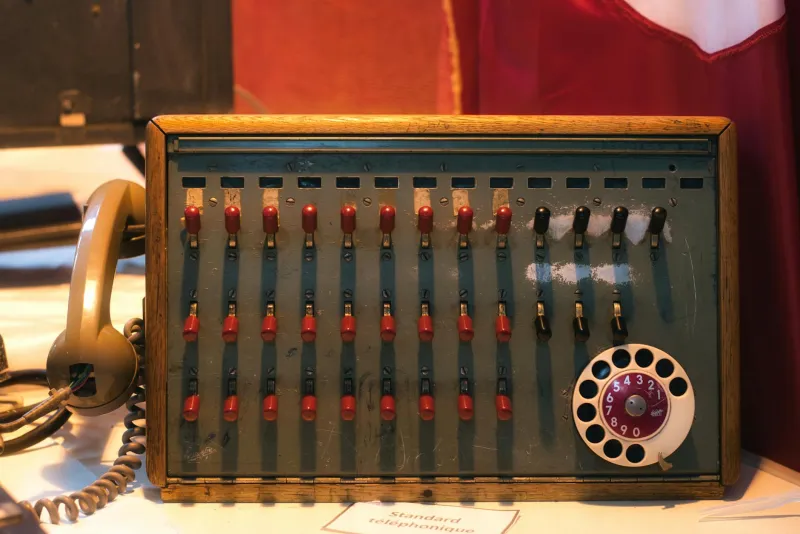
The Phone That Belonged to the Whole Neighborhood
Mrs. Henderson always answered on the first ring, even when the call wasn't for her. Living on a party line in rural Ohio meant that one phone line served eight different households, and every ring echoed in every kitchen. The Hendersons had two short rings, the Johnsons had one long and one short, and the Millers had three short rings that always seemed to go on forever.
But Mrs. Henderson wasn't being nosy—she was being neighborly. When old Mr. Peterson had his heart attack in 1967, it was Mrs. Henderson who heard his wife's panicked call to the doctor and immediately rang the fire department herself. The party line wasn't just a communication system; it was a community early warning network.
This was American telecommunications for the better part of the 20th century: shared, slow, and surprisingly intimate. Before the age of personal devices, communication was inherently communal, mediated by human operators, and limited by physical infrastructure that forced neighbors to literally share the same conversations.
The Human Internet: When Operators Knew Everyone's Business
Betty Morrison worked the switchboard in Millfield, Pennsylvania, from 1952 to 1978. She knew every voice in town, every family crisis, and every piece of gossip worth knowing. When you picked up the phone and said "Operator," Betty's voice came back with "Good morning, Mrs. Johnson. You calling your sister in Pittsburgh again?"
 Photo: Millfield, Pennsylvania, via centrodeestudiosendocrinos.es
This wasn't surveillance—it was service. Betty knew that Mrs. Johnson's sister worked nights and shouldn't be disturbed before noon. She knew that Dr. Williams was making house calls on Elm Street and could be reached at the Peterson house. She knew which teenagers were supposed to be in school and which parents needed to be informed about suspicious afternoon calls.
Long-distance calls required Betty's intervention every time. You'd pick up the phone, wait for her voice, and say something like "I need to place a call to Chicago, Illinois." Betty would ask for the number, tell you the rate (expensive), and warn you about the three-minute minimum charge. Then she'd physically plug cables into the appropriate jacks and say "Go ahead, please" when the connection was established.
 Photo: Chicago, Illinois, via thumbs.dreamstime.com
The process could take several minutes for complicated connections. Calling across multiple time zones meant Betty had to coordinate with operators in other cities, each one manually connecting cables and confirming the line quality. International calls were so complex they often required advance scheduling.
The Phone Book: America's Original Search Engine
Every household received one massive phone book annually, and it contained everyone. Not just phone numbers—addresses, business listings, and often the husband's occupation. The White Pages listed residential customers alphabetically, while the Yellow Pages organized businesses by category. If you wanted to find someone in your town, you opened the book. If they had a phone, they were listed.
The phone book represented a completely different approach to privacy and information. Being unlisted required special effort and often extra fees. The default assumption was that if you had a phone, your neighbors should be able to find you. Businesses paid extra for larger listings, bold type, and display advertisements, but even the smallest shop got a basic listing.
Families developed elaborate phone book rituals. New editions meant updating the kitchen drawer, transferring important numbers to personal address books, and checking to see which neighbors had moved or changed numbers. Children learned to "let their fingers do the walking" through the Yellow Pages to find everything from pizza delivery to piano lessons.
The phone book also served as furniture. Thick metropolitan directories made excellent booster seats for small children, doorstops for heavy doors, and emergency kindling for fireplaces. In some households, the phone book was the primary reference source for settling arguments about spellings, addresses, and business hours.
The Etiquette of Shared Communication
Party line culture developed elaborate social protocols that seem almost incomprehensible today. You were supposed to listen briefly when picking up the phone to determine if neighbors were already talking. If they were, you hung up immediately and tried again later. Emergency calls took priority over social conversations. Long-distance calls required everyone else to stay off the line.
Some families developed coded ring systems with their closest neighbors. Two quick rings followed by hanging up might mean "call me back when you're free." Three rings could signal "emergency—pick up immediately." These informal networks created communication channels that bypassed the official party line protocols.
Telephone conversations themselves followed different rules. Since privacy was never guaranteed, people spoke more carefully. Sensitive topics were discussed in person or through coded language. Gossip was shared in whispers, and family disputes were kept deliberately vague. The possibility that neighbors might be listening shaped not just what people said, but how they said it.
Children learned phone etiquette as carefully as table manners. They were taught to answer politely, take accurate messages, and never tie up the line unnecessarily. Teenage phone conversations—a source of family conflict in the era of private lines—were naturally limited by community pressure and shared access.
When Getting a Phone Number Was Like Getting a Social Security Number
Phone numbers weren't portable, personalized, or permanent. They belonged to addresses, not individuals. When you moved, you got a new number. When you married, the phone typically went in the husband's name. When you divorced, someone had to give up the number entirely.
Getting phone service installed required a technician's visit, often scheduled weeks in advance. The phone company owned the actual telephone—a heavy, indestructible device that came in basic black and was built to last decades. Customers rented phones for a monthly fee that continued for as long as they kept the service.
Phone numbers themselves told stories. The first two digits indicated your neighborhood exchange, often represented by letters that spelled out local landmarks. Pennsylvania 6-5000 became "PE 6-5000" and eventually "736-5000," but longtime residents still referred to exchanges by their original names. Living in "Madison" or "Riverside" or "Hillcrest" meant something to people who understood the geography of telephone infrastructure.
The Death of Distance and the Birth of Isolation
Long-distance calling was expensive enough to reserve for special occasions. A ten-minute call from New York to Los Angeles in 1960 cost about $4—roughly $35 in today's money. Families scheduled long-distance calls like special events, gathering around the phone to take turns talking to distant relatives.
This scarcity made long-distance communication precious. Letters remained the primary method for maintaining distant relationships, with phone calls reserved for emergencies, holidays, and major life events. When someone called long-distance, it meant something important was happening.
The expense and complexity of long-distance calling also meant that communities were more self-contained. Local relationships mattered more because distant ones were harder to maintain. The phone book contained everyone you were likely to call regularly, and the operator knew everyone you might need to reach in an emergency.
What We Gained When Everyone Got Their Own Line
The transition to private lines and personal phones brought obvious improvements: privacy, convenience, and the ability to have long conversations without worrying about neighbors. Teenagers could talk for hours. Business calls could remain confidential. Families could argue without community oversight.
Direct dialing eliminated the need for operators on most calls, reducing costs and increasing speed. Touch-tone phones replaced rotary dials, making calling faster and enabling automated systems. Answering machines meant missing calls no longer meant missing opportunities.
The rise of mobile phones completed the transformation, giving every individual their own personal communication device. Phone numbers became portable and permanent. Privacy became absolute. Communication became instant and unlimited.
What We Lost in the Great Disconnection
But the shift from shared to private communication also eliminated some valuable social infrastructure. Party lines created natural community networks that helped neighbors stay connected and informed. Operators provided human customer service that understood local context and individual needs. Phone books created shared information resources that everyone could access equally.
Most significantly, the old system forced people to consider their communication choices more carefully. When phone calls were expensive and privacy was limited, conversations were more intentional. When everyone shared the same information sources, communities had more shared knowledge and common reference points.
The party line era wasn't perfect—privacy was limited, service was slow, and the system excluded people who couldn't afford phone service entirely. But it operated on fundamentally different assumptions about communication, community, and the relationship between individual convenience and collective responsibility.
Today's communication technology offers unprecedented power, speed, and privacy. We can reach anyone, anywhere, anytime, with perfect clarity and complete confidentiality. But in gaining total control over our communication choices, we may have lost some of the serendipitous connections and community oversight that made the old system more than just a way to make phone calls—it was a way to stay connected to the place where you lived and the people who lived there with you.