Creeks, Ponds, and the Summer You Finally Stopped Sinking: When Swimming Was Something You Just Figured Out
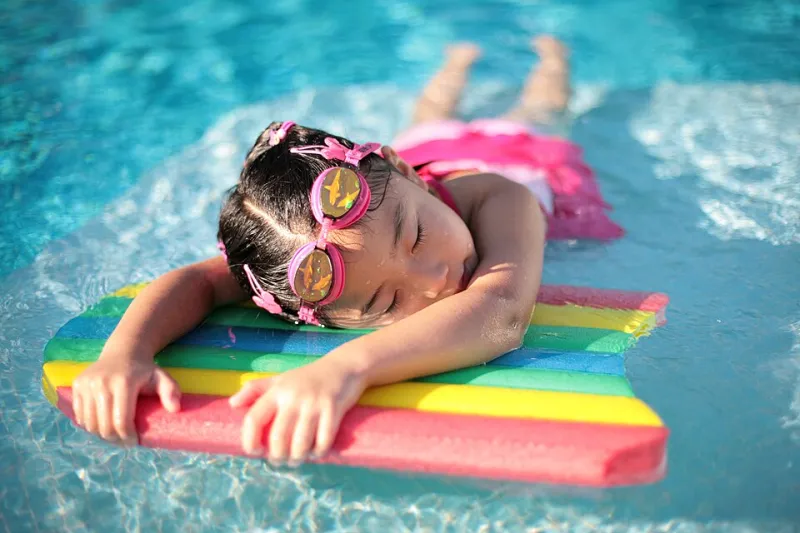
Photo: Tommy Wong, CC BY 2.0, via Wikimedia Commons
Somewhere in rural Ohio in the summer of 1962, a nine-year-old named Bobby learned to swim the same way his father had, and his grandfather before that. An older cousin threw him off a low rope swing into a slow bend of the creek, watched to make sure he surfaced, and then yelled something encouraging from the bank. By August, Bobby could cross the whole swimming hole without touching bottom. Lesson over. Skill acquired.
That scene — or something close to it — played out across American summers for most of the twentieth century. Rivers, farm ponds, quarry lakes, and the shallow ends of municipal pools with a single lifeguard and a whistle served as the nation's unofficial swim academies. Nobody paid a registration fee. Nobody signed a waiver. You learned because the alternative was going home dry while everyone else splashed around, and that was simply not acceptable.
The Swimming Hole as Classroom
Before air conditioning made summer afternoons bearable indoors, water was the destination. Kids biked miles to get to a decent swimming spot. Older siblings taught younger ones. Neighborhood teenagers who'd figured out a decent freestyle became the unofficial instructors for the whole block. The peer-to-peer transmission of swimming knowledge was remarkably effective, mostly because the social stakes were enormous. You wanted to swim with your friends. You learned.
Municipal pools played a huge role too, especially in cities. By the 1950s, most American towns of any size had a public pool, often crowded to the point of chaos on a hot July afternoon. Swim lessons were available — a dollar or two for a week of group instruction — and the Red Cross had been running organized beginner programs since the 1920s. But plenty of kids never bothered with formal lessons at all. They watched, they tried, they swallowed some water, and eventually they swam.
The knowledge passed down wasn't just about strokes. Kids learned to read water — where the current pulled, which rocks were slippery, how cold water could cramp your legs if you went in too fast. They learned their own limits through experience rather than a curriculum. It wasn't always safe. But it produced generations of Americans who were genuinely comfortable in the water.
What Changed, and When
The shift didn't happen overnight. Liability concerns started reshaping public recreation in the 1970s and 1980s. Swimming holes got posted with no-trespassing signs. Municipal pools added more rules, more supervision, more structure. Natural swimming spots that had served communities for decades were quietly closed off as landowners worried about lawsuits.
At the same time, the culture around childhood safety was transforming. Unsupervised outdoor activity — which had been completely normal for American kids — began to feel less acceptable to parents. The idea of a ten-year-old spending an afternoon at an unsupervised creek started to seem irresponsible rather than ordinary.
Into this gap stepped the swim academy. Today, learning to swim in America typically means enrolling in structured lessons at a private facility, often starting as young as six months old with parent-and-baby classes. Certified instructors, heated indoor pools, progressive skill levels with names like Guppy and Minnow, and fees that can run $200 to $400 for a single session series are now standard. It's a genuine industry.
The Numbers Behind the Splash
Here's the uncomfortable part: despite all this structure and investment, America still has a significant swimming problem. According to the American Red Cross, roughly 54 percent of Americans cannot perform the five basic water safety skills considered essential for survival. Drowning remains one of the leading causes of accidental death for children under 14. Rates are disproportionately high among Black and Hispanic children, partly because of historical exclusion from public pools and partly because private swim lessons remain financially out of reach for many families.
The old swimming hole wasn't equitable either — plenty of kids in earlier eras never learned to swim, particularly in communities that lacked access to safe water. But the democratizing force of the neighborhood creek or the cheap municipal pool meant that swimming was at least within reach for most kids regardless of income. Today's structured model has made lessons safer and more technically sound, while simultaneously pricing out a significant portion of the population.
Something Lost in the Chlorine
There's also something harder to quantify that disappeared when swimming moved indoors and onto a schedule. The swimming hole was a place where kids governed themselves, figured out risk, and built genuine competence through trial and error. It was messy and unstructured and occasionally frightening — and that was precisely the point. The cold water and the muddy bank and the older kid daring you to jump from the higher rock were all part of an education that went well beyond swimming technique.
Today's swim lessons are excellent at producing children who can execute a proper freestyle stroke in a heated, well-lit pool. They're less good at producing kids who feel genuinely at home in the water — who've spent enough unstructured hours in rivers and lakes to develop real water confidence rather than pool competence.
The swimming hole is mostly gone now, posted and fenced and legally off-limits. What replaced it is better in some ways and poorer in others. Bobby's grandchildren take lessons at a facility with lane ropes and certified instructors. They learn faster and more safely than he did. But they've never felt a creek current pull at their ankles, never had to figure out for themselves how deep was too deep.
Sometimes the most important lessons are the ones nobody officially taught you.