Dear Mr. Henderson: The Two Sentences That Used to Get You Hired — and the Algorithm That Replaced Them
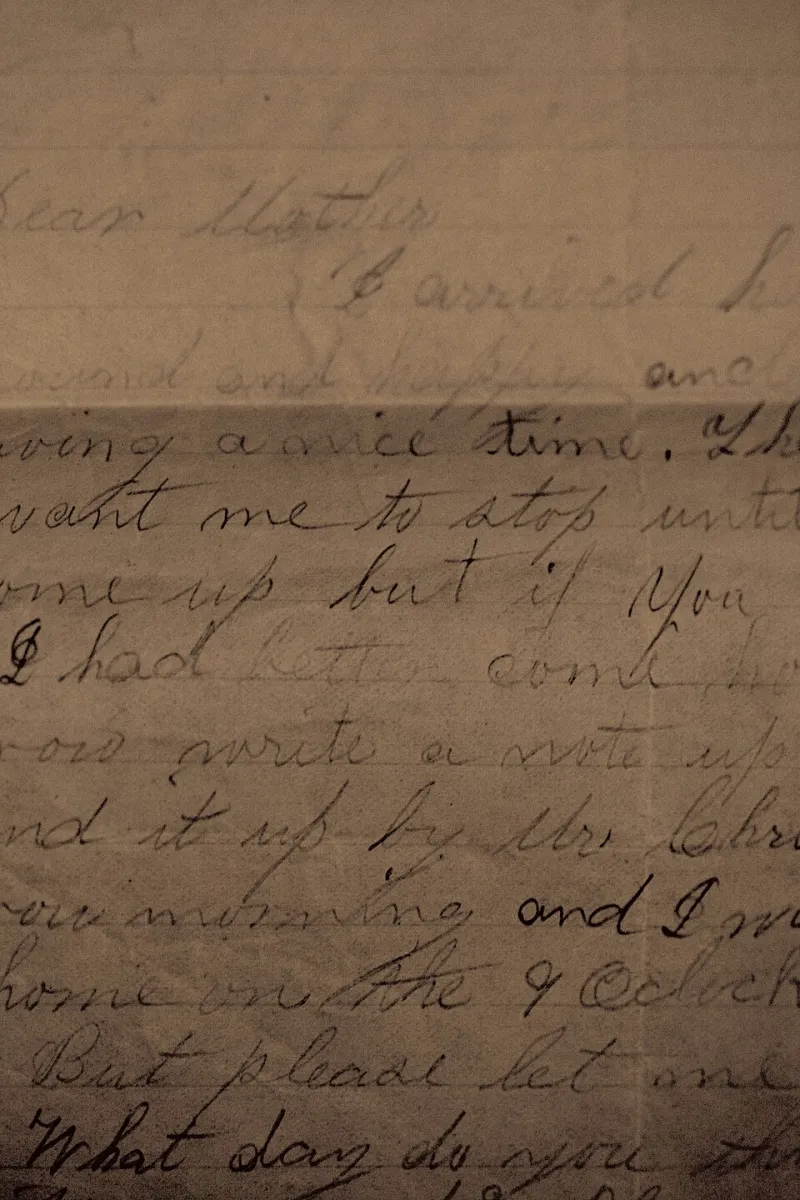
Photo: Pink Sherbet Photography from USA, CC BY 2.0, via Wikimedia Commons
Sometime in the late 1950s, a young woman named Patricia finished a job interview at an insurance company in downtown Cincinnati, went home, sat at her kitchen table, and wrote a thank-you note to the man who'd interviewed her. Four sentences. Neat handwriting on good stationery. She mailed it that afternoon. She got the job on Friday. Her supervisor told her years later that she was the only candidate who'd written.
That story isn't unusual for its era. It's almost a cliché of mid-century American professional life — the handwritten note as the final, decisive gesture in a hiring process built almost entirely on human judgment and personal impression. What makes it remarkable now is how completely that world has disappeared.
When Hiring Was a Relationship
The American job market before the digital age was, by modern standards, remarkably personal. Positions were often filled through direct networks — someone knew someone, a manager asked around, a trusted employee recommended a neighbor's kid. When formal interviews did happen, they were conversations between people who understood they might see each other again, in the same industry or the same town. Reputation traveled.
The follow-up letter was part of that relational logic. It wasn't just a courtesy — it was a demonstration. It showed that you were organized enough to follow through, thoughtful enough to express genuine appreciation, and socially aware enough to understand that the relationship with the interviewer didn't end when you walked out the door. In a hiring environment where two equally qualified candidates might be separated only by intangible factors, a well-crafted note could tip the balance.
Career advisors of the era were emphatic about it. Send the note within 24 hours. Reference something specific from the conversation. Keep it brief and sincere. The advice was simple because the underlying principle was simple: hiring was personal, and personal gestures mattered.
Beyond the thank-you note, the whole architecture of job searching was built on human contact. You walked into an office and asked to speak with someone. You called the phone number in the newspaper ad and spoke to an actual person. Interviews were often conducted by the person you'd actually be working for, someone with direct knowledge of what the job required and direct authority to make the hire. The relationship between interviewer and candidate was real, and both parties understood that.
The Portal and the Black Hole
Apply for a job today and the experience is almost the inverse of that. You submit a resume and cover letter through an online portal to a company you may have no existing connection with. Before a human being ever looks at your application, it passes through an Applicant Tracking System — software designed to scan for keywords, filter for specific qualifications, and rank candidates according to criteria set by someone in HR who may not have a complete picture of what the hiring manager actually needs.
According to research by Harvard Business School, roughly 75 percent of resumes submitted to large employers are rejected by ATS software before any human review. If your resume doesn't contain the right keywords in the right density, it may be filtered out regardless of your actual qualifications. The system is optimizing for pattern matching, not for the kind of judgment that would recognize a promising candidate whose background doesn't fit a standard template.
 Photo: Harvard Business School, via imageio.forbes.com
If you make it through the algorithmic screen, you may then face a video interview reviewed by AI software that analyzes your word choices, facial expressions, and vocal patterns. Companies like HireVue have deployed these systems at scale. The human being who will actually be your manager might not enter the picture until the final round — if there is a final round.
And after all of that? In many cases, no response at all. The phenomenon of the application black hole — submitting a job application and never hearing anything back, not even an automated rejection — is so common that job seekers have developed their own vocabulary for it. "Ghosted by a company" is a phrase that would have been incomprehensible in 1965.
What the Algorithm Can't Measure
The shift to algorithmic hiring wasn't arbitrary. Large employers receiving thousands of applications for a single position genuinely cannot process them all through human review. The ATS exists because scale demanded a solution, and software was the solution available. There's a real logic to it.
But the optimization has costs. The qualities that made Patricia's thank-you note meaningful — follow-through, social awareness, genuine engagement with the specific person across the table — are precisely the qualities that don't survive the translation to a keyword-scanned PDF. The resume tells a hiring algorithm what you've done. It says almost nothing about how you operate as a person, how you handle ambiguity, whether you're the kind of employee who writes the note.
Hiring managers who work within these systems will often admit, privately, that the best hires they've made came through referrals and direct conversations — the old relational model, operating in parallel with the official process. The algorithm handles volume. The relationship handles quality. The tension between those two approaches sits at the center of modern hiring.
The Note Still Works — Sometimes
Here's the odd coda to all of this: career advisors still recommend sending a thank-you note after an interview. Not handwritten anymore — email has replaced stationery — but the underlying advice is the same. Follow up. Be specific. Be sincere. Because in a process that has been stripped of so much human contact, a direct and personal gesture still stands out.
Patricia's four-sentence note worked because it demonstrated something real about who she was. That hasn't changed. What's changed is everything surrounding that moment — the layers of software, the automated screens, the ghosting, the black holes — that a candidate now has to survive before they even get to the interview where the note becomes possible.
The handshake and the follow-up letter built careers for a century of American workers. The algorithm is faster, cheaper, and scales to millions of applicants. Whether it's actually better at finding the right person for the job is a question the data hasn't clearly answered yet.