A Handshake Used to Mean Something: The Slow Death of America's Tradesman Culture
A Handshake Used to Mean Something: The Slow Death of America's Tradesman Culture
Somewhere between the post-war housing boom and the rise of the smartphone, America lost something it didn't notice was gone until the kitchen sink started leaking at 9 p.m. on a Thursday.
It lost the neighborhood tradesman.
Not just the person — the whole system. The web of trust, reputation, and mutual obligation that once connected homeowners to the people who kept their houses standing. It wasn't a perfect system. But it worked in ways that our current arrangement, for all its digital sophistication, simply doesn't.
The Guy Your Dad Called
For most of the twentieth century, skilled tradespeople — plumbers, electricians, carpenters, roofers — operated through an economy built almost entirely on personal reputation. They didn't advertise in the Yellow Pages much. They didn't need to. Word traveled fast in a neighborhood where everyone knew everyone, and a botched electrical job or a leaky pipe repair that failed inside a month would follow a tradesman for years.
This accountability wasn't enforced by a ratings algorithm or a one-star review. It was enforced by Mrs. Kowalski telling her sister-in-law at church, who told her neighbor, who happened to be building a garage addition and needed an electrician. The network was invisible and completely effective.
When you called your guy — and most families had one for each trade — he often already knew your house. He'd wired it in 1962, or fixed the furnace three winters running, or replaced the gutters after that bad storm in '74. He showed up, looked at the problem, gave you a number, and got to work. There was no intake form, no service window of four to six hours, no upfront booking fee charged before anyone set foot on your property.
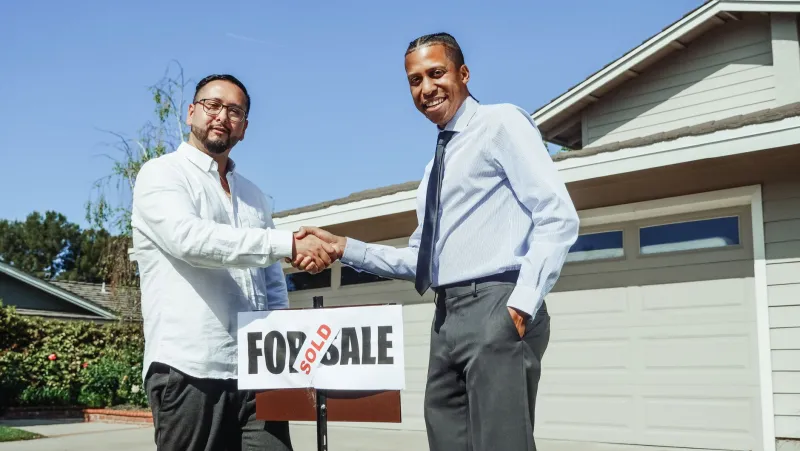
The handshake at the end wasn't just a social nicety. It was the contract.
What the App Economy Actually Replaced
Today, when something breaks in your home, the process looks nothing like that. You open an app, scroll through profiles with stock-photo headshots and star ratings aggregated from strangers, and request a booking that might — if you're lucky — get confirmed within 48 hours. You'll pay a platform fee, possibly a diagnostic fee, and then a labor rate that has been quietly inflated to cover what the app skims off the top.
Surge pricing — that cheerful invention from the rideshare world — has migrated into home services. Need a plumber on a weekend? That'll cost you. Emergency electrical issue on a holiday? Prepare yourself.
And then there's the ghost contractor problem. Anyone who has hired through a home services platform has experienced this: the confirmed appointment that simply doesn't happen. No call, no text, no explanation. You're left holding a bucket under a dripping pipe, rescheduling your entire day, and leaving a one-star review that will be gently buried under five-star ratings from paid promotions.
The tradesman who knew your house, your family, and his own professional reputation had every incentive to show up and do good work. The gig-economy contractor dispatched by an app has a financial relationship with a platform, not with you.
The Three-Week Wait and What It Costs
Beyond the trust problem is the availability problem. In much of the country, getting a licensed plumber or electrician to your home within a reasonable timeframe now requires either significant luck or significant money. Three-week waiting lists for routine work are not unusual in major metro areas. Emergency rates can push simple repairs into four-figure territory.
This isn't entirely the platforms' fault. America has a genuine skilled trades shortage, decades in the making, driven by a cultural shift that steered generations of young people toward four-year colleges and away from apprenticeships. The tradesman who retired in 2005 wasn't replaced at the same rate he left.
But the gig-economy model made things worse by fragmenting the remaining workforce into a collection of independent operators with no local roots and no long-term client relationships to protect.
What Home Ownership Actually Felt Like
Here's what gets lost in the conversation about convenience and pricing: the tradesman relationship changed the emotional texture of owning a home.
When you had a plumber you trusted — one who'd been in your basement before, who knew where the main shutoff was, who charged you fairly because he wanted you to call him again in ten years — home ownership felt manageable. Problems were solvable. You weren't at the mercy of an anonymous marketplace every time a pipe made a strange noise.
That sense of security wasn't trivial. It was part of what made a house feel like a home rather than an anxiety-generating asset you couldn't fully control.
Today, plenty of homeowners — particularly younger ones who never experienced the old system — feel a low-grade dread around maintenance and repair. Not because the problems are worse, but because the support system for solving them has become unreliable, expensive, and impersonal.
Progress Isn't Always the Right Word
The app economy offers real things. Wider reach, easier booking, some measure of credential verification. If you move to a new city and don't know a soul, having a platform that can connect you to a licensed electrician is genuinely useful.
But it's worth being honest about what was traded away. The neighborhood tradesman who operated on reputation wasn't just a relic of a simpler time — he was a functioning piece of social infrastructure. He connected people. He created accountability. He made the physical world of American homes feel a little less like something that could fall apart without warning.
That handshake at the end of the job? It wasn't just polite. It was a promise. And promises, it turns out, are harder to automate than anyone expected.