The Store That Took All Afternoon and Gave You Something to Talk About at Dinner
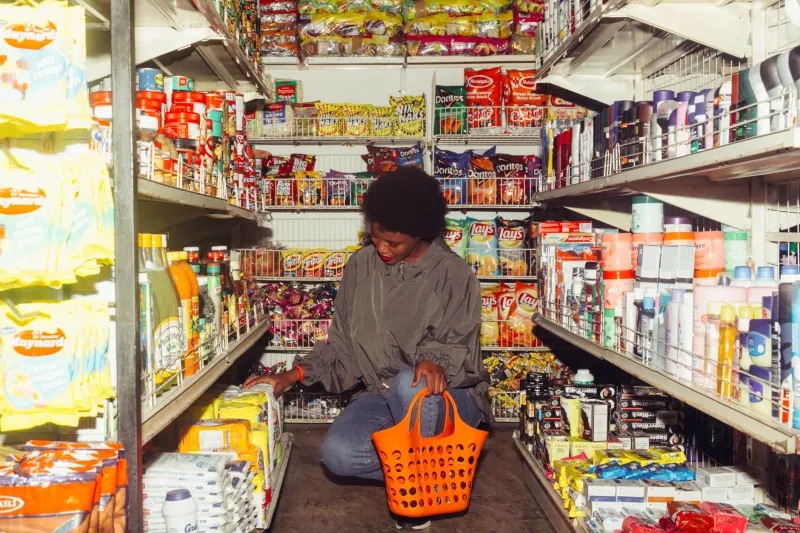
If you were a certain kind of American child in the mid-twentieth century, a trip downtown to the department store was an event. You dressed up. Not formally — but you put on something decent, because that's what you did. The store had revolving doors, which were already exciting. It had an elevator with an operator who announced the floors. It had a restaurant on the top level where the chicken salad sandwiches came with the crusts cut off. And it had floor after floor of things to look at, touch, smell, and occasionally purchase — organized with a logic that rewarded exploration.
This was shopping as an experience. Now it's a transaction. The distance between those two things is larger than it might appear.
Architecture Designed to Make You Linger
The great department stores of the mid-twentieth century — Marshall Field's in Chicago, Macy's in New York, Foley's in Houston, Bullock's in Los Angeles — were built with the explicit intention of keeping you inside as long as possible. Not through manipulation, exactly, but through genuine abundance. The perfume counters near the entrance. The display cases arranged to catch afternoon light. The seasonal decorations that turned ordinary shopping into something that felt vaguely festive.
These stores employed people whose entire job was to know their department intimately. The woman who worked the dress section had been there for fifteen years and could assess your size by looking at you. The man in the shoe department had opinions about arch support and wasn't shy about sharing them. The cosmetics counter staff had been trained by the brand representatives and could explain, with genuine enthusiasm, why one foundation was better suited to your skin tone than another.
This wasn't upselling in the modern sense. It was expertise, offered in the context of a relationship. You came back to the same people. They remembered what you'd bought before.
The Social Function Nobody Fully Appreciated Until It Was Gone
Beyond the commerce, the department store served a social function that's easy to underestimate in retrospect. It was a place where people from different parts of a city ended up in the same building, moving through the same spaces, occasionally running into each other in ways that felt accidental but were structurally inevitable.
You'd run into your neighbor near the housewares section. You'd see your daughter's teacher by the children's clothing. The store was, in a quiet way, a commons — a shared civic space that wasn't a church or a school or a government building, but that carried some of the same community weight.
Women, in particular, used the department store as a social institution. Lunch at the in-store restaurant with a friend. An afternoon of browsing that was as much about the company as the merchandise. The store provided a destination, a reason to be somewhere, a structure for an afternoon that was also, secondarily, about shopping.
The Collapse Came From Multiple Directions
The decline of the full-service department store is one of the most thoroughly documented stories in American retail history, and it happened in waves. The first wave was the malls of the 1970s and 80s, which pulled shoppers away from downtown districts and reorganized retail around the suburban car culture. Department stores adapted — many of them became the anchor tenants of those same malls — but the migration changed the character of the experience. The downtown flagship, with its grandeur and its history, gave way to the mall branch, which was fine but not the same thing.
The second wave was big-box retail. Why buy linens at a department store when you could buy them cheaper at Target or Bed Bath & Beyond? The department store's value proposition — breadth, quality, service — got squeezed from below.
The third wave, of course, was the internet. Amazon didn't invent the idea of shopping without leaving home, but it perfected it in ways that made the department store's remaining advantages — the ability to touch things, the staff expertise — feel insufficient for most purchases on most days. Why drive to the mall when the thing you need will arrive tomorrow?
What the Algorithm Can't Do
Here's where it gets interesting, from a technology perspective. The recommendation engine that powers modern e-commerce is genuinely impressive. It knows what you've bought, what you've browsed, what people like you tend to purchase next. In a narrow sense, it does what the expert salesperson used to do — it surfaces things you might want.
But it can only show you things that resemble what you already know you want. The department store, by contrast, put you in proximity to things you didn't know existed. You went in for a bath towel and walked past the kitchenware section and discovered a type of pan you'd never heard of and came home with something that changed how you cooked. That's serendipity. Algorithms are not good at serendipity. They're optimized to reduce uncertainty, which is the opposite of what discovery requires.
The tactile dimension is equally irreplaceable. You cannot feel the weight of a blanket through a product photo. You cannot smell the leather of a wallet. You cannot understand how a piece of clothing fits your specific body from a model whose proportions are nothing like yours. The department store offered sensory information that no screen can replicate, and for a lot of purchases, that information was the entire point.
What's Left and What Isn't
A handful of great department stores survive, and a few of them — Nordstrom comes to mind — have managed to preserve something of the service culture that made the format worthwhile. But they're exceptions in a landscape that has largely moved on.
What replaced the department store isn't one thing. It's Amazon and Etsy and Instagram shopping and TikTok-driven impulse purchases and direct-to-consumer brands that you find through targeted ads. The shopping is faster. The prices are often lower. The selection, in aggregate, is incomparably vast.
But you can't run into your neighbor there. Nobody cuts the crusts off the sandwiches. And the elevator operator is gone, along with the floors she used to announce.