Three Weeks, One Station Wagon, and Zero Apologies: The American Vacation We Stopped Letting Ourselves Take
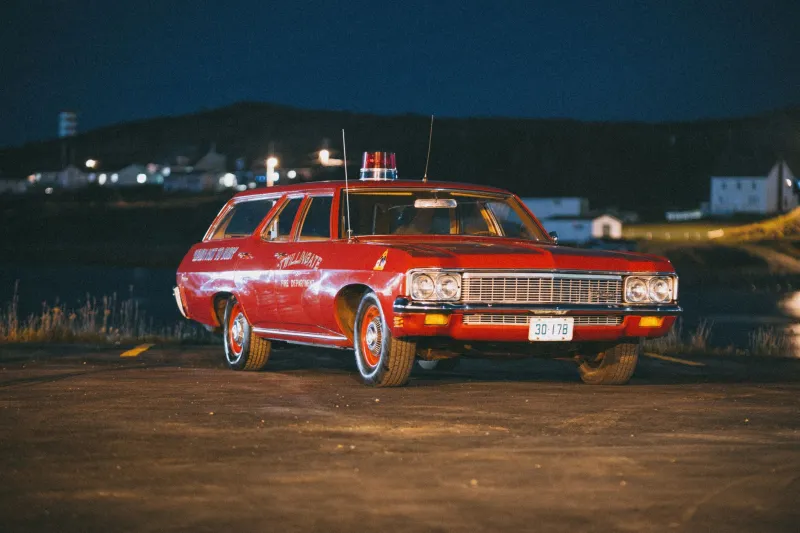
Somewhere in a shoebox in a million American homes, there are photographs of a station wagon pointed west. Kids in the backseat. A cooler in the trunk. A road atlas on the dashboard with a hand-drawn route and circled stops. The trip probably lasted three weeks. Nobody checked work email, because there was no work email. The office survived.
That America feels like a different country now.
The Golden Age of Going Nowhere Fast
The postwar American vacation was a genuine cultural institution. Between the late 1940s and the early 1970s, taking extended time off wasn't just accepted — it was expected. The interstate highway system, completed in stages through the 1950s and 60s, opened up the country in ways that felt genuinely thrilling. The national parks were expanding. Motels were cheap and clean. Gas was affordable. And crucially, the social contract between American employers and employees included something that has quietly eroded: the understanding that workers would take their full vacation time, and that doing so was not a sign of weakness.
Families planned these trips for months. They wrote to state tourism boards for brochures. They marked up maps. They budgeted carefully and set off for two or three weeks with a loose itinerary and the collective understanding that whatever happened on the road was part of the point. Breakdowns. Detours. Roadside attractions that turned out to be somebody's junk collection with a painted sign. All of it counted.
The vacation wasn't just a break from work. It was a shared national experience, a ritual that said: we are a family, and for these weeks, we belong entirely to each other.
How Work Ate the Vacation
The unraveling happened gradually, then suddenly. The economic turbulence of the 1970s and early 80s introduced a new anxiety into American workplace culture — job security became something you performed, not assumed. Taking three weeks off started to feel like a statement you might regret. Layoffs, restructuring, the slow decline of union power — all of it pushed workers toward a kind of perpetual availability that the vacation directly threatened.
Then came the technology that made the threat real. The pager. The laptop. The BlackBerry. The smartphone. Each device made it slightly easier to stay connected and slightly harder to justify being unreachable. By the mid-2000s, the always-on worker was no longer an exception — it was the ideal. And the vacation, already shrinking in duration, began to change in character. People brought their laptops to the beach. They checked Slack from the airport. They answered emails from the hotel pool while their kids played in the shallow end.
The vacation hadn't disappeared. It had just become a performance of being on vacation while still being at work.
The Numbers Tell a Bleak Story
America is the only wealthy nation that doesn't legally mandate paid vacation time. Zero days. Employers offer it voluntarily, and many do — but the average American worker leaves a significant portion of their paid time off unused every single year. A pre-pandemic survey by the U.S. Travel Association found that Americans collectively forfeited roughly 768 million vacation days in a single year. That's not a rounding error. That's a cultural pathology.
The reasons people give are familiar: workload, fear of falling behind, concern about how it looks. Younger workers, in particular, report feeling genuine anxiety about taking extended time off, even when they're explicitly encouraged to do so. The message absorbed from the workplace culture is that presence equals commitment, and absence — even sanctioned, paid absence — is a small act of disloyalty.
Meanwhile, the long road trip has been replaced by the long weekend. Three days in Nashville. A quick flight to see family. A Friday-to-Monday beach rental. These are fine things. Nobody's saying they aren't. But they're not the same as three weeks on the road with nowhere you absolutely have to be by Monday morning.
What the Long Trip Actually Did
There's something that happens on a long trip that doesn't happen on a short one. The first few days, you're still decompressing. You're still mentally at the office, running through to-do lists, waking up at 6 a.m. out of habit. By the end of the first week, something shifts. You start to actually see where you are. By the second week, you're a different person — slower, more present, more curious. The third week, if you get it, is when the trip becomes the thing you'll actually remember for the rest of your life.
Short trips don't get you there. They return you to work before the decompression is even complete.
The mid-century American family, perhaps without fully understanding it, had stumbled onto something psychologically essential. The long vacation wasn't indulgent. It was restorative in a way that a long weekend simply cannot replicate.
The Road Is Still Out There
Here's the thing: the infrastructure for the great American road trip still exists. The interstates are there. The national parks are there — overcrowded, yes, but magnificent. The motels are there, and so are the roadside attractions and the diners and the small towns that reward slow travel in ways that airports never will.
What's changed isn't the road. It's the permission we give ourselves to be on it.
The three-week vacation didn't disappear because Americans stopped wanting it. It disappeared because the culture stopped making space for it. Getting it back won't require a new highway or a better travel app. It'll require something harder: deciding, collectively, that rest is not a reward for finished work. It's a condition of doing good work at all.
The station wagon is optional. The attitude isn't.