When America's Kids Were Their Own GPS — The Lost Era of Unsupervised Adventures
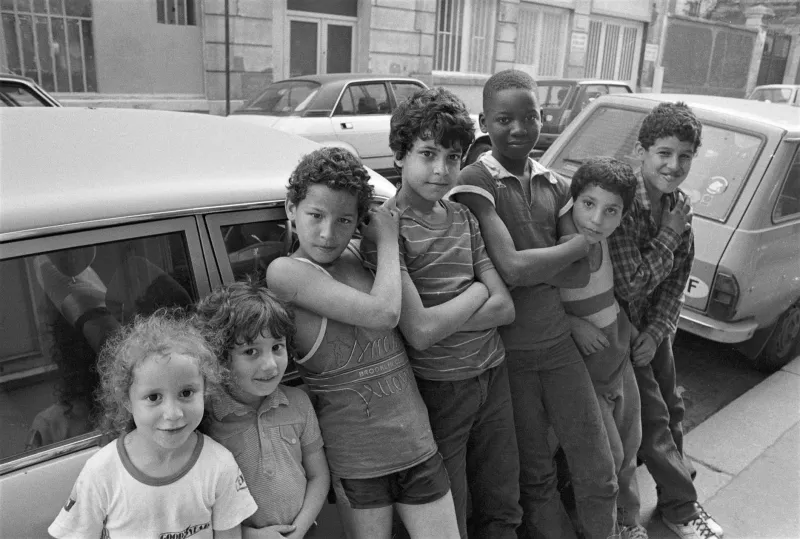
When America's Kids Were Their Own GPS — The Lost Era of Unsupervised Adventures
There was a time in America when a seven-year-old could disappear after breakfast and not resurface until dinner, and nobody called the police. In fact, nobody even worried much. The unspoken rule was simple: be home when the streetlights come on, and don't do anything that would require stitches.
Today, that same scenario would trigger Amber Alerts, neighborhood Facebook groups in meltdown mode, and possibly a visit from Child Protective Services. The transformation of American childhood from free-range to carefully curated represents one of the most dramatic cultural shifts of the past fifty years — and most of us barely noticed it happening.
The Golden Age of Getting Lost
In the 1960s and 70s, American neighborhoods operated under an entirely different set of assumptions about children and safety. Kids as young as five roamed in packs, creating elaborate games of hide-and-seek that spanned multiple blocks. They built forts in vacant lots, caught fireflies in Mason jars, and settled playground disputes through a complex system of rock-paper-scissors and "do-overs" that adults never needed to referee.
The typical summer day began with a bowl of cereal and ended with grass stains, scraped knees, and stories that parents heard only in fragments. Children learned to read their neighborhoods like topographical maps — which yards had the meanest dogs, where the best climbing trees grew, and which shortcuts led home fastest when trouble was brewing.
Most importantly, they learned to solve their own problems. When Tommy claimed he'd been tagged when he clearly hadn't, the group worked it out. When Sarah fell off her bike three blocks from home, she either walked it back or figured out how to fix it herself. Adult intervention was reserved for genuine emergencies, not everyday childhood drama.
The Great Scheduling Revolution
Fast-forward to today, and the average American child's schedule reads like a corporate executive's calendar. Soccer practice at 4:30, violin lessons at 6:00, and homework that requires parental supervision until bedtime. The concept of unstructured time has become so foreign that some families literally schedule "free play" into their weekly routines.
Modern parents coordinate every social interaction through text chains that would make NATO summit organizers proud. Playdates require advance planning, background checks on the hosting family, and detailed discussions about snack allergies and screen time limits. The idea of a child simply knocking on a neighbor's door and asking if their friend can come out to play has become as antiquated as using a rotary phone.
This shift wasn't accidental. It emerged from a perfect storm of cultural changes that transformed how Americans think about childhood safety, academic achievement, and parental responsibility.
When Fear Rewrote the Rules
The 1980s brought a new vocabulary to American parenting: "stranger danger," "helicopter parenting," and "child-proofing." High-profile kidnapping cases, though statistically rare, dominated news cycles and fundamentally altered how parents calculated risk. The milk carton missing children campaigns of the era created a generation of parents who saw potential threats in every unmarked van and unfamiliar face.
Simultaneously, academic competition intensified. The informal neighborhood education that happened during unsupervised play — learning to negotiate, lead, follow, and recover from failure — was gradually replaced by structured activities designed to build college applications. Parents began to view unstructured time as wasted time, a luxury their children couldn't afford in an increasingly competitive world.
What We Gained and What We Lost
Today's children are undoubtedly safer in measurable ways. They wear helmets, use car seats until they're practically teenagers, and rarely encounter the kind of casual physical risks that previous generations took for granted. They're also more academically prepared, more culturally aware, and more supervised than any generation in American history.
But something intangible was traded away in the process. The children who once navigated their neighborhoods with nothing but their wits developed a kind of practical intelligence that's hard to replicate in structured environments. They learned to read social cues, assess genuine risks, and bounce back from minor failures without adult intervention.
They also developed what researchers now call "geographical confidence" — an intuitive understanding of space, direction, and navigation that GPS-dependent generations often lack. More importantly, they learned that the world beyond their front door was fundamentally safe and navigable, a lesson that shaped how they approached challenges throughout their lives.
The Ripple Effects
The consequences of this shift extend far beyond childhood. College counselors report that incoming freshmen often struggle with basic problem-solving skills that previous generations developed naturally during unsupervised play. Young adults who were never allowed to walk to school alone sometimes have difficulty navigating unfamiliar cities or making independent decisions without extensive consultation.
Meanwhile, American neighborhoods have become quieter, more isolated places. The natural surveillance network that once existed — kids playing in every yard, neighbors chatting over fences — has largely disappeared. Many suburban streets that once buzzed with activity now sit empty except for the occasional dog walker or delivery truck.
The Long View
Looking back, it's clear that both eras had their advantages. The children of the 1970s developed independence and resilience, but they also faced real risks that modern safety measures have largely eliminated. Today's children are more protected and academically prepared, but they may be missing out on the kind of unstructured learning that only comes from genuine freedom.
The challenge for modern parents isn't to recreate the 1970s wholesale — the world has genuinely changed in ways that make some old approaches impractical. Instead, it's about finding ways to preserve the essential elements of childhood independence within the realities of contemporary American life.
Because somewhere between the milk carton campaigns and the college prep arms race, we may have forgotten that the most important navigation skills children need aren't about finding their way home from soccer practice. They're about learning to find their way in the world, period.